Advertisement

“We are not against African culture”: Catholic Archbishop in South Africa Clarifies Decree on Traditional Healing

Credit: SACBC

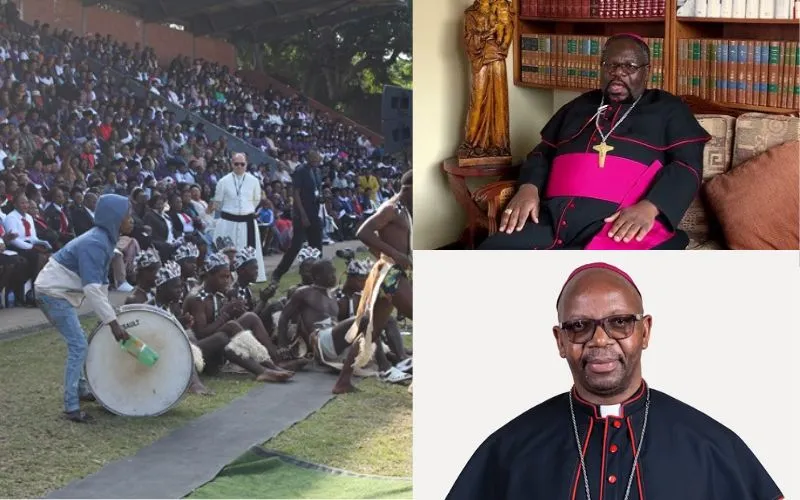
Archbishop Siegried Mandla Jwara of South Africa’s Catholic Archdiocese of Durban has clarified that the Church in South Africa is not opposed to African culture or traditional values, following the release of a recent pastoral statement by the Bishops of the Durban Ecclesiastical Province directing the Clergy and women and men Religious to refrain from practising Ubungoma – traditional healing – while exercising their ministry.

The statement, which has sparked broad discussion within the Church in Southern Africa, aimed to address concerns over Clergy who blend traditional belief systems with Catholic ministry. 

In an interview with the Communication Office of the Southern African Catholic Bishops Conference (SACBC), Archbishop Mandla explained that the decree seeks to ensure that faith remains firmly centred on Christ and not divided between Christian and ancestral practices.

“We are very clear that we are not against African culture. In each culture, there is something good and also something that needs purification. We keep what is good,” the South African Catholic Archbishop said in the interview published on November 9.

Archbishop Mandla, a member of the Congregation of Mariannhill Missionaries (CMM), said the Bishops’ decision followed careful reflection by the Durban Ecclesiastical Province—comprising the Dioceses of Eshowe, Dundee, Kokstad, Mariannhill, Umtata, Umzimkulu, and the Vicariate Apostolic of Ingwavuma—on the growing practice among some priests of Ubungoma.
Advertisement

“We discussed the problem we have—some priests who are practising Ubungoma, believing in the ancestors. We issued a statement to say that they should desist from this because a Priest is only there in persona Christi. You can’t be a priest representing Christ and at the same time representing your ancestors,” he explained.

Archbishop Mandla clarified that the statement does not oppose African traditions or family customs, but only forbids Clergy from practising Ubungoma while ministering as Priests.

“Nothing has changed. We are just targeting priests who practise Ubungoma while ministering as Priests,” he said.

Addressing those who feel drawn to both the Priesthood and traditional healing, he said discernment is necessary.

“If the second calling comes after ordination, the person has to choose: is he for Christ or for the ancestors?” Archbishop Mandla posed.

More in Africa

While acknowledging that African spirituality honours ancestors, the Catholic Church leader noted that it does not amount to ancestor worship.

“Africans do not worship ancestors. That was always a misunderstanding, especially by the early missionaries. But when one works as a sangoma and never mentions Christ, that becomes a problem,” he said.

The Catholic Archbishop added that the decree also applies to Religious Sisters and Consecrated Persons, saying it provides clarity on what is expected in consecrated life.

On his part, SACBC First Vice President, Archbishop Zolile Peter Mpambani of Bloemfontein Archdiocese, said metropolitan provinces have the authority to issue local pastoral decisions, provided they align with the broader direction of the national Conference.

“A Diocese or Metropolitan can make its own decisions, but these decisions need to be congruent with what the SACBC is working towards,” Archbishop Mpambani said.

Advertisement

He noted that the Durban decree concerns only Priests and Religious, while guidance for the laity will follow once the SACBC’s study on Ubungoma is complete.

“The Durban Metropolitan was under pressure to act. For the laity, that guidance will come from the Conference once the research is completed,” the member of the Congregation of Priests of the Sacred Heart (SCI) said.

Jude Atemanke is a Cameroonian journalist with a passion for Catholic Church communication. He holds a Bachelor’s Degree in Journalism and Mass Communication from the University of Buea in Cameroon. Currently, Jude serves as a journalist for ACI Africa.