

Advertisement

For Centuries, Church Institution in Angola “pillar” in Championing Justice, Education, Health: Catholic Archbishop

For centuries, Catholic missionaries and devoted Christians have played an important role in Angola’s state of progress as a “pillar” in championing justice and the country’s education and health sectors, Archbishop Zacarias Kamwenho has said.  

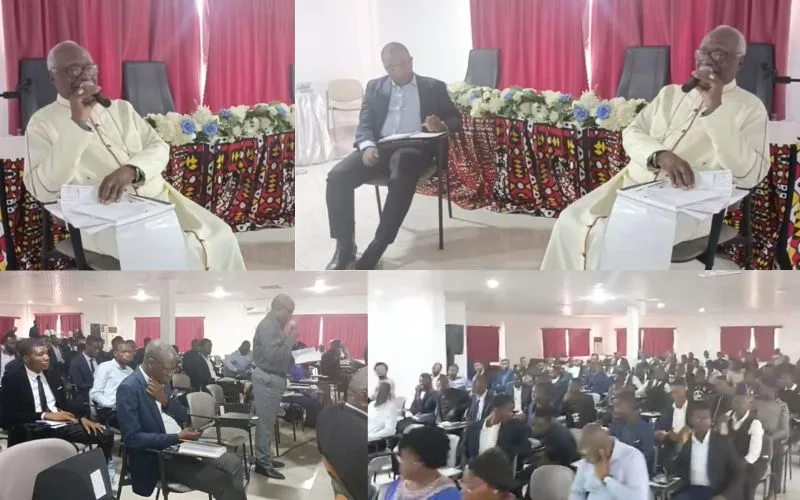
In his keynote address during the third gathering of former Seminarians and friends of the Catholic Diocese of Sumbe, Archbishop Kamwenho recognized the significant role of the Catholic Church institution in awakening national consciousness and shaping the Angolans’ moral and intellectual identity.

“Since the arrival of the first missionaries in 1491, the Church has been a pillar in building a more just, educated, and hopeful Angola,” the 90-year-old Angolan Catholic Archbishop said at the May 3 event that was held at the Social Welfare Fund Conference Hall of the Armed Forces in Angola’s Cuanza-Sul Province.

The Angolan Catholic Church leader, who was at the help of Lubango Catholic Archdiocese till September 2009 when he retired at the age of 75 added, “The missionaries were the first to create schools, health centers, and boarding institutions. They taught us to read and write, cared for the sick, and opened up the minds of young Angolans.”

He highlighted the Catholic Church’s impact on national leadership, noting that the institution was “the spiritual and intellectual mother of many of the country’s political and religious leaders.”
Advertisement

“At a time when Angolans were denied dignity, the Church opened its doors, defended the poorest, and proclaimed that all are children of God. Many Priests and missionaries paid a high price for standing with the people,” Archbishop Kamwenho said.

He noted that the Catholic Church remains relevant in the Angolan society as it is elsewhere, and called for a renewed pastoral approach that ensures that the people of God feel part of the Church institution, rooted in justice, listening, and peace.

“We need a Church that denounces injustice, guides with wisdom, and promotes the common good,” he said in his keynote address delivered under the theme, “Five Decades of Independence: A Journey of Resistance and Hope”.

In his May 3 address at the third gathering of former Seminarians and friends of the Catholic Diocese of Sumbe, the Angolan Archbishop, who started his Episcopal Ministry in November 1974 as Auxiliary Bishop of Angola’s Luanda Catholic Archdiocese called upon youth and former Seminarians to reignite their commitment to faith and service.

“To be Christian today is to carry on the mission of the first missionaries, with the same courage, dedication, and hope,” he said.

More in Africa

Reflecting on Angola’s independence, Archbishop Kamwenho said, “To speak of political independence is to revisit the journey from Egypt to the Promised Land. Independence is not only a political event but a collective vocation to justice, freedom, and sharing.”

The Angolan Catholic Church leader went on to lament the gap between Angola’s post-independence dreams and current realities. He said, “The Angola we dreamt of and the Angola we have are not the same. We want a different Angola for the next 50 years.”

He recalled the liberation struggle that began in 1961 and culminated in independence on 11 November1975 as a long march through regions like Ndongo, Cassanje, Matamba, and the Central Plateau, which he described as Angolans’ “own sacred journey toward dignity”.

“We came from the Great Lakes, searching for a place to live with dignity. We are a pilgrim people. Freedom marked the end of colonization and the start of a new era,” Archbishop Kamwenho said.

João Vissesse is an Angolan Journalist with a passion and rich experience in Catholic Church Communication and Media Apostolate.