According to the June 12 report, students at the institute are between the ages of 17-25 and are studying to gain skills for later employment or higher education.
“I remember using computers that took forever to load. Sometimes, I couldn’t even access the websites or tools needed for my assignments,” says Noah Ahiabu, a beneficiary of the institute.
He notes that, “everything changed when we received funding from Salesian Missions for the new computers. This was a game-changer for me personally and the institute at large.”
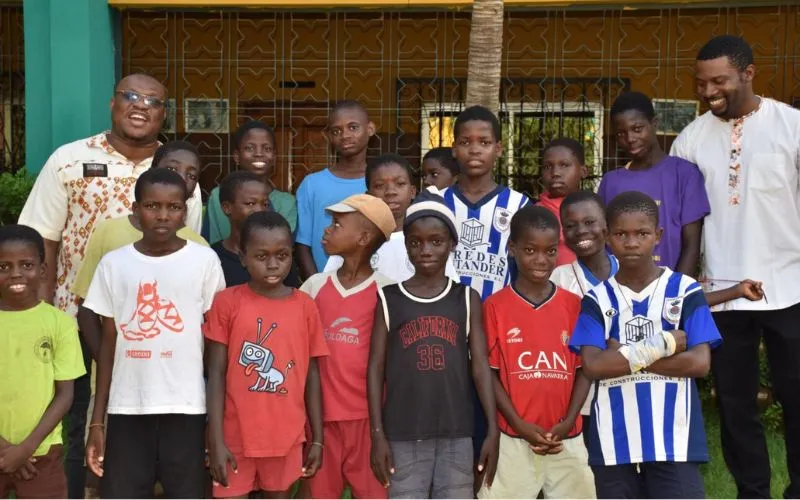
Meanwhile, in Benin, Burkina Faso, Gambia, Guinea, Mali, and Senegal, Salesian missionaries from the Our Lady of Peace provincial community have provided 209 scholarships to disadvantaged youth aged 8 to 25, including orphans and those from families unable to afford school fees.
According to the June 12 report, Sub-Saharan Africa is experiencing a rising demand for education driven by a steadily growing school-age population, with girls disproportionately excluded from education compared to boys of the same age.
“We want to ensure that all youth have a chance to gain an education, particularly girls who face greater disadvantages in accessing education,” says a Salesian official, adding that “Salesians provide education and social development programs to support poor youth and their families.”
He further says, “It is our goal to connect all youth, despite their disadvantages, to education where they can gain skills for later employment and to succeed in life.”
In the East African nation of Tanzania, the Don Bosco Kilimanjaro International Institute for Telecommunications, Electronics and Computers (Don Bosco KIITEC), in Arusha, serves youth and young girls from poor backgrounds.
Salesian officials say the completion of the project, which currently serves 150 students, is the result of a collaborative effort between local benefactors and the Salesian Missions, and it can accommodate 300 students.
Herman Exaud John, a beneficiary of the Don Bosco KIITEC, which serves youth and young adults who are poor in the East African nation, says he is proud of himself and grateful for the transformation he has received from the institute.