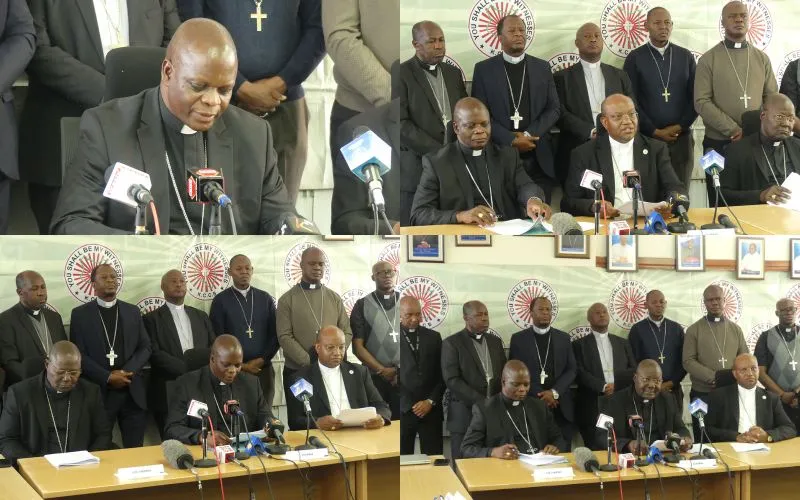
“This practice has entrenched a culture of cronyism and tokenism (corruption and bribery), where proximity to power determines who receives services and who remains neglected,” KCCB members lamented, and added, “In the final analysis, it is a form of personal or state advertisement.”
They emphasized that leadership should be exercised for the national welfare and not in a biased manner, warning that when this is not the case, some communities are uplifted while others are left behind, “not because they lack anything, but because they lack political favour.”
The Bishops’ criticism follows local media reports that the Kenyan Deputy President, Prof. Kithure Kindiki, has been touring various parts of the country, distributing funds as part of an empowerment initiative to support women and youth groups.
According to Kenya’s Daily Nation June 6 report, the Deputy President led a delegation of senior government officials to Eastern Kenya for a fundraising event supporting the empowerment initiative, including a KES. 3 million (US$ 23,335.00) contribution from President William Ruto.
“This program of supporting small-scale traders is a good one. Some leaders are despising it, claiming that we are bribing citizens. Does this look like a bribe? Do we look like people who bribe citizens?” Prof. Kindiki is quoted as posing during the June 6 event.
In their June 24 press statement, Kenya’s Catholic Bishops reiterated that “resources belong to all Kenyans” and emphasized that “development is a right.”
True progress, KCCB members said, is only realized "when policies are fair, institutions are strong, and public service is grounded in integrity and equity.'"
“Indeed, ‘authority must be exercised legitimately... guided by a moral law grounded in God’” they said, alluding to the Compendium of the Social Doctrine of the Church.
In their press statement, the Catholic Church leaders also caution against selective application of the rule of law, saying that “over the past two decades, Kenyans have continued to witness the uneven application of justice.”
“The poor, the outspoken, and the socially vulnerable face swift and often aggressive enforcement of the law, while those with influence are shielded from accountability,” the Catholic Bishops said, warning that the “imbalance discredits our legal institutions and disorients society's moral compass.”