

Advertisement

Catholic Bishop Links Woes of Migrants in South Africa’s Public Hospitals to U.S. President’s Aid Suspension

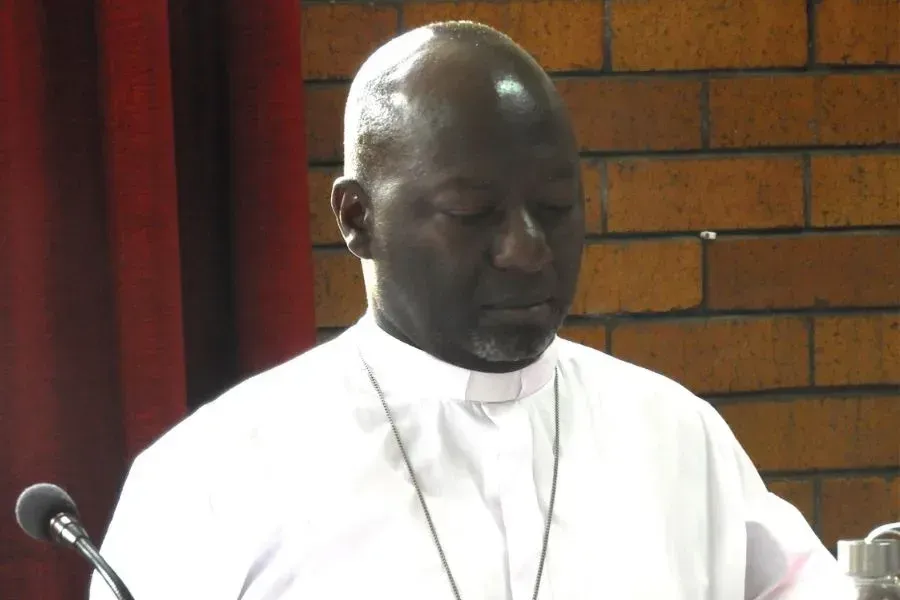
Bishop Joseph Mary Kizito, the Liaison Bishop for the SACBC Migrants and Refugees Office. Credit: SACBC

The liaison Bishop for the Migrants and Refugees Department of the Southern African Catholic Bishops’ Conference (SACBC) has denounced the ongoing xenophobic attacks against foreign nationals in some parts of South Africa, noting that the foreigners are not to blame for the shortage of medication in the country’s health facilities.

In an interview with ACI Africa on Tuesday, July 15, Bishop Joseph Mary Kizito said that South Africa’s health sector has been brought to its knees by the recent suspension of most U.S. foreign assistance.

According to Bishop Kizito, many locals, who are protesting against migrants “do not understand world politics”, and are unaware of the effects of President Donald Trump’s directives. That is the reason they have turned to migrants and refugees,” he said.

“It is true that there is a lack of medication in the hospitals. But it's not because the foreigners have caused that. It is the economic situation we have found ourselves in. That is why we do not have a lot of money in the clinics,” Bishop Kizito said.

He added, “I think this situation has been also caused by the current international withdrawal of funding by President Trump of America. It has affected many economic changes in the departments, especially health and education.”
Advertisement

“I have seen HIV and TB projects here closing down,” the Bishop of South Africa’s Catholic Diocese of Aliwal said, and continued, “A lot of Trump money for HIV and TB is no longer there. People are going to get shortage of medication. And now, they are turning on foreigners, saying that it is them who are taking all their medications, but they don't know the causes of the shortage. They don't know the politics of the world.”

The Ugandan-born Catholic Bishop found it hard to believe that non-locals are causing a strain on the country’s health system. “It is not true that all over the country, foreigners are more than the local people. That's not true.”

Recent protests, notably in Johannesburg’s Rosettenville suburb, have seen locals establish barricades demanding that undocumented migrants seek private medical care.

For weeks, residents of Rosettenville have also been reportedly calling for the deportation of illegal immigrants in South Africa, saying that they want South Africans to be prioritized for state services. 

SACBC members have denounced the xenophobic attacks, describing the move to exclude foreign nationals in South Africa from health care as “a morally reprehensible” behaviour that they say risks undermining the country’s attempts to strengthen social cohesion.

More in Africa

In the interview with ACI Africa, Bishop Kizito noted that statelessness in South Africa “is not going down” any time.

He added, “The situation in Zimbabwe is not improving, DRC (the Democratic Republic of Congo) is not improving. Same with Lesotho and many other countries whose nationals are here in South Africa. Therefore, we do not see the issue of migrants and refugees stopping. They are only going to increase.”

 “We are still addressing this issue because the systems are very difficult to penetrate. There is a lot of miscommunication between the government and the agents on the ground,” the Catholic Bishop of Aliwal Diocese since his Episcopal Consecration in February 2020 said.

He challenged authorities in South Africa to start probing why there are many undocumented migrants in the country.

The Catholic Bishop highlighted poor border management as one of the biggest contributors to the increase in undocumented migrants in South Africa, faulting law enforcers in the country for failing to control the borders.

Advertisement

“Our borders are either too big, or the resources are not enough. And so, a lot of people come into the country illegally,” he explained, adding that corrupt officials at the borders do not help the situation.

The Liaison Bishop for the Migrants and Refugees in the SACBC bemoaned the growing woes of migrants, refugees, asylum seekers, and those labelled stateless in South Africa, noting that delays in documentation is forcing foreign Priests to leave the country.

He said that he had interacted with Catholic Priests, who had been forced to go back to their home countries after attempts to renew their visas hit a snag.

“We are witnessing delays in the processing of documents such as visas. Many priests have left the country because they have failed to secure their documents that show that they are not living here illegally,” Bishop Kizito told ACI Africa on July 15.

He added, “These are Clergy, men of God who want to renew their visas, but they have failed. I know about three who have left. One left this week. They say that they cannot be here illegally. They have tried everything possible to complete their applications, but nothing is working because of office delays.”

(Story continues below)

Bishop Kizito said that the growing trend for Priests to move from South Africa, and back to their home countries is not good for the country that he said already has a shortage of Priests.

He pleaded with South Africa’s department of Home Affairs, and other authorities concerned “to get their systems working” to reduce delays in documentation processes.

“The system is stuck. They always say they have a huge backlog.  But for how long?” He posed, and added, “We appeal with the government. We appeal with the department of Home Affairs to make the system work. People genuinely want to renew their papers. But the office bureaucracies turn them down. People don't want to be in this country illegally.”

Agnes Aineah is a Kenyan journalist with a background in digital and newspaper reporting. She holds a Master of Arts in Digital Journalism from the Aga Khan University, Graduate School of Media and Communications and a Bachelor's Degree in Linguistics, Media and Communications from Kenya's Moi University. Agnes currently serves as a journalist for ACI Africa.