


Advertisement

Planned Laity’s National Congress in Angola “decisive milestone” for Church: Official

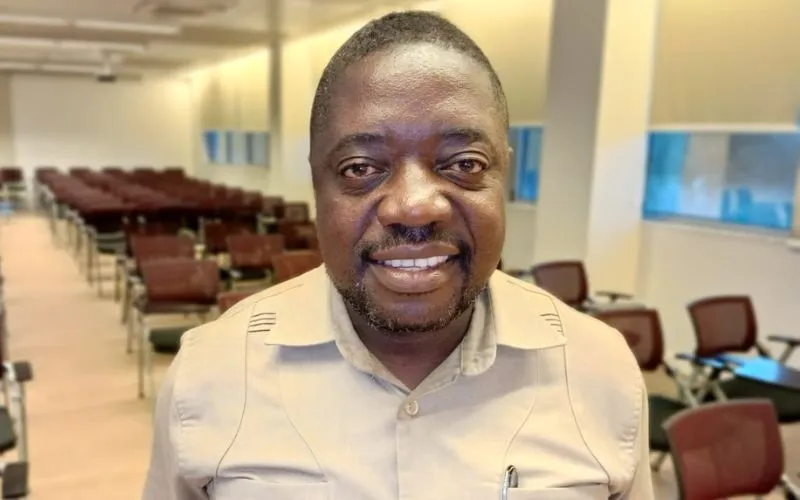
Sebastião Marques Panzo. Credit: ACI Africa

The planned Third National Congress of Catholic Laity in Angola will be a defining moment for the people of God in the Southern African nation, the Director of the National Secretariat for the Apostolate of the Laity of the Bishops' Conference of Angola and São Tomé and Príncipe (CEAST) has said.

Addressing journalists on Wednesday, July 16, Sebastião Marques Panzo shed light on the July 24-25 Congress, which marks the resumption of a four-year cycle of lay coordination that was interrupted by the COVID-19 pandemic.

Mr. Panzo said that the planned Congress seeks to strengthen lay identity, promote social transformation, and renew the mission of Catholic laypeople in society.

“This congress is a decisive milestone in the history of the laity and the Catholic Church in Angola,” he said, and added, “This will be a moment for examining our conscience and planning the future. Without evaluation, there is no authentic progress.”

He noted that the congress’s four-year rhythm allows lay movements to assess their work, reaffirm their mission, and adapt to changing realities in the light of late Pope Francis’ teachings and the Church’s Social Doctrine.
Advertisement

Mr. Panzo recalled the two previous congresses held in Luanda in 1992 and 2019, each shaped by its own historical context.

“The first congress came shortly after the transition to multiparty democracy and called laypeople to embrace citizenship and social responsibility,” he said.

Mr. Panzo added, “By 2019, the focus had shifted to laypeople as ‘salt and light in the world,’ with emphasis on active citizenship, solidarity, and public witness of faith.”

“We want to consolidate what we have learned and build a more structured and influential lay Church,” he said.

On the choice of Namibe Diocese for the 2025 event, Mr. Panzo said it reflects the national character of the Congress and the fact that laypeople in all regions are essential to the Church’s life and mission.

More in Africa

“This choice affirms that all parts of the Church can embrace this moment of reflection and action,” he said.

The July 24–25 event is to feature two main activities. The first is a public conference open to all the baptized. The second is a session restricted to 150 delegates—three from each Diocese of CEAST, including São Tomé. The delegates are to be responsible for drafting and approving strategic directions for the next four years.

The public conference is to be held under the theme, “Angola at 50 Years: The Role of Catholic Laity in the Political, Social, Economic, and Business Sectors.”

According to Mr. Panzo, it is designed to form and integrate laypeople, while the closed-door congress will focus on decision-making and united forward movement.

“We expect this to be a space of networking, strategic debate, and effective use of lay resources and talents,” he said.

Advertisement

The program also includes moments of spirituality, biblical formation, and catechesis. “This solid balance between faith and action is the great richness of the congress,” Mr. Panzo said, adding that that Congress “will be a moment of deep listening, living memory, and celebration—an opportunity to learn from those who have helped shape the Church with fidelity and courage.”

To enhance participation, Mr. Panzo said a virtual Parish platform is to livestream the entire Congress, making it accessible to Catholics unable to travel to Namibe.

“This ensures the Congress reaches even those in remote areas,” he said.

Delegates, including rapporteur from Dioceses, spiritual assistants, and secretariat representatives, are tasked with engaging local movements, collecting testimonies, and bringing grounded insights to the discussions.

“They are not only called to listen but to carry forward the mission,” Mr. Panzo said.

(Story continues below)

After the event, he said two documents will be prepared for publication: a report with recommendations from the public conference and a strategic orientation document for the next four years, to be available on the official event website, www.congressolaical.com

“Let us build a Church that is more participatory, transparent, and missionary. May each layperson embrace their vocation with courage and wisdom,” Mr. Panzo told journalists on July 16.

João Vissesse is an Angolan Journalist with a passion and rich experience in Catholic Church Communication and Media Apostolate.