

Advertisement

Bissau-Guinean Catholic Bishop Cautions against Threat to Peace amid Growing Hate Speech

Credit: Radio Sol Mansi

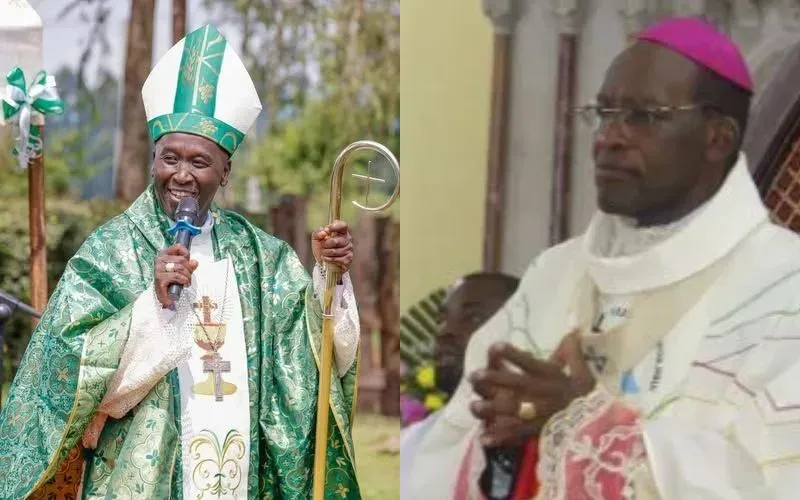
Bishop Víctor Luís Quematcha of the Catholic Diocese of Bafatá in Guinea-Bissau has expressed concern about the growing prevalence of hate speech and intolerance in Guinean society, warning that such tendencies “have endangered peace in Guinea-Bissau.”

Addressing journalists on Wednesday, July 30, following a meeting with Bubacar Turé, President of the Guinean League for Human Rights (LGDH), Bishop Quematcha reaffirmed the Church’s commitment to defending human dignity and promoting social cohesion.

“In recent times, as governance policies have been shaped, hate speech, and religious, ethnic, and social intolerance have emerged, threatening the peace in Guinea-Bissau,” the Catholic Bishop said following the visit of Mr. Turé at the Bishop’s House.

He added, “This is my mission as a bishop. There are two worlds, two fronts. I don’t have to work with water—I build walls here.”

The Catholic Church leader emphasized the Church’s prophetic role, saying, “The Church is a bastion of peace, a pillar of social and national cohesion.” 
Advertisement

“The Church continues to guide the younger generation along the path of peace and strives to build walls against hate speech,” Bishop Quematcha said.

He acknowledged Guinea-Bissau’s long-standing culture of religious tolerance but warned, “The current situation demands a vigilant and proactive presence from religious institutions.”

The member of the Order of Friars Minor Capuchin (OFM Cap.) welcomed the LGDH visit, describing it as “a very positive gesture, a true expression of humanity.” 

He underscored the importance of calm, dialogue, and mutual understanding in the country, adding that this spirit should also spread across the West African sub-region and the continent.

Expressing gratitude for peacebuilding efforts, the Bishop Quematcha said, “This is a feeling of gratitude for the Army of the Global Government.” 

More in Africa

We, as a religious institution, will continue collaborating. The Church shares in the hope of the League and sees its mission within this same framework,” the Local Ordinary of Bafatá since his Episcopal Ordination on June 28 said.

He also noted that “defending human values requires courage and determination,” adding, “God does not just pass by; He walks with our cause.”

For his part, LGDH President Turé explained that the meeting had three main objectives. 

“The first,” he said, “is to congratulate the Bishop and establish a moment of connection. I hadn’t had the opportunity to do this publicly and formally, so now was the right time. We are a human rights organization, and we wanted to express our esteem to the Bishop,” he said.

Mr. Turé continued, “The second objective is to inform the Bishop about actions that the League and its international partners have undertaken to promote peace in Guinea-Bissau, especially in preventing violent extremism.”

Advertisement

He recalled that since March 2022, the LGDH and the Marquês de Valle Flôr Institute have been implementing a project called the “Peace Observatory,” aimed at working in network with national actors to prevent violent extremism. “In the past three and a half years,” he noted, “we have carried out several initiatives with the collaboration of all religious denominations, especially the Catholic Church, which has been one of our key partners.”

With the appointment of a new Bishop, Turé said the League hopes to strengthen this partnership. 

“We want to collaborate more actively with the Church and integrate it into our common agenda. The League views the Church as a fundamental moral reserve, a bastion of peace and social cohesion,” he said.

Looking ahead, Mr. Turé said the third objective of the meeting was “to invite the Bishop to participate in a major event we are organizing in September to mark the International Day of Peace.” 

He noted that the event will culminate in the creation of a Forum of Religious Leaders in Guinea-Bissau and the launch of a book on the role of interreligious dialogue in preventing radicalization and promoting peace.

(Story continues below)

Mr. Turé emphasized, “This visit is also meant to reinforce the Church’s commitment to tolerance, dialogue, and service to the nation. We want to continue walking together in building peace, democracy, and sustainable development.”

“The Catholic Church has demonstrated a close presence among the people, deeply concerned with social issues. It has played a key role in education, health, and social support. Where there is clean water, health, and education, the Church is often there,” he said. 

Mr. Turé further said, “We reaffirm the League’s desire for continuous collaboration with the Church, placing itself at the service of peace, tolerance, and national unity.”

João Vissesse is an Angolan Journalist with a passion and rich experience in Catholic Church Communication and Media Apostolate.