“We decided to go to Subukia, our national shrine, and declare, because then corruption also comes from personal choices, that we stand against corruption, and we had the gesture of removing our shoes, showing the real desperation of our people, and also our commitment from then on that we should always fight corruption,” he recounted in reference to the 2019 anit corruption campaign by members of the Kenya Conference of Catholic Bishops (KCCB)
 Bishop Joseph Obanyi Sagwe of Kenya’s Catholic Diocese of Kakamega. Credit: ACI Africa
He added, “We even formulated a formula of renouncing sin, somehow, something like renewing our baptismal promises, because that's where it comes from. And that cascaded down to groups, to individuals, and it worked very well, until COVID came, probably it slowed it down, but such an activity would be a concrete way of going beyond the statements, and any other that can be reflected upon.”
Bishop Obanyi emphasized that actions must follow words, especially since, in many cases, “the same leaders are now used to [our statements]. They know we shall bark, and life will go on. Maybe it should not be like that now. It should be like we should follow up with specific actions… that will make sure that the message lives on, reaches the intended destination, and can ruffle whoever is responsible, so that they can come up and act.”
Responding to questions about the limits of gestures such as the 11 April 2019 extraordinary gesture when the late Pope Francis knelt and kissed the feet of South Sudan’s President, Salva Kiir and those of his rival, Vice President Dr. Riek Machar Teny, among others—a gesture that has yet to bear lasting peace in that nation—Bishop Obanyi underscored the need for genuine conversion among political leaders.
(Story continues below)
“Those were powerful gestures, and I do believe that in time to come, it will still weigh on the consciences of the two leaders, that something happened, and they did not act,” he said, adding, “Now it comes really to the leaders. What kind of leaders do we bring on board? They are the ones who can defy even God himself… who will defy the Holy Father, who comes in a very humble way to seek on behalf of the people that we lead.”
Bishop Obanyi underscored the need to form ethical leaders—leaders who have the moral sensitivity to understand the weight of such gestures.
“When the Pope kneels down to kiss your feet, if you are an ethical leader, you will know the message as powerfully as anybody could,” he said.
He added, “That is the question of focusing on the leadership, formation of future leaders, and also imprinting on our people that they need to reflect on leaders truly, who are out there to lead the people of God.”
Reflecting on the promises made during election campaigns across the continent, Bishop Obanyi observed that while political candidates often offer “profound promises that would revolutionize the country,” their governance afterward tends to fall short.
“This is what happens every time,” he said.
Praising Rwanda’s post-genocide transformation, the Kenyan Catholic Bishop pointed to Kigali as a symbol of what is possible with committed leadership, saying, “You see a lot of transformation... Africa is not poor. Africa is not incapable. Africa is possible.”
 Bishop Joseph Obanyi Sagwe of Kenya’s Catholic Diocese of Kakamega. Credit: ACI Africa
“Our countries are more than 60 years of independence. Now, if a country can move in the span of 30 years, [with] transformation of this kind, what would have happened if we had leaders of this kind 60 years ago or 70 years ago? We would be having an Africa that is competing or as equal, as good as Europe and America,” Bishop Obanyi said.
Reflecting on the theme of the ongoing Catholic Church’s 2025 Jubilee Year, “Pilgrims of Hope”, Bishop Obanyi exhorted the people of God in Africa to remain hopeful.
“Dear people of Africa, it is possible. Never lose hope. I think the last thing one can lose, and lose everything, is hope,” he said.
Bishop Obanyi added, “With the hope that does not disappoint, we can still soldier on and ensure that we have an Africa one day—an Africa that we can be proud of, an Africa where all of us celebrate the goodness of the Lord.”
ACI Africa was founded in 2019. We provide free, up-to-the-minute news affecting the Catholic Church in Africa, giving particular emphasis to the words of the Holy Father and happenings of the Holy See, to any person with access to the internet. ACI Africa is proud to offer free access to its news items to Catholic dioceses, parishes, and websites, in order to increase awareness of the activities of the universal Church and to foster a sense of Catholic thought and culture in the life of every Catholic.





 Bishop Joseph Obanyi Sagwe of Kenya’s Catholic Diocese of Kakamega. Credit: ACI Africa
 Bishop Joseph Obanyi Sagwe of Kenya’s Catholic Diocese of Kakamega. Credit: ACI Africa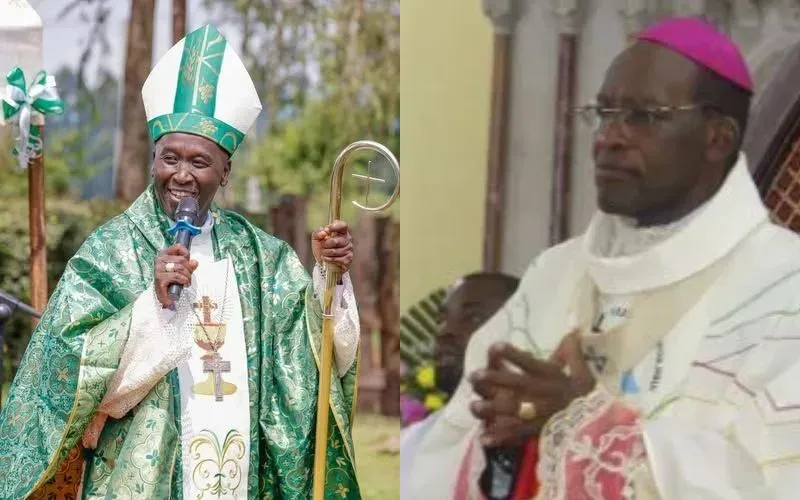
 Bishop Joseph Obanyi Sagwe of Kenya’s Catholic Diocese of Kakamega. Credit: ACI Africa