These persons, she emphasized, need to “participate in the life of the Church ... they should not feel ostracized; they should not feel as if they're outsiders.”
As part of this second proposal, the lecturer at St. Pius X Theological Major Seminary in Mozambique’s capital city, Maputo, said, Church institutions need “to help these people to understand that the Sacrament is not the passport of salvation.”
“The salvation is coming by Jesus Christ; by accepting Him,” she said, emphasizing the need for all Christians to accept the person of Jesus Christ, and have Him at the centre of their lives.
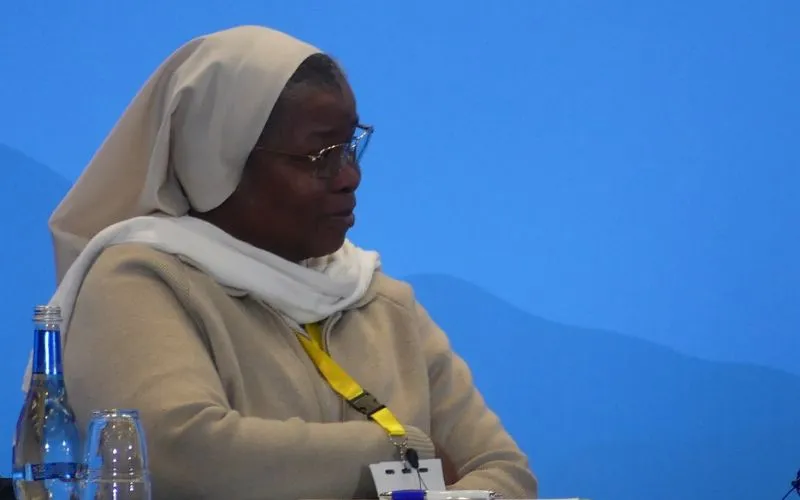
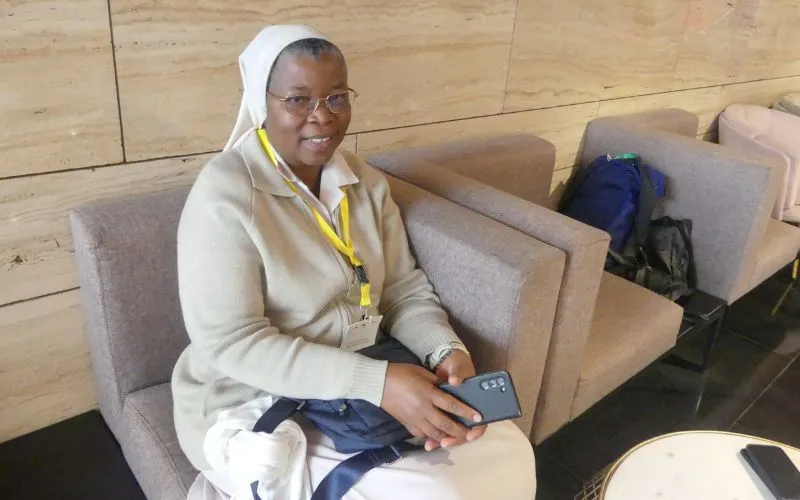
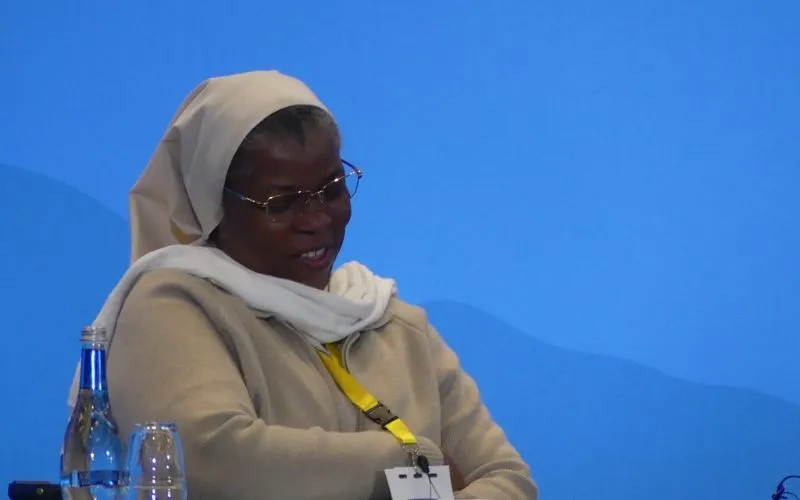
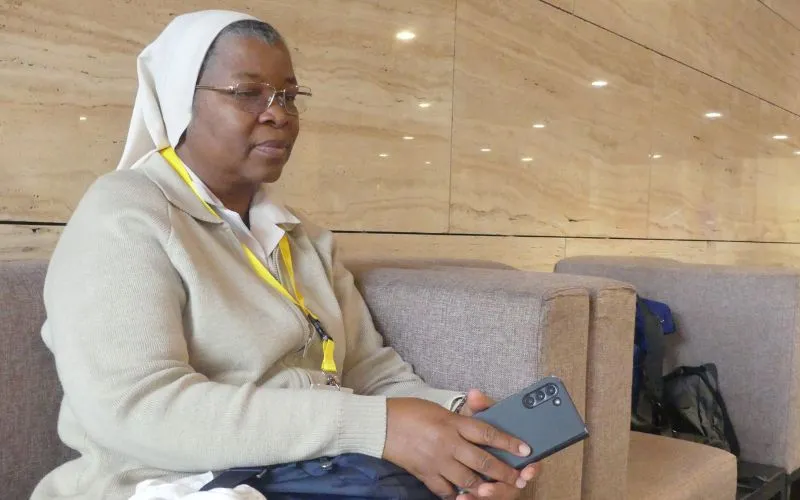 Sr. Esther Lucas Jose Maria. Credit: ACI Africa
The third proposal focuses on widows, who Sr. Esther said form a significant majority of women in situations of polygamy.
(Story continues below)
The culture of wife inheritance in many African communities has fostered polygamy, she noted, adding that the Church and her institutions should “accompany people like the widows, that they can continue their life without having the need to submit themselves to the undesirable culture of being given to other men.”
People in situations of polygamy need to be accompanied “to understand the need of conversion,” said the Mozambican theologian, who was among the delegates from Africa at the Synod on Synodality, which the late Pope Francis officially inaugurated in 2021 and later extended to 2024, highlighting the fourth proposal.
The fifth proposal, she said, is about promoting the understanding of fecundity as being wider than just having biological children.
The Church and her various institutions must help people in polygamous unions “to be open to charity, to give and to help other people,” she said, recalling her August 1 presentation to delegates of the 20th Plenary Assembly of SECAM, who included 13 Cardinals, over 100 Archbishops and Bishops, dozens of Catholic Priests, women and men Religious and representatives of SECAM partners.
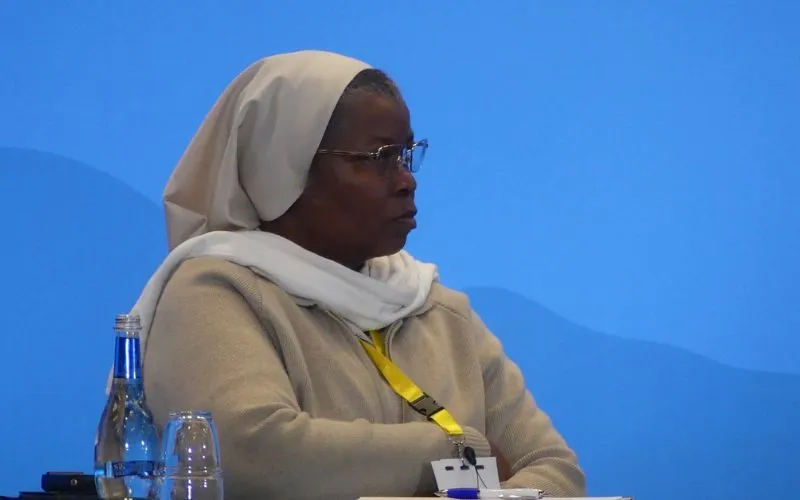 Sr. Esther Lucas Jose Maria. Credit: ACI Africa
Taking seriously family apostolate constitutes the final proposal in the document on polygamy, Sr. Esther said.
It entails catechesis for members of families in polygamous situations, paying attention to “people in the family who can't receive the Sacraments,” she said.
While “the first wife has a possibility to be baptized because she started the relationship as a monogamous union”, she said, the other wives are impeded.
The children of the other wives, she went on to clarify, “can be baptized by going through catechesis.”
Coming from polygamous families, including being a child of “other wives” should not be an impediment to Priestly and Religious Life, the Mozambican DC member said, adding that “we have Bishops and even Cardinals who are products of polygamous families.”
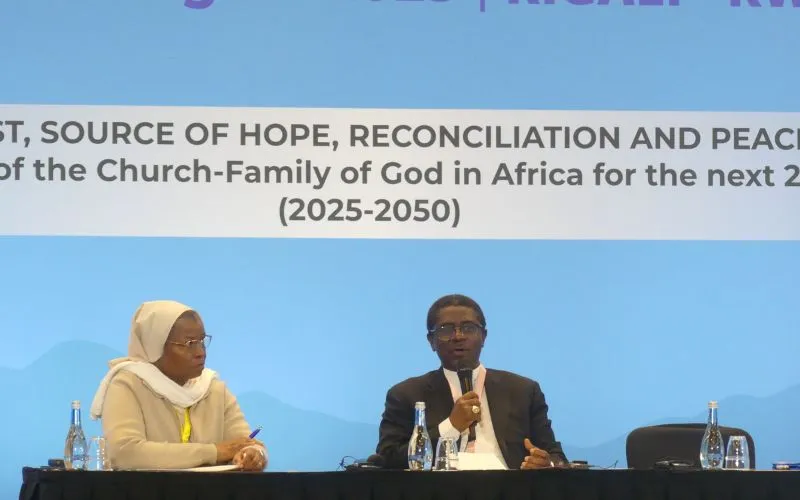 Sr. Esther Lucas Jose Maria and Archbishop Andrew Nkea Fuanya. Credit: ACI Africa
Asked if the six approaches are sufficient in resolving the challenge of polygamy to Christian living, she said, “I think that is just the beginning of our reflection ... we know that the reflection has to be continued ... and we have to open our mind to other kind of approaches.”
“It's not a final work; it is the beginning of our reflection,” she told ACI Africa, adding that any of the six approaches can also be adjusted.
She advocated for openness, saying, “We have to be open to the ways of God because there are many ways that God uses to redeem people ... we must be open to hear from them what is their problem, what pushes them to this kind of life, in order to help them to understand their own life and to see that conversion is possible.”
In his input at the Plenary Assembly, Archbishop Andrew Nkea Fuanya of Cameroon’s Bamenda Catholic Archdiocese clarified that during the deliberations at the Synod on Synodality, “polygamy was not brought up as an African concept to be approved. It was brought up as a challenge to Christian marriage in Africa.”
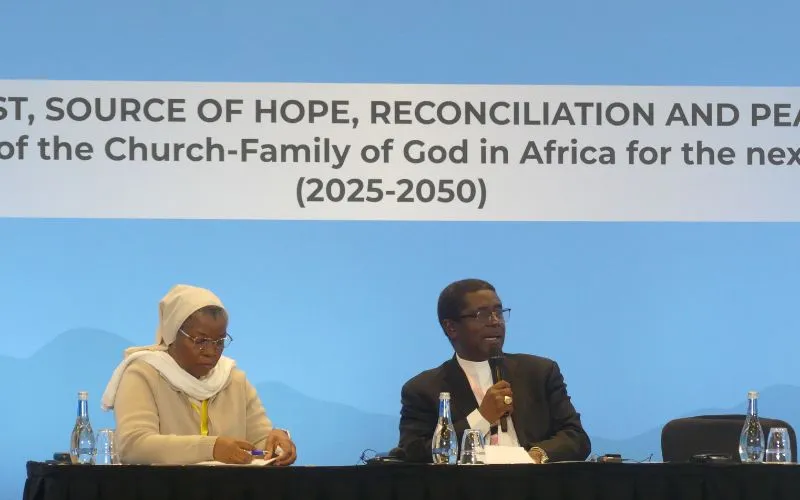 Sr. Esther Lucas Jose Maria and Archbishop Andrew Nkea Fuanya. Credit: ACI Africa
Referring to Sr. Esther’s presentation on behalf of the theologians from Africa, Archbishop Nkea said that the pastoral approach to polygamy is “one of listening, proximity, and accompaniment.”
People in polygamous situations, he said, are “encouraged to join the Christian community and hear the word of God ... (and) follow their consciences.”
Having an encounter with the person of Jesus Christ, the Cameroonian Archbishop, who participated in the Synod on Synodality said, is “something that solidifies Christian marriage and makes polygamy stand out as being not according to the mind of God from the moment that God created man and woman and made marriage as a divine institution.”
“Polygamy does not promote the dignity of man and woman as willed by God from the moment of their creation,” he emphasized.
Archbishop Nkea reiterated the communication from the SECAM Secretary General, Fr. Rafael Simbine Junior, that the draft of the document Sr. Esther presented had been reviewed by the Vatican Dicastery for the Doctrine of Faith.
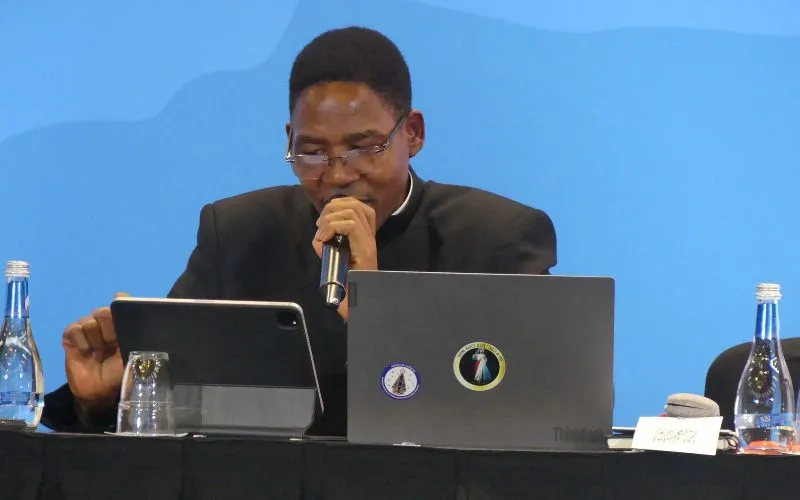 Fr. Rafael Simbine Junior. Credit: ACI Africa
In the August 2 interview, Sr. Esther spoke about what else is in the document titled, “Accompaniment of Persons in Polygamous Situations”. She said the document, which is yet to become public, contains some definitions of polygamy, outlines causes of polygamy, and how polygamy negatively impacts women “because their dignity is not taken in consideration.”
“Even when the wife asks the man to take a second wife, something is wrong in the relationship,” she said.
The document also highlights the “interdisciplinary approaches to polygamy, including anthropological, theological, moral and social approaches,” she told ACI Africa, adding that in a section of the document, polyandry is discussed.
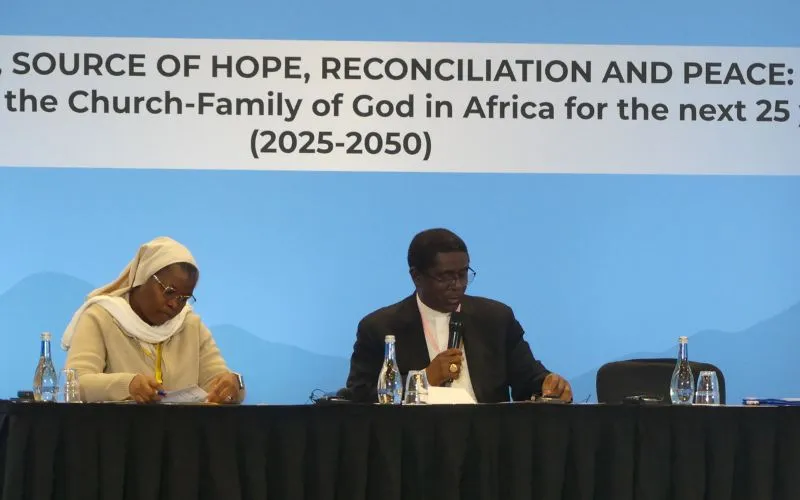 Sr. Esther Lucas Jose Maria and Archbishop Andrew Nkea Fuanya. Credit: ACI Africa
“The document says that we continue to reaffirm the doctrine of our Church. We recognize only the monogamous marriage; there is no possibility for other kinds of marriages,” Sr. Esther said.
What the document is saying is that while “knowing that marriage is monogamous in our Church, we can't close the door for those people who live in polygamous situations,” she reiterated.
Following the first session from 4-29 October 2023, Catholic Bishops in Africa were encouraged to foster “the accompaniment of people in polygamous unions coming to faith.”
ACI Africa was founded in 2019. We provide free, up-to-the-minute news affecting the Catholic Church in Africa, giving particular emphasis to the words of the Holy Father and happenings of the Holy See, to any person with access to the internet. ACI Africa is proud to offer free access to its news items to Catholic dioceses, parishes, and websites, in order to increase awareness of the activities of the universal Church and to foster a sense of Catholic thought and culture in the life of every Catholic.





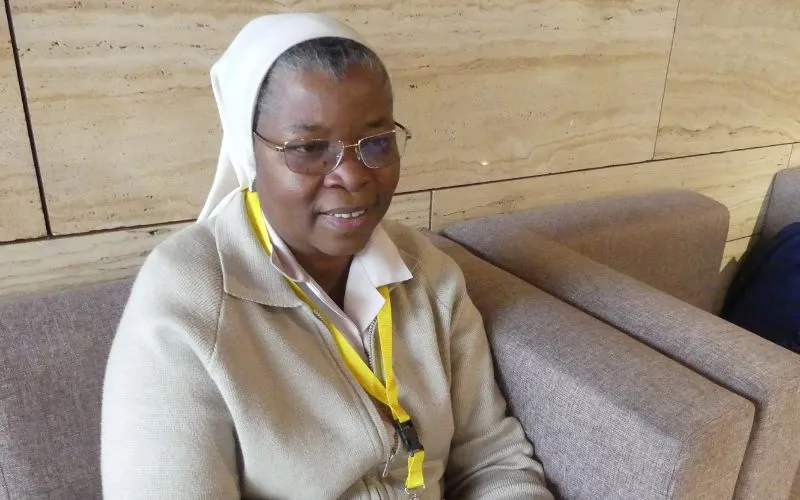 Sr. Esther Lucas Jose Maria. Credit: ACI Africa
 Sr. Esther Lucas Jose Maria. Credit: ACI Africa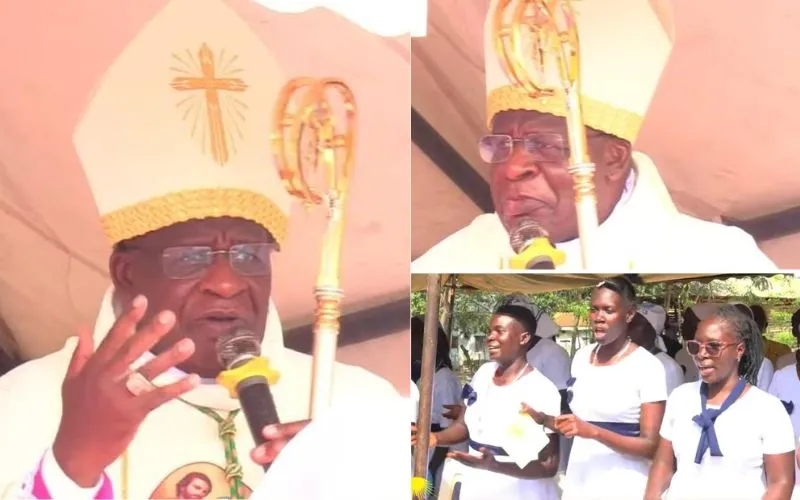
 Sr. Esther Lucas Jose Maria. Credit: ACI Africa
 Sr. Esther Lucas Jose Maria. Credit: ACI Africa