

Advertisement

Recent Deaths in “Saba saba” Anti-government Protests in Kenya about “legitimate yearning of young Kenyans”: Archbishop

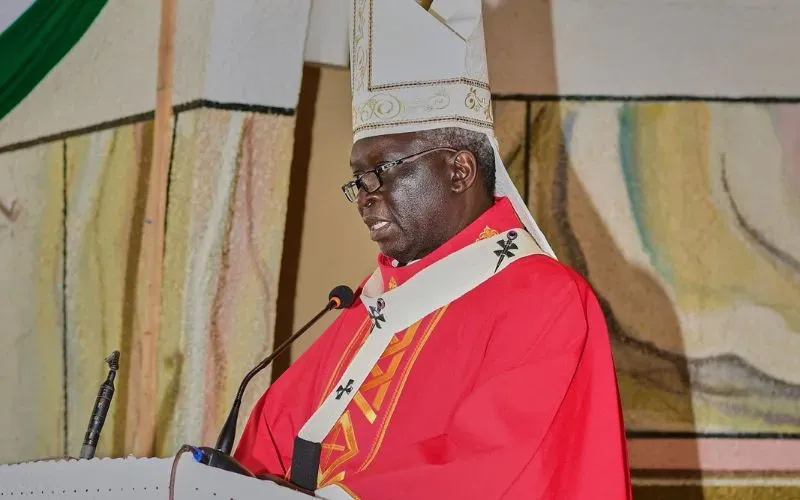
Archbishop Philip Arnold Subira Anyolo of the Catholic Archdiocese of Nairobi (ADN) in Kenya. Credit: ADN

The deaths and injuries during the July 7 (Saba Saba) anti-government protests in Kenya were about a push for accountability, economic opportunities, and the dignity of Kenyans, Archbishop Philip Subira Anyolo of the country’s Catholic Archdiocese of Nairobi (ADN) has said.

In a pastoral letter to Catholic institutions in his Metropolitan See, Archbishop Anyolo recounts “Saba saba” protests organized to mark 35th anniversary of Kenya’s multiparty democracy and calls for spiritual solidarity with affected families.

In Kenya, “Saba Saba”, a Swahili expression for “seven seven” that refers to July 7, is remembered as the day when nationwide protests against one-party dictatorship and demands for free elections were carried out.  

The day was formed on 7 July 1990, when Kenyans, including “progressive nationalist elements and a newer generation of democracy activists”, took to the streets in a move that eventually forced then-President Daniel Arap Moi to repeal Section 2A of the Constitution, making Kenya a multi-party country. 

The deadly July 7 protests, Archbishop Anyolo says, “have once again brought to light the legitimate yearning of young Kenyans for accountable governance, economic opportunity, and respect for human dignity.”
Advertisement

“When police used live ammunition and tear gas against demonstrators in Nairobi and other towns, many young people were killed and dozens injured, fuelling wider unrest over corruption and state violence, as reported by both local and international media,” Archbishop Anyolo says.

He adds, “In light of these heartbreaking events—including the tragic loss of young lives, destruction of property, and the emergence of violent goons—we as the Church stand in sorrow and solidarity with all those affected.”

“The Archdiocese of Nairobi embraces many of the localities where violence erupted,” Archbishop Anyolo says and continues, “Living at the epicentre for many of the demonstrations, we are compelled to act.”

He further says, “We mourn the untimely deaths of our youth, especially the brave members of Generation Z, who peacefully demanded justice and accountability. These painful events remind us of the urgent need to uphold human dignity and the sanctity of life.”

On July 7, protests occurred in at least 17 of the 47 Kenyan Counties, including Nairobi, Kajiado, Mombasa, Kisumu, timed to coincide with Saba Saba Day.

More in Africa

Protesters demanded government accountability amid concerns over police brutality, corruption, and economic hardship. Authorities imposed a lockdown of Nairobi, with key roads blocked, security forces deployed, and businesses forced to close.

In his pastoral letter, Archbishop Anyolo affirms that in the face of such suffering and helplessness, the Gospel calls for unceasing prayer, entrusting the victims and their families to God’s mercy, and imploring the Holy Spirit to convert hearts.

“Christ himself taught, ‘Blessed are the peacemakers, for they shall be called sons of God’ (Mt 5:9), and St. Peter urges us to ‘always be ready to give a defence to anyone who asks you for a reason for the hope that is in you, yet do it with gentleness and respect’ (1 Pt 3:15),” he says.

Archbishop Anyolo says that “Christians are summoned to respect the dignity of the human person, accompany the young in nonviolent witness, stand in solidarity with the poor and marginalized, and work for structures of justice rather than retaliation.”

He also recalls his previous call for “a marathon of rosaries” when protests erupted earlier in June  and emphasizes that the same prayers should be said to express solidarity with the victims of the Saba Saba protests.

Advertisement

The controversial murder of Albert Ojwang, a teacher and blogger, who was arrested on June 7 and confirmed dead on June 8, reportedly in police custody sparked protests after doctors contradicted Kenyan police claims that the late, 31, had succumbed to self-inflicted injuries caused by hitting his head on a wall in his cell. The autopsy revealed that Albert Ojwang’s death was likely the result of physical assault.

The late Kenyan teacher and blogger had been arrested following a complaint by Kenya’s Deputy Inspector General (DIG) of Police, Eliud Lagat, that he (Albert Ojwang) had tarnished his name in a social media post. The DIG yielded to pressure and “stepped aside” to be subjected to the Independent Policing Oversight Authority’s (IPOA) investigations.

In his pastoral letter, Archbishop Anyolo says, “When violent protests rocked our city on Tuesday, June 17, I requested all our Catholic faithful to pray the Holy Rosary devoutly and frequently.”

He continues, “I also requested our Priests to offer Holy Masses for the following intentions: respect for human life and dignity; law and order in Nairobi and across the country; comfort for those who have lost their lives, their families, and their livelihoods; and for our leaders—that God may touch their hearts and give them wisdom to realize the havoc they are causing in our country.”

“Today I renew these requests. In all our parishes and religious institutions, let the Holy Rosary be recited before daily Mass, during Eucharistic Adoration, or on its own. Our Blessed Mother has given us the Holy Rosary as a powerful instrument for peace,” Archbishop Anyolo says.

(Story continues below)

He urges the people of God “to spend time in Eucharistic Adoration, imploring the Lord’s mercy on our people and nation, especially on the youth.”

Silas Mwale Isenjia is a Kenyan journalist with a great zeal and interest for Catholic Church related communication. He holds a Bachelor’s Degree in Linguistics, Media and Communication from Moi University in Kenya. Silas has vast experience in the Media production industry. He currently works as a Journalist for ACI Africa.