

Advertisement

Angolan Catholic Bishop Urges Openness to Forgiveness, Says “reconciliation will not come from signed agreements alone”

Credit: Radio Ecclesia Ondjiva

Bishop Dionísio Hisiilenapo of the Catholic Diocese of Namibe in Angola has called upon the people of God in the Southern African nation to commit themselves to national reconciliation as an ongoing process, demonstrating openness to forgiveness.

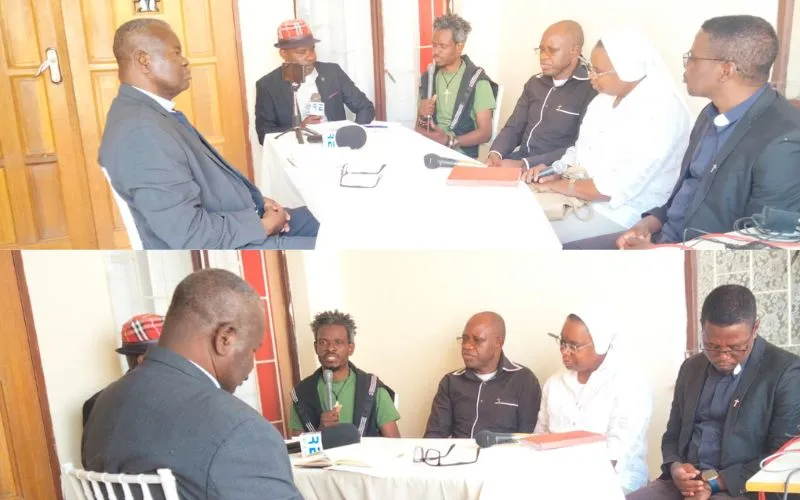
Speaking at a conference to conclude the Golden Jubilee of the creation of the Catholic Diocese of Ondjiva, Bishop Hisiilenapo emphasized that true and lasting peace goes beyond the signing of agreements and requires gestures of kindness, coherence, and hearts transformed by forgiveness.

He described reconciliation as “an unfinished process that requires daily commitment, courage to avoid reacting with hurt, and the will to walk together even when the wounds have not completely healed.”

“Reconciliation will not come from signed agreements alone. It is not just about having signed papers, but about self-giving, continuous dialogue, and allowing the Spirit to work in hearts,” the Angolan Catholic Bishop said in his August 30 presentation on the theme, “The Meaning and Importance of 50 Years of Faith and Mission of the Diocese of Ondjiva.”

He noted that “reconciliation is a path that never ends; it is not an arrival point but a journey of conversion of hearts and the daily building of peace.”
Advertisement

He emphasized that reconciliation demands “the courage to admit that wounds exist, without hiding them, and to transform them with patience and love into bridges that bring us closer.”

“More than laws and documents are needed. Reconciliation requires the practice of forgiveness, speaking to one another as brothers and sisters, and avoiding revenge. Until this happens, peace remains fragile,” Bishop Hisiilenapo said during the conference that was held at Bishop’s House in Ondjiva.

The 58-year-old Catholic Bishop warned of the danger of being trapped in the past, a practice he lamented is widespread in Angola.

“Living in the past is a risk we all run. Just listen to the debates in Parliament to perceive the level of hatred, rejection, and harsh language that keeps reviving old wounds and prevents the country from moving forward,” Bishop Hisiilenapo said.

He lamented, “The greatest obstacles to reconciliation are in the higher spheres of political life. It is the speeches of the political elites that most inflame the past and make reunion difficult.” 

More in Africa

Highlighting the role of ordinary Angolans in fostering reconciliation, the Angolan Catholic Church leader said, “The people are giving better signs of reconciliation than many leaders. In communities, people live together, help one another, and forgive each other. Those who lead the country should set the example, but in many cases, they fuel the conflict.”

He went on to defend the need for forgiveness and for letting go of past resentments for true reconciliation. He said, “The more we remain tied to hurt, the weaker we become as a people. Politics cannot feed pain; it must be an instrument of healing, reconciliation, and service to the common good.”

Bishop Hisiilenapo continued, “Reconciliation is not the task of the police, the Armed Forces, or only of leaders – it is born in the small attitudes of each person. It is souls, hearts, and consciences that promote true healing.”

He appealed for personal responsibility in fostering peace, saying, “Each of us is responsible for the path of peace. We cannot delegate to institutions what belongs to humble action, the listening voice, and forgiveness that reconciles.” 

The Local Ordinary of Namibe Diocese since his Episcopal Consecration in September 2011 reiterated that “peace in Angola will not be consolidated with silenced weapons or signed agreements, but with converted hearts, committed leadership, and citizens aware of their historical responsibility.”

Advertisement

“If we want a different country, we must begin to speak, act, and choose differently – with truth, forgiveness, and real reconciliation,” he said during the August 30 conference.

João Vissesse is an Angolan Journalist with a passion and rich experience in Catholic Church Communication and Media Apostolate.