 Credit: Radio Maria Kenya
This four-fold passion, he said, guided every decision Cardinal Lavigerie made, every mission he embraced, and every community he established.
“The Cardinal’s love for Africa was not simply the fascination of an explorer,” Fr. Lubungo said, and added, “It was the love of a missionary who saw in our continent a people beloved of God and destined to flourish in the Gospel.”
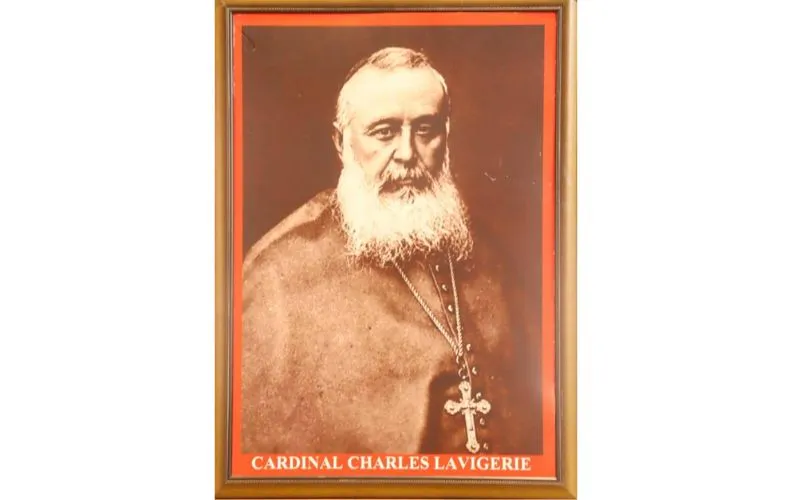
From the very beginnings of his Episcopal Ministry in Algeria and later in Tunisia, Fr. Lubungo said that Cardinal Lavigerie “made it clear that he wanted to die and be buried in African soil.”
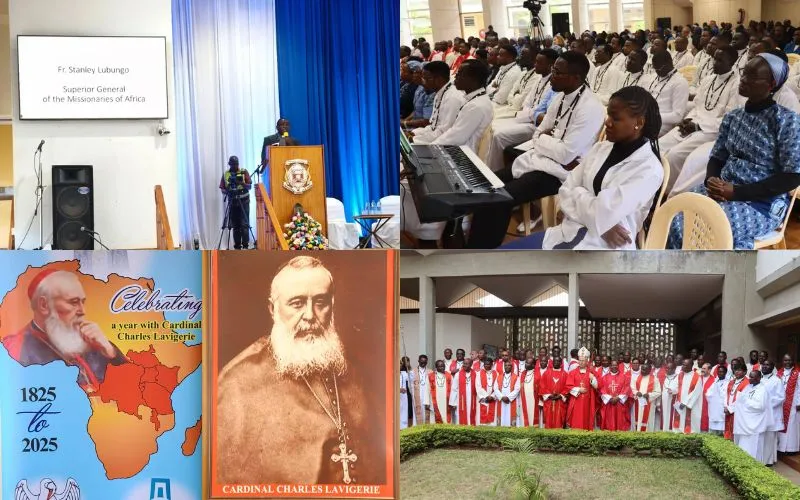
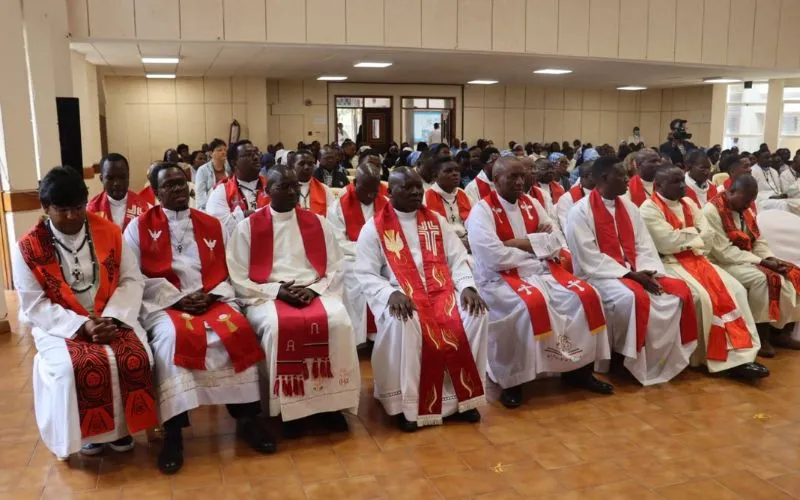 Credit: Radio Maria Kenya
(Story continues below)
“He once wrote, I love everything about this Africa,” the White Fathers’ Superior General said, and added that their founder proved it by refusing more prestigious positions in Europe to remain where his heart had found its home.
He added, “Cardinal Lavigerie’s passion was nourished by a broad and open vision of the Church and salvation. He saw God’s grace already at work in every person of goodwill. This conviction, I think, led him to adopt patient methods of evangelization, such as the long catechumenate.”
For him, Fr. Lubungo said, “mission meant respect, dialogue, and friendship—a vision that still inspires our missionary approach today. Our founder’s love for Africa was not only spiritual or historical; it was also profoundly humanitarian.”
 Credit: Missionaries of Africa
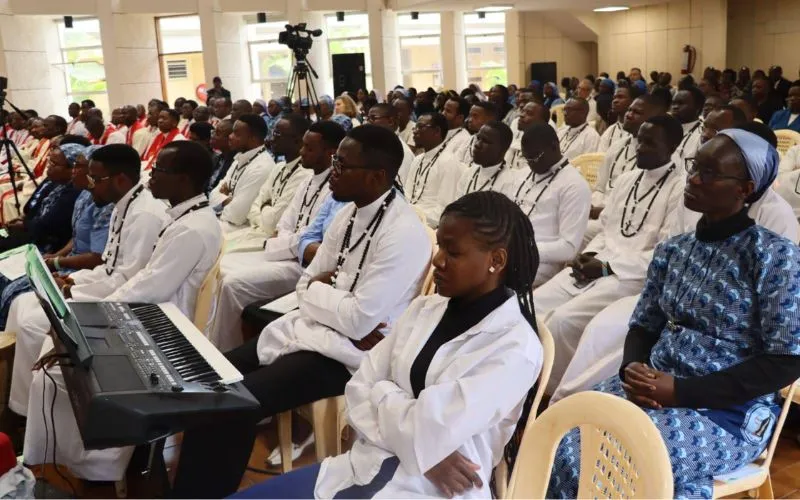
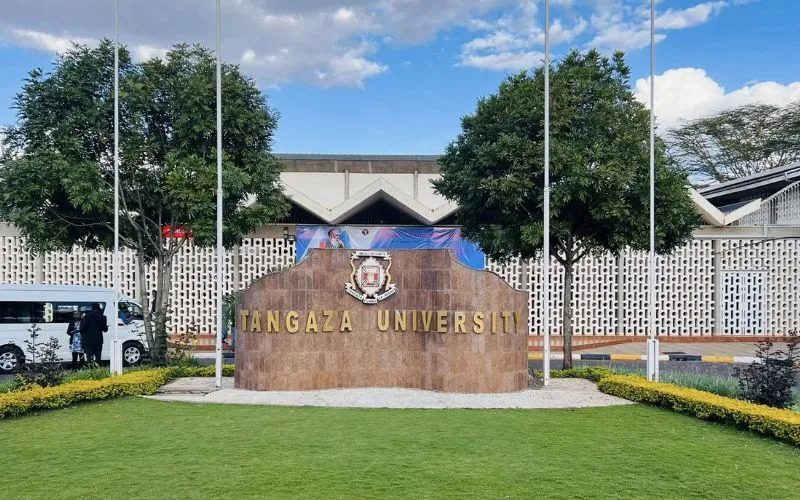
“We have an apostle in him, and our prayer is that we may be inspired by that same missionary zeal that pushed him to fight for Africa,” he said in his September 20 address at TU, the Nairobi-based Catholic institution of higher learning jointly-owned by 22 member Institutes of Consecrated Life and the Societies of Apostolic Life (ICLSAL).
Speaking at the same event, the Chancellor of TU described Cardinal Lavigerie as a pioneer, a dreamer, and a prophet who “played a leading role towards the abolition of the slave trade.”
As a pioneer, a dreamer, and a prophet in his own rank, Fr. Prof. Edward Etengu said that the Cardinal’s daring experiment has “borne unexpected fruits through his evangelization work” in Africa.
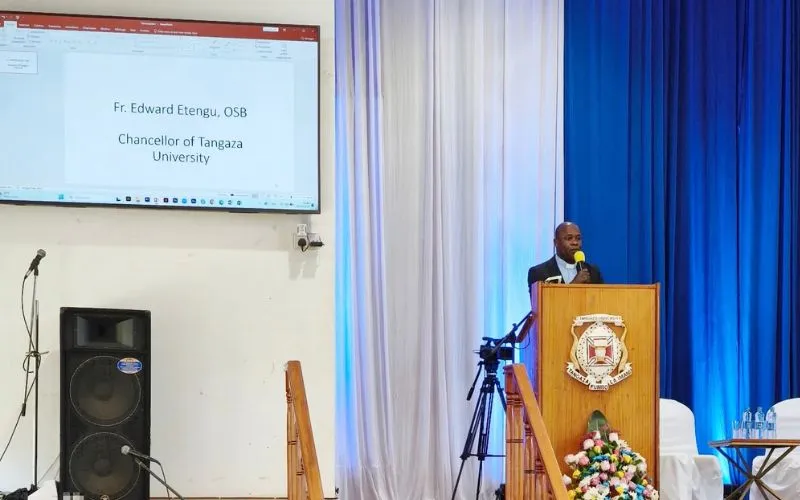 Fr. Prof. Edward Etengu. Credit: Harmony Institute
“The missions once established on distant soils, especially Africa, have grown into authentic mission stations rooted in the Catholic tradition and local culture,” Fr. Etengu said in his September 20 address.
He added, “On this note, my prayer for you as sons and daughters of Cardinal Lavigerie is that you may continue to carry on with the dream, with this vision, and that this vision may not die with you.”
On her part, Sr. Florence Mwamba Malunga, who presented on the vision of Cardinal Lavigerie said their founder “was always ahead of his own time (and) believed in the special and indispensable role that women play in the development of humanity.”
Sr. Mwamba said that the Cardinal had “progressive ideas about the role of women in society and in missionary apostolate.”
Even in old age, the MSOLA member said that the Cardinal dedicated his life to supporting the apostolate of women, whom he saw as apostles and indispensable partners of their male counterparts.
“Looking at the role of women in the Holy Gospels, starting with the Blessed Virgin Mary, our Mother, and the women in his own life, Cardinal Lavigerie believed in the important role of Christian women in spearheading transformation in society through the sharing of the Gospel of liberation,” she said.
The native of the Democratic Republic of Congo (DRC) further said that the Cardinal was already speaking of the essential role of women in the world and in the Church before the campaign for the liberation of women, as it is known in contemporary society.
Through Cardinal Lavigerie’s vision, she said, “women are transformers of society from within” for the Cardinal acknowledged that women’s crucial work greatly contributes to the progressive transformation of societies, the interior liberation of people, and the integral development of humanity.
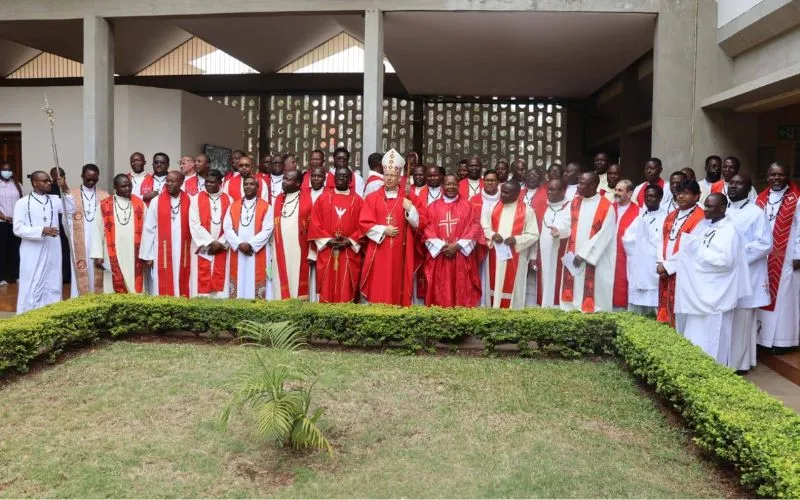 Credit: Radio Maria Kenya
“Cardinal Lavigerie’s broad-minded vision stemmed from his belief in the universal Church that embraces all people and adapts to diverse cultures and contexts,” Sr. Mwamba said, adding that one of the Cardinal’s visions was that Christian women are the best apostles to other women.
Cardinal Lavigerie also have the vision that Christian women need to engage in advocacy in favour of their sisters who need liberation, Sr. Mwamba, who previously served as leader of MSOLA members in East and Central Africa recalled.
She noted that Cardinal Lavigerie envisioned women as evangelizers and leaders within their respective families, emphasizing that a holistic approach to the promotion of women is essential, and that their active participation in public life is vital for the transformation of society.
Silas Mwale Isenjia is a Kenyan journalist with a great zeal and interest for Catholic Church related communication. He holds a Bachelor’s Degree in Linguistics, Media and Communication from Moi University in Kenya. Silas has vast experience in the Media production industry. He currently works as a Journalist for ACI Africa.




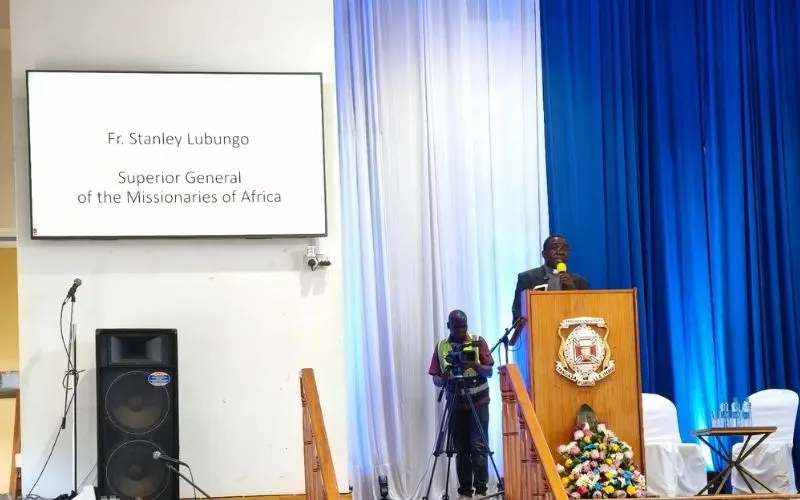 Fr. Stanley Lubungo. Credit: Harmony Institute
 Credit: Harmony Institute
 Credit: Harmony Institute