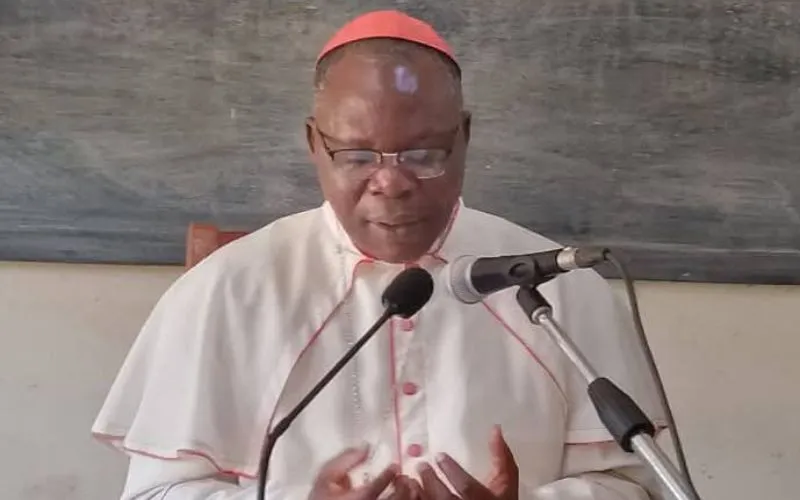
“Here we are, gathered as Catholics, Protestants, Muslims, and people of goodwill—in short, sons and daughters of the Central African Republic—meeting for this exchange of giving and receiving,” Cardinal Nzapalainga said in reference to the September 23-28 event.
Reflecting on the theme of the pastoral year, he said, “Mission is the identity of the Church, indeed, the soul of the Church.”
“Our challenge is to succeed in living together in every area of social life,” he said, adding, “for the Catholic Christian, no human being lives outside the sphere of divine grace for Christ died for all.”
Cardinal Nzapalainga acknowledged the obstacles on the path of mission, citing division, indifference, intolerance, corruption, nepotism, and many other destructive behaviors, but insisted that “whoever believes and trusts in God knows that it is possible to walk together, for nothing is impossible with God.”
He urged the assembly to listen attentively “to what the Spirit says to the Churches” and to contribute to “this silent encounter with him through the sharing that brothers and sisters will offer us.”
The Archbishop of Bangui told participants that the pastoral assembly would cover seven themes, including the diversity of ministries, the identity of the Church in Bangui, collaboration between priests and laity, interreligious dialogue with Islam, the Church’s social engagement, the role of Small Christian Communities (SCCs), and the Eucharist as the source of all ministries.
“We are all pilgrims of hope since we believe it is possible to live in harmony,” Cardinal Nzapalainga said, noting that the pastoral year theme is directly linked to the ongoing Catholic Church’s 2025 Jubilee Year.
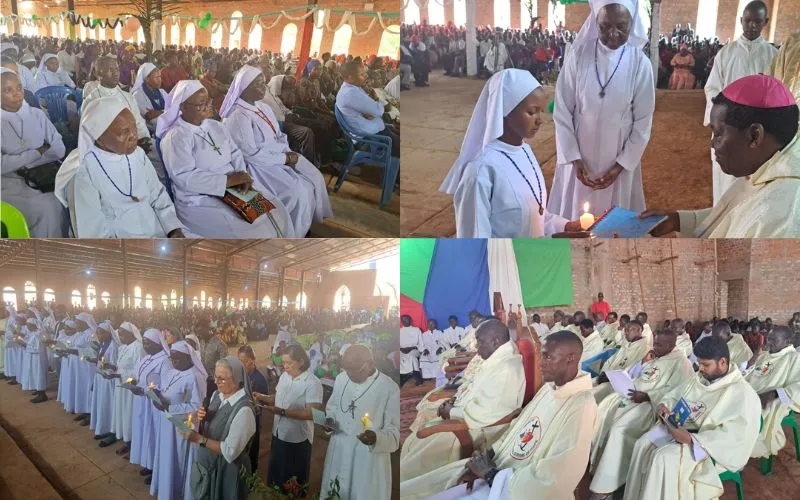
The launch of the pastoral year is bringing together delegates from the 39 Parishes of Bangui Archdiocese, apostolic action movements, as well as people of goodwill. Representatives of other religious denominations are also expected to participate.
The September 23-28 event is addressing a variety of themes, including pastoral conversion; the identity of the Church of Bangui in a changing context; co-responsibility in mission between laity and clergy; and co-responsibility in a Muslim environment.
Other topics include the mission of Christ and the Church’s social engagement in politics, the economy, and culture; the role of basic ecclesial communities as stepping stones of synodality; and prayer and the Eucharist as sources of the common journey.