Sr. Elizabeth said the ASN Heritage Room is a place where ASN members, old and new, pause and ask themselves whether they are still living according to the reasons why their Congregation was founded.
The ASN Heritage Room is also “a museum”, open to members of the public who wish to know something about the ASN Congregation, she said.
Describing the inspiration for the establishment of the ASN Heritage Room, Sr. Elizabeth said, “A time came when we started asking ourselves questions. Who are we? And who do people say that we are? Are we really what we are meant to be? That was in 1985. We also started thinking seriously about having a place that would detail our journey.”
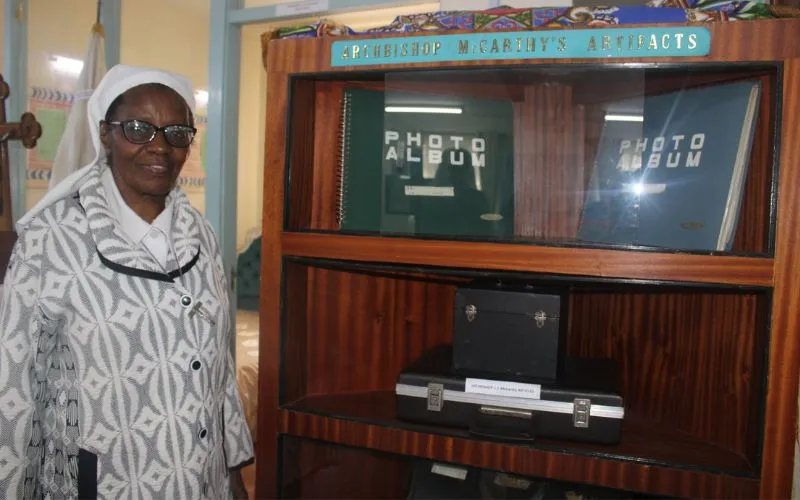 Sr. Elizabeth Njoki wa Joel posses for a photo against Archbishop McCarthy's artefacts. Credit: ACI Africa
Several meetings later, the responsibility of setting up the ASN Heritage Room was given to Sr. Elizabeth in 1979, and at the end of 1996, the now Servant of God Maurice Michael Cardinal Otunga, who had taken over as ADN Archbishop gave a nod to the start of the project.
(Story continues below)
By 2019, progress had been made in identifying and training archivists for the project. A place had also been identified for the ASN Heritage Room, and once more, Sr. Elizabeth was appointed to see to it that the initiative was realized.
Asked why the ASN Heritage Room took over 40 years to materialize, the leadership of the Congregation cites limited finances and competing priorities.
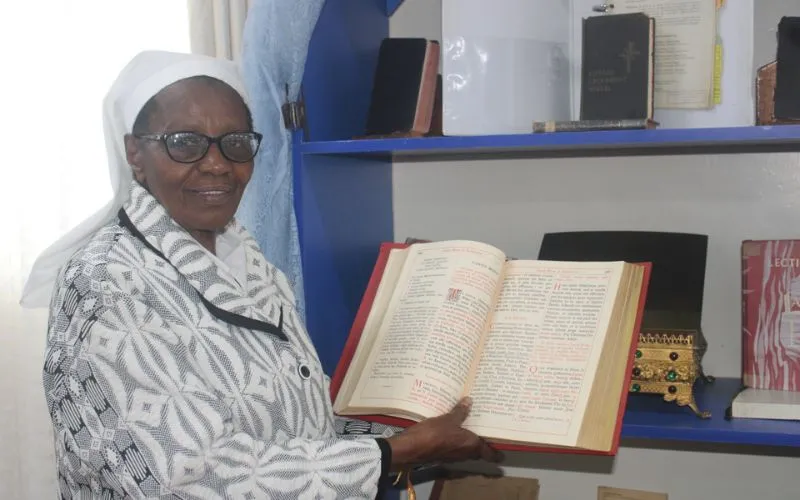
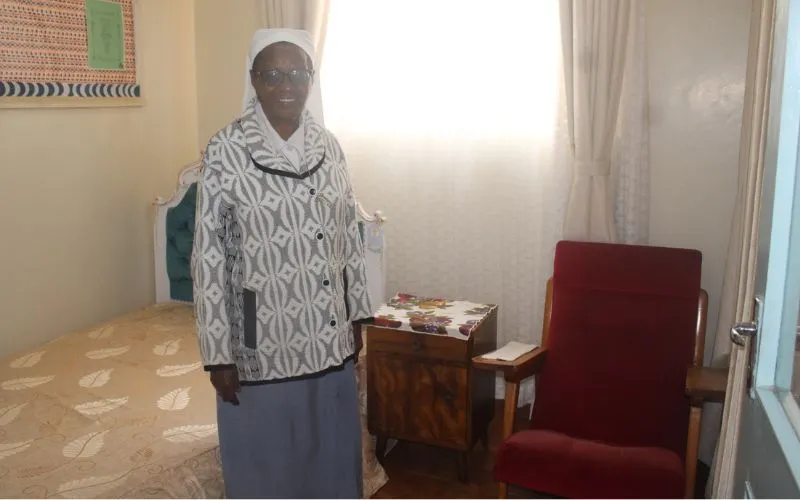 Sr. Elizabeth Njoki wa Joel poses for a photo in founder McCarthy's room. Credit: ACI Africa
“When I was appointed, I couldn’t say no,” Sr. Elizabeth told ACI Africa, and added, “I knew that I was appointed because I had been a member of the Congregation for long, and they knew I had an idea of our history. I know a lot of things that younger members of the Congregation may not know.”
To put the ASN Heritage Room together, Sr. Elizabeth dug into archives, visited libraries and museums, and rummaged through any information she could get from other Institutes of Consecrated Life and the Societies of Apostolic Life (ICLSAL) in Nairobi that had bits of history of Archbishop J.J. McCarthy.
The Irish Archbishop’s tenure in Nairobi is synonymous to the development of the Kenyan Metropolitan See both in structures and in vocations. Born in 1896 in Ireland, Archbishop J.J. McCarthy joined the Spiritans in his early years.
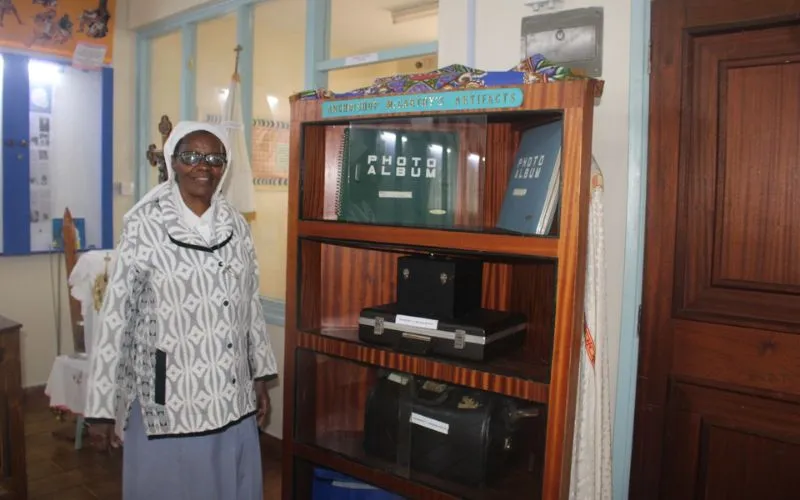 Sr. Elizabeth Njoki wa Joel posses for a photo against Archbishop McCarthy's artefacts. Credit: ACI Africa
His hard work extended to neighbouring Catholic Dioceses of Ngong and Machakos. In his tenure, Archbishop J.J. McCarthy founded the ASN Congregation as well as the Religious Order of the Brothers of St. Peter Claver. There are 39 Parishes and Catholic missions, which he founded in ADN, in the Archdiocese of Mombasa, and in the Dioceses of Ngong and Machakos.
He built over 30 schools and training Colleges and established even more Catholic mission centres in Kenya.
In her research, Sr. Elizabeth visited many of these institutions to gather information about the ASN founder.
 Credit: ACI Africa
The ASN Heritage Room opens with an entrance designed to inspire deep spiritual reflection on the origin of the name of the 70-year-old Congregation, which received its Decree of Pontifical Recognition in 1998—a status that places it under the direct authority of the Vatican rather than a Diocesan Bishop.
The room has 48 articles on the Dogma of the Assumption of Our Blessed Virgin Mary into Heaven Body and Soul. It is upon this Dogma that the Congregation was founded.
The ASN Heritage Room also features information about Archbishop J.J. McCarthy, tracing his missionary journey from Ireland to Africa by ship, his first settlement in Morogoro, Tanzania, and his eventual arrival in Nairobi.
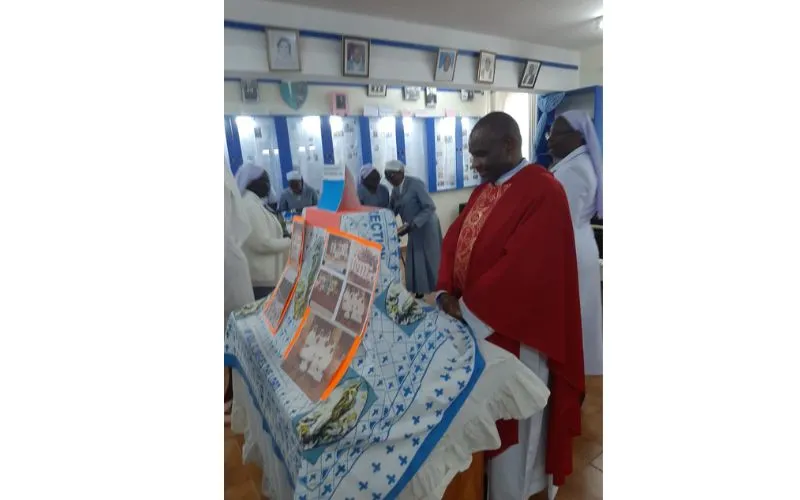 Credit: Assumption Sisters of Nairobi/Sr. Rose Catherine Wakibiru
There is a section dedicated to Archbishop J.J. McCarthy’s collaborators, including the Missionary Sisters of Our Lady of Africa (MSOLA/White Sisters), Spiritans, members of other ICLSAL who were serving in his Metropolitan See at the time, as well as Priests appointed as Chaplains of the ASN initial formation.
The room also highlights the Congregation’s first Religious Profession in 1959, when 10 African Sisters became the pioneer members of ASN.
It further details the unfortunate decline of vocations in the ASN Congregation caused by introduction of formal education requirements for those who felt called to join the Congregation.
Following Archbishop J.J. McCarthy’s retirement in 1971, Cardinal Otunga took over as ADN Local Ordinary, taking the ASN “under his wing”, and seeing the Congregation through its autonomy and humble beginning with an entirely African Council.
“Cardinal Otunga took us under his wing when our founder retired. The Cardinal really helped us. We are praying that he be declared a Saint soon,” Sr. Elizabeth told ACI Africa during the interview on October 2, the Feast of the Guardian Angels.
One section features typewritten excerpts from the diaries of Mother Winfred Moris, a British-born member of the MSOLA who served as the first Novice Directress and the first Superior General of ASN – from 1956 to 1964. The collection also includes some of the homilies of the Congregation’s founder, Archbishop J.J. McCarthy.
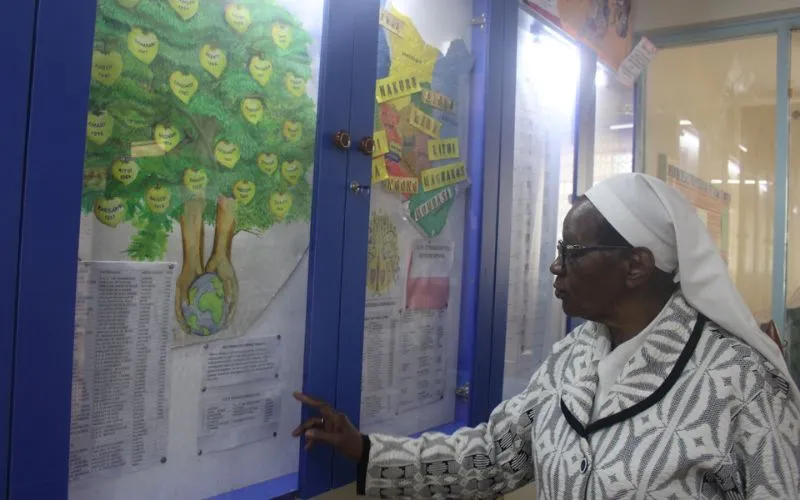
There is also information on all places where the ASN Congregation is present.
Photos of the Congregation’s pioneers and those who are still alive also decorate the walls of the ASN Heritage Room that has cabinets full of Archbishop J.J. McCarthy’s artifacts and articles.
There is also a model bedroom with the bed the Spiritan Archbishop slept in, his night table and his relaxing chair.
Outside the small bedroom stands a wooden tabernacle and the kneeler that Archbishop J.J. McCarthy used during his moments of prayer.
Her biggest challenge, Sr. Elizabeth admitted, had been to read a lot. “The challenge was to do a lot of research, prepare mountains of documents, sieve through them and arrange them chronologically. The information had to have consistency.”
“Many are the times that I had to destroy everything I arranged and start afresh,” she said.
In the interview with ACI Africa, Sr. Elizabeth cited lack of adequate space to preserve everything she has gathered about the ASN Congregation.
“This place is small. What I have put here is everything in brief. The information I have cannot fit in here. We are therefore thinking of putting everything we have about our heritage in a book,” she said.
ASN Superior General, Sr. Margaret Wahungu, has praised Sr. Elizabeth’s sacrifice and dedication in bringing the Heritage Room to life, describing the Kenyan member of the Congregation as one of its “great giants” still alive.
In her message to Sr. Elizabeth who has been working tirelessly on the project, Sr. Margaret said, “You are a great woman, and I congratulate you for what you have done. You have made our dream come true.”
She noted that Sr. Elizabeth was the right person to work on the ASN Heritage Room, saying, “Sr. Elizabeth is very passionate about this project. She was also among the first members of our Congregation, having joined in the 60s. She therefore has our history at her fingertips.”
Acknowledging the far the ASN Heritage Room had come from, Sr. Margaret told ACI Africa on Monday, October 6, “We first talked about the idea to have the room in our third chapter. We are now living in the ninth chapter.”
Sr. Margaret said that for ASN, having a Heritage Room means that the Congregation has “a history that links us down to our humble beginnings in the 50s.”
“The (ASN) Heritage Room will also help us to know about the people who are instrumental in our founding, those who sacrificed a lot. We are stepping on giant shoulders; and we have some of them still alive,” she said.
 Credit: ACI Africa
The ASN Superior General expressed optimism that their Heritage Room would inspire and deepen vocations in the Congregation, which has members serving in Kenya, Tanzania, Jamaica, and Canada.
“We have 13 aspirants who came in early this month. Whenever they join us, the young girls are always curious to know where our journey began. This Heritage Room will explain everything for the young women who come to us for “come and see” sessions,” she said.
Sr. Margaret said that it is important that Congregations archive their information to be able to acknowledge where they came from and be thankful.
“For us, we are now going to be able to know things like what attracted our pioneer members to Religious Life, and to this Congregation in particular. When we realize that we were founded to immerse ourselves among God’s people, we will be able to stick closely to that charism,” she said.
Agnes Aineah is a Kenyan journalist with a background in digital and newspaper reporting. She holds a Master of Arts in Digital Journalism from the Aga Khan University, Graduate School of Media and Communications and a Bachelor's Degree in Linguistics, Media and Communications from Kenya's Moi University. Agnes currently serves as a journalist for ACI Africa.





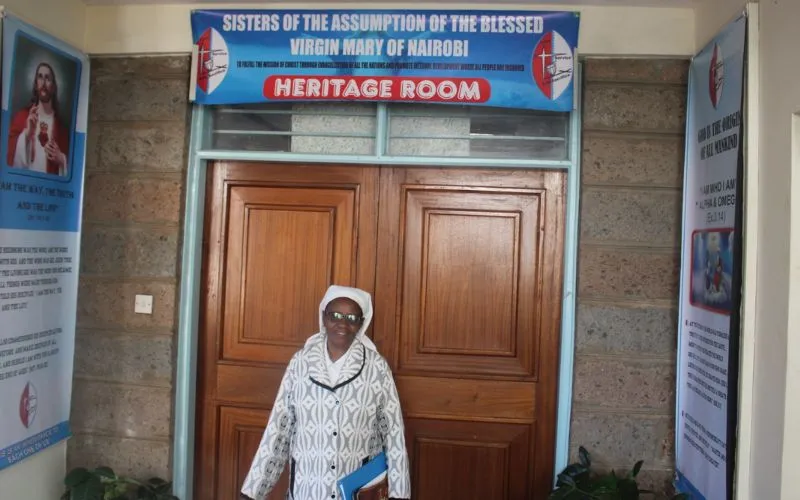 Sr. Elizabeth Njoki wa Joel poses for a photo outside the ASN Heritage Room. Credit: ACI Africa
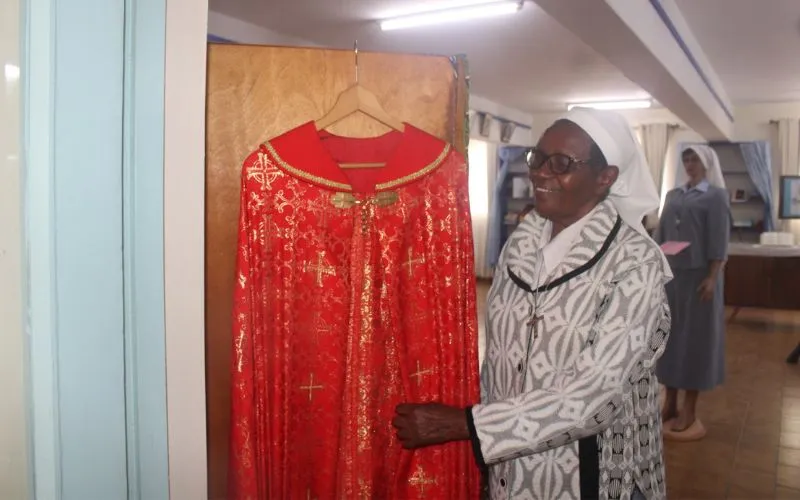 Preserved vestment of Archbishop McCarthy inside ASN's Heritage Room Credit: ACI Africa
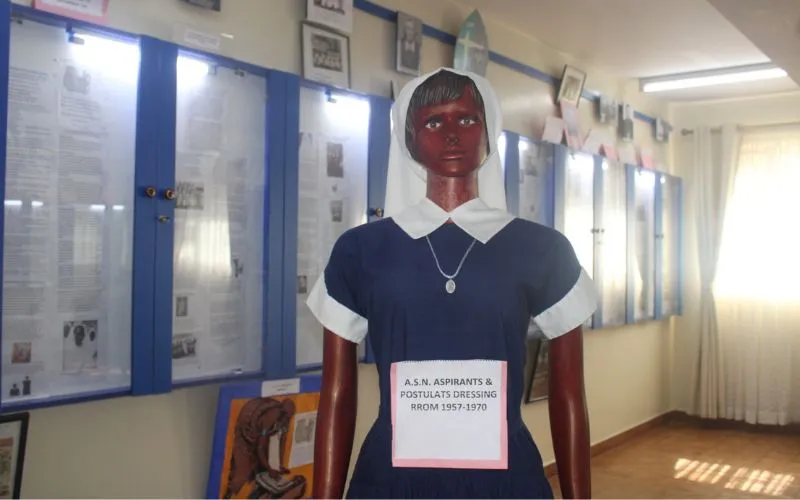 An illustration of how the ASN Postulants dressed from 1957-1972. Credit: ACI Africa
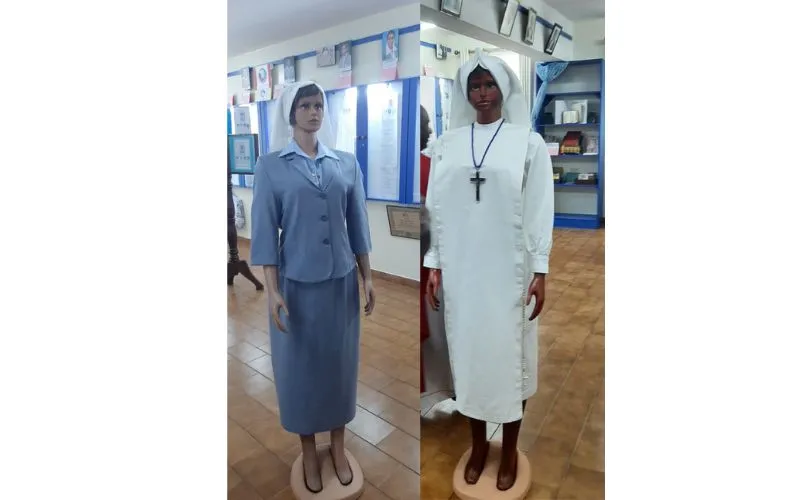 Credit: Assumption Sisters of Nairobi/Sr. Rose Catherine Wakibiru
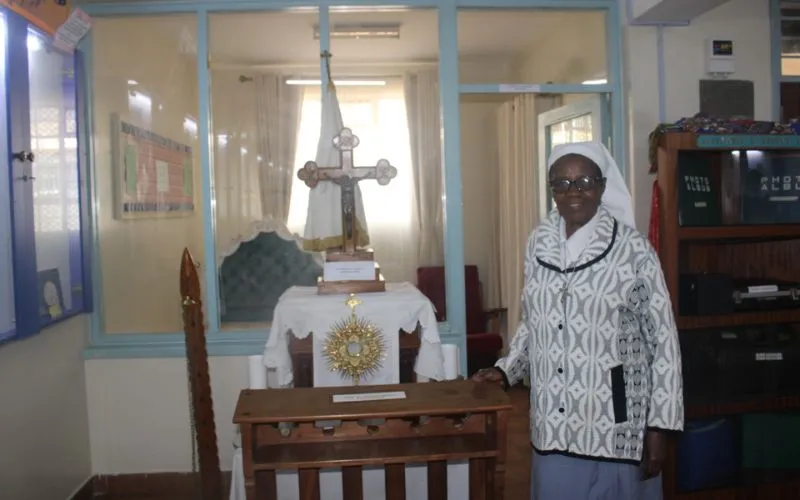 Archbishop McCarthy's kneeler. Credit: ACI Africa