


Advertisement

“Continue to be prophetic, voice of the voiceless”, Archbishop Urges Malawi’s Church Leaders in Post Election Reflection

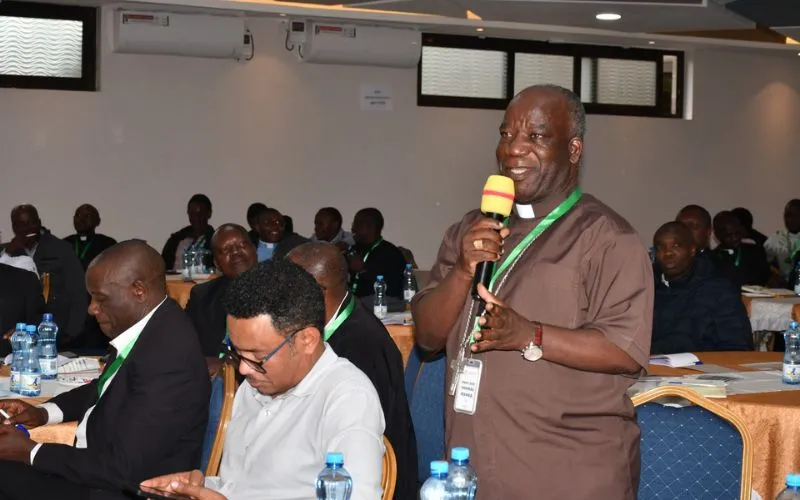
Archbishop Thomas Luke Msusa of Malawi’s Catholic Archdiocese of Blantyre. Credit: ACI Africa

The Archbishop of Malawi’s Catholic Archdiocese of Blantyre has underscored the essential role of Church leaders in guiding and forming the moral conscience of the people of God, especially during general elections.

In an interview with ACI Africa on Wednesday, October 22, Archbishop Thomas Luke Msusa emphasized the need for Church leaders to remain steadfast in their prophetic mission amid social and political challenges.

We, as Bishops, should “continue to be prophetic, to walk with the people, and to remain the voice of the voiceless.” Archbishop Msusa said, highlighting the Church leaders’ enduring duty to uphold justice and truth in society.

Reflecting on Malawi’s September 16 general elections, the member Congregation of the Missionaries of the Company of Mary (SMM/Montfort Missionaries) noted that citizens often look to the Church for moral guidance and encouragement to participate peacefully in democratic processes.

“When it comes to general elections, people expect the Bishops to speak, to guide them, to prepare them, and to encourage them to go and vote,” Archbishop Msusa said, adding that the experience of his country’s recent polls offers vital insights into how faith-based leadership can promote peace and unity during electioneering periods.

Advertisement

He went on to acknowledge the Catholic Church’s active contribution to civic education and peacebuilding, saying, “In Malawi, the Catholic Church played a significant role in preparing the people for the polls, emphasizing peace, unity, and civic responsibility.”

In the October 22 interview on the sidelines of the three-day conference on safeguarding in Seminaries, which concluded October 23 at Roussel House of Donum Dei Missionary Sisters in Karen, Nairobi, the Malawian Archbishop recalled that the Malawi Conference of Catholic Bishops (MCCB) issued a Pastoral Letter ahead of the elections during Lent and later followed it up with a statement through the Catholic Justice and Peace Commission (CJPC).

He told ACI Africa, “Through that letter, the preparation for the elections went on very well. We were, of course, very curious, seeing so many political parties preparing for the elections, hearing their rhetoric, and witnessing people’s deep desire for justice and economic improvement. We were really wondering what would happen.”

“We asked all Catholics to pray a special prayer from the 6th of July onwards. We encouraged all Dioceses, Priests, and Parishes to lead this daily prayer, urging everyone, especially those eligible to vote, to participate in the elections,” he said.

He added, “We also preached peace and unity, emphasizing that no matter the outcome, we must remain peaceful. And indeed, the elections went very well. There was tremendous tension before the elections. But I believe the prayers we said truly helped.”

More in Africa

Archbishop Msusa called upon the people of God in the member countries of the Association of Member Episcopal Conferences in Eastern Africa (AMECEA) countries preparing for general elections, to remain close to the people, offer spiritual guidance, and cultivate hope. The countries comprise of Tanzania on October 29, Uganda on 15 January 2026, and Zambia in August 2026, 

“Let us help people remain engaged and go out to vote. At the same time, let them place their hope and aspirations in God’s hands. Prayer is very powerful during such times,” he stated.

For him, “Bishops, Priests, Religious, and Laity must remain prophetic, not siding with the rich or politicians, but always standing for the poor. At the same time, we must rely not on our own strength but on God. That is our true source of power.”

During the October 22 interview with ACI Africa, Archbishop Msusa also weighed in on what some observers describe as Africa’s emerging “one-term” political trend.

He observed that the trend reflects a growing impatience among citizens regarding unfulfilled promises.

Advertisement

He said, “During campaigns, politicians make many promises. People trust that these promises will be fulfilled. But once elected, when the first year, second year, and even third year pass without results, people begin to lose faith.”

“What happened in Malawi is a good example. The outgoing government had made many promises and raised great expectations. But after five years, not much had changed,” he noted, adding that the electorate was careful not to be duped into repeating the same mistake.

Archbishop Msusa cautioned politicians against giving unrealistic and unachievable promises during election campaigns.

“If leaders give promises and fail to deliver, the people will not be patient enough to give them another term. Their promises must be realistic and achievable,” he told ACI Africa on October 22.