

Advertisement

In Christmas 2025 Message, Chad’s Catholic Bishops Call for National Reconciliation That “includes healing wounds”

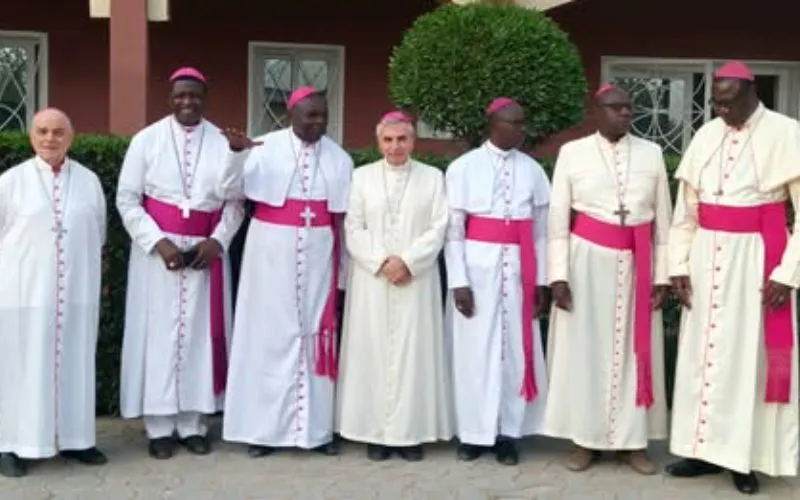
Members of the Episcopal Conference of Chad (CET). Credit: Cloche TV

Members of the Episcopal Conference of Chad (CET) have called for national reconciliation that follows the “various stages”, warning that deepening social divisions, political exclusion, and weak democratic institutions threaten cohesion in the Central African nation.

In their Christmas 2025 Message issued December 14, CET members urge Chadian politicians and religious leaders to commit themselves to healing wounds and rebuilding trust across communities.

They remind Chadians that they are “ambassadors of Christ” called to be reconciled with God and with one another. 

“Reconciliation is not limited to resolving disagreements; it also includes healing wounds. At the heart of a process of reconciliation lies mutual forgiveness, which usually requires several stages: overcoming injustices or suffering pain, listening to the other and trying to understand their point of view, offering sincere apologies, and finally committing to change to avoid repeating the same mistakes,” the Catholic Bishops say.

They note that “building trust can take time and require constant effort. Maintaining an always-open dialogue will help address potential new conflicts and strengthen relationships.”
Advertisement

“We are all called, individually and as a community, to take concrete actions that express our will to reconcile by recognizing equality in dignity. This is reflected in the search for truth, respect for differences, forgiveness given and received, justice, the cultivation of peace, and so on,” CET members say.

They add, “The time has come for citizens’ efforts to be joined with those of leaders to open the way to a bright future. Every Chadian woman and man, every human community, every religious denomination must demonstrate sincerity, justice, and self-transcendence that lead to genuine reconciliation.”

They express concern about what they describe as a “growing climate of mistrust” among Chadians, marked by ethnic, religious, and regional divisions, including persistent North–South and Muslim–Christian tensions. 

They lament recurring intercommunal conflicts and farmer–herder clashes that continue to claim lives.

They also highlight obstacles to reconciliation within religious circles, noting that insufficient collaboration among religious leaders weakens efforts toward peaceful coexistence, despite positive interreligious initiatives in some regions.

More in Africa

Against this backdrop, the Catholic Bishops remind the people of God that Christmas “is a favorable time when God visits his people. This visit brings reconciliation, for the experience of forgiveness restores communion between God and humanity, and among human beings themselves.”

In a direct appeal to the President of the Republic, the Catholic Bishops call for an amnesty for prisoners.

“This plea arises from our pastoral concern for those living in distress. You have the authority to remit sentences. Such an act would strongly promote appeasement and the building of peaceful coexistence through reconciliation among all Chadians,” CET members say.

They urge the government to promote “inclusive governance, fair justice, and respect for human dignity”, and ask traditional leaders to “intensify their role in mediating conflicts using cultural values that uphold human life.”

The Catholic Church leaders also encourage youth, civil society leaders, religious leaders, and the international community to “reject violence, fundamentalism, and selfish interests, and instead promote dialogue, competence, and the common good.”

Advertisement

They urge the people of God to renounce “revenge, forgive, for doing good is possible only through true love. Christmas offers us an opportunity to redouble our efforts to overcome what divides us and promote reconciliation.”

“May the Virgin Mary, Our Lady of Good Counsel and Hope, accompany us on this path of reconciliation,” CET members implore.

Jude Atemanke is a Cameroonian journalist with a passion for Catholic Church communication. He holds a Bachelor’s Degree in Journalism and Mass Communication from the University of Buea in Cameroon. Currently, Jude serves as a journalist for ACI Africa.