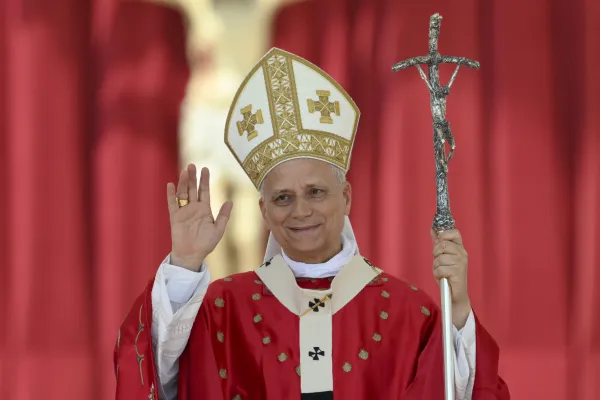
The book that has ‘shaped my spiritual life’
In a preface to “The Practice of the Presence of God,” published by the Vatican Publishing House (LEV) in Italian, the pope goes deeper into this personal experience and places the work within his own journey of faith.
“As I have had occasion to say, together with the writings of St. Augustine and other books, this is one of the texts that has most shaped my spiritual life and has formed me in what the path for knowing and loving the Lord can be,” he writes.
Leo emphasizes that the small book by Brother Lawrence places at the center not merely the experience but a true “practice” of the presence of God, lived in everyday life.
It is, he explains, a path that is “simple and arduous at the same time. Simple, because it requires nothing other than “constantly calling God to mind, with small, continual acts of praise, prayer, supplication, adoration, in every action and in every thought, with him alone as our horizon, source, and end.”
It is demanding because it requires “a journey of purification, of ascetic discipline, of renunciation and conversion of the most intimate part of ourselves — of our mind and our thoughts, even more than of our actions,” he explains.
In this context, the pontiff cites St. Paul’s exhortation to the Philippians: “Have in you the same sentiments as Christ Jesus” — to underscore that “it is not only our attitudes and behaviors that must be conformed to God, but our very sentiments, our very way of feeling.”
Making daily tasks ‘easy and light’
In the preface, Leo underscores that this spiritual path, in which the presence of God becomes “familiar and occupies our inner space,” is where “graces and spiritual riches blossom, and even daily tasks become easy and light.”
The pope situates Brother Lawrence’s message in the context of today’s world. The writings of this Carmelite, who lived with luminous faith through a century marked by conflicts and violence — “certainly no less violent than our own” — can, he affirms, “also be an inspiration and a help for the lives of us men and women of the third millennium.”