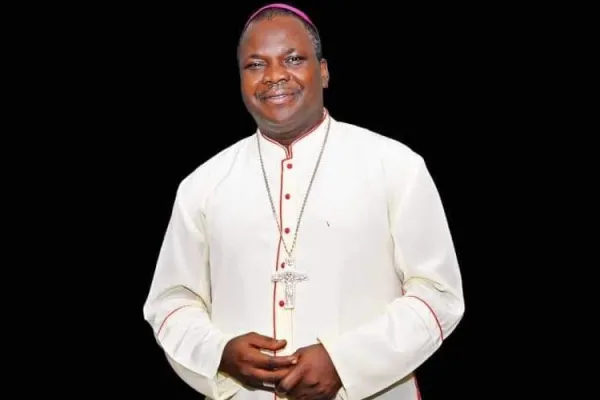
He commends “the Federal and some State governments for the impactful policies being implemented in the oil, agriculture, education, youth empowerment and finance sectors,” but insisted that such initiatives “must be constantly monitored and optimized in a transparent manner so that the intended gains can percolate down to the people in the streets in Nigeria.”
In his New Year 2026 message he shared with ACI Africa on December 28, the member of the Vatican Dicastery for Communication since his appointment in December 2021 is critical of what he describes as the persistent failures of political leadership.
“Our political leaders must acknowledge the damage caused by poor political leadership in our country,” he says, adding that whether “at the level of parties or in the area of governance their performance has been poor.”
He warns that repeated allegations of “corruption, lack of discipline and lack of transparency” involving political leaders have “largely eroded public trust and confidence in politics,” describing this erosion as “a dangerous situation.”
According to Bishop Badejo, ongoing political instability, marked by “the chaos of party defections and court cases” and “the current fiasco about the new task regime law,” reflects “general confusion inflicted on the public by selfish leaders who have scant capacity or intention to serve.”
Such an environment, he cautions, fuels social breakdown. “Such an environment creates frustrations in the public and can be an incubator for truancy, banditry and other crimes,” Bishop Badejo says, linking governance failures directly to insecurity and social unrest in Africa’s most populous nation.
He warns that the loss of trust in leadership could rebound dangerously on those in power. “The erosion of public trust through bad governance can become a self-inflicted coup if political leaders do not become more reliable and trust worthy in the eyes of the people they govern,” he cautions.
When cynicism takes hold, Bishop Badejo goes on to explain, it “provokes blanket cynicism about every plan which leaders make and every step they take and devalues any serious government impact in society.”
Looking to 2026, he calls for a moral and political conversion. “In the New Year, our leaders must have a change of heart and embrace truthfulness, transparency and honesty which build public trust and confidence and show respect for Nigerians in their decisions,” he appeals.
The Catholic Church leader who started his Episcopal Ministry in October 2007 as Coadjutor Bishop of Oyo Diocese also identifies accountability and justice as unresolved challenges, describing them as “a black spot of Nigerian political leadership that needs to be tackled through courageous leadership.”