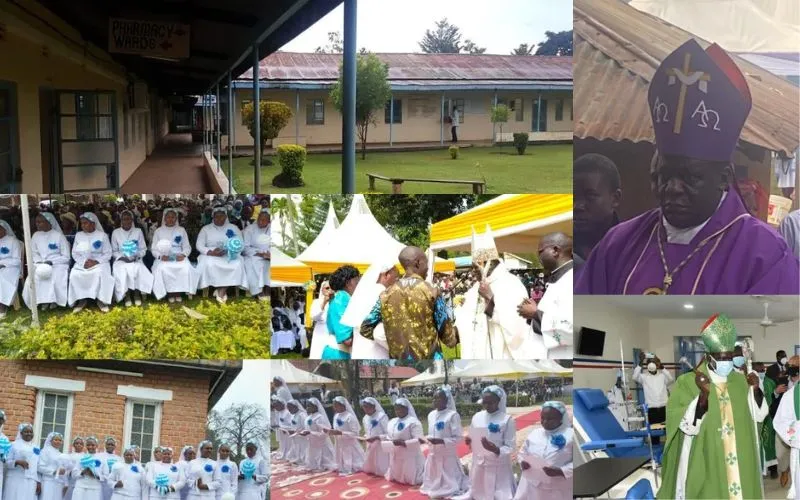
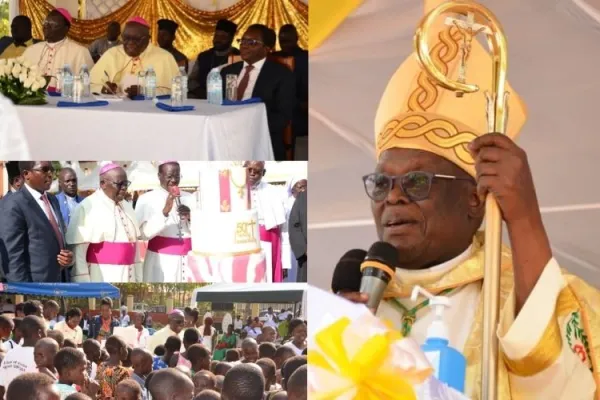
“That’s where we are,” he said, describing the current phase as one of transition and preparation. “Now the next step is trying to see when we can start, reopen the hospital,” he added.
Targeting January 2026 for reopening
While acknowledging the legal and logistical complexities involved, Bishop Obanyi expressed cautious optimism about the timeline.
“Legally speaking, even after declaring redundancy, it's a complex matter,” he said. Still, he added, “the time frame we are having is to be this January (2026).”
“By the end of January 2026, we'll have probably come up with a modality of reopening,” the native of Kenya’s Kisii Catholic Diocese told ACI Africa, signalling a renewed sense of direction after months of uncertainty.
(Story continues below)
Crisis years in the making
According to Bishop Obanyi, the closure of St. Mary’s Mumias Mission Hospital did not come out of nowhere. “Honestly, I have to tell you, when I came as Bishop in 2015, there were issues,” he said.
Reflecting on the broader picture, he said, “Somewhere, somehow, our mission hospitals, began losing their vision and identity as Catholic, and somehow, we didn’t realize.”
He described a gradual drift from mission to business, where financial inflows masked deeper problems. “When you start hearing people calling themselves CEOs, they're getting money from NHIF (National Health Insurance Fund), and you don't exactly know how, and then you see it is thriving, it gives you an impression that, ah, yeah, yeah, we are doing well, until it collapses like we've just experienced,” he said.
“You realize that it was based on a vision that is not of the Church,” Bishop Obanyi added.
Restoring Catholic identity and ethos
The crisis, the Catholic Bishop said, has prompted a rethinking of how Catholic health facilities should operate. “What I think myself now is to restore our health facilities to be the mission health facilities that they were,” he said.
At the core of this vision is service, not profit. “The vision of the Church is we don't really stress on profit, but on proper service delivery,” Bishop Obanyi said.
He lamented that the staff walkout had exposed a deeper problem. “Remember, it was because of being paid that we had people walking out leaving patients, which means they don't even have the Catholic ethos.”
He stressed the importance of vigilance when working with external experts. “People come to my office many times and tell me this is how we are going to do it,” he said, adding, “But you can look at it and say it doesn't have the Catholic ethos; it doesn't have the Catholic vision.”
Why women Religious are central to the plan
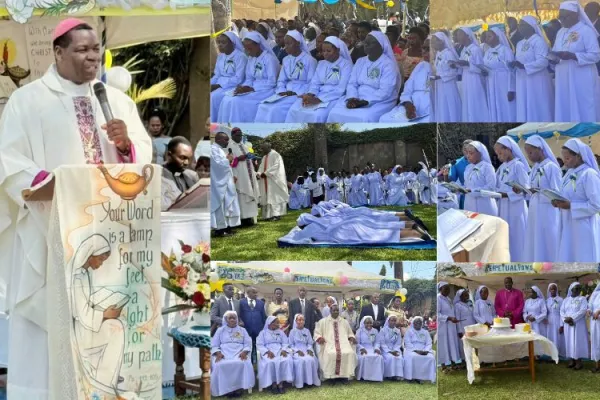
In explaining the personnel strategy for reopening St. Mary’s Mumias Mission Hospital, Bishop Obanyi said, “I intend to start with my own Sisters, Sisters of Mary of Kakamega (SMK).”
The Congregation, the Local Ordinary of Kakamega Diocese noted, has members who are “very qualified, very, very enthusiastic people.”
He revealed that discussions are already underway with the leadership of the SMK, saying, “We are already negotiating with the Superior General and the Council.”
For Bishop Obanyi, the presence of women Religious is about more than staffing. “Their presence alone is able to instil a bit of confidence,” he said, adding that over time, professional expertise can be added “without losing our own grip and identity.”
He pointed to St. Elizabeth Mukumu Mission Hospital of his Episcopal See as a model. “What has helped it is when they see Sisters, ah, that is our hospital,” he said, and added, “That identity of Catholic Nuns, vested as Nuns, yes, practically present … is an identity that has restored back” the hospital’s functioning.
External factors and the Mumias sugar factory legacy
Bishop Obanyi also linked the hospital’s struggles to the collapse of Mumias Sugar Factory, once the economic backbone of Western Kenya. “It used to be a reference place for factory workers,” he recalled. When the factory collapsed, so did a major source of patients and income, he said.
“That dependence solely on Mumias sugar factory was the real undoing of Mumias hospital,” he said, adding, “That's where the rain started beating Mumias hospital.”
While acknowledging management gaps, he downplayed them as the primary cause of St. Mary’s Mumias Mission Hospital challenges. He told ACI Africa referring to management gaps, “For me, it's neither here nor there. But it is a cross-section of gaps.”
A wake-up call and a message of hope
Looking back, Bishop Obanyi described the mission hospital closure as “a wake-up call.” “Even this period of closure helps us all to reflect,” he said, adding, “So, it's not wasted time.”
Despite political pressures and public scrutiny, the Kenyan Catholic Bishop remains hopeful. “We hope with God's grace and also the prayers of the people, we will be able to take off,” he told ACI Africa on December 29.
In a direct message to the community that has long relied on St. Mary’s Mumias Mission Hospital, Bishop Obanyi urged patience and trust. “For the people who have basically always relied on Mumias hospital, I wish to tell them, don't lose hope,” he said.
“We are going to begin and begin well,” he said, adding, “And you'll be part of that transformation of the hospital so that we grow both spiritually and physically.”
ACI Africa was founded in 2019. We provide free, up-to-the-minute news affecting the Catholic Church in Africa, giving particular emphasis to the words of the Holy Father and happenings of the Holy See, to any person with access to the internet. ACI Africa is proud to offer free access to its news items to Catholic dioceses, parishes, and websites, in order to increase awareness of the activities of the universal Church and to foster a sense of Catholic thought and culture in the life of every Catholic.