

Advertisement

“He brought Capuchin way of life to Episcopal Ministry”: Catholic Bishop in Angola on Legacy of Predecessor

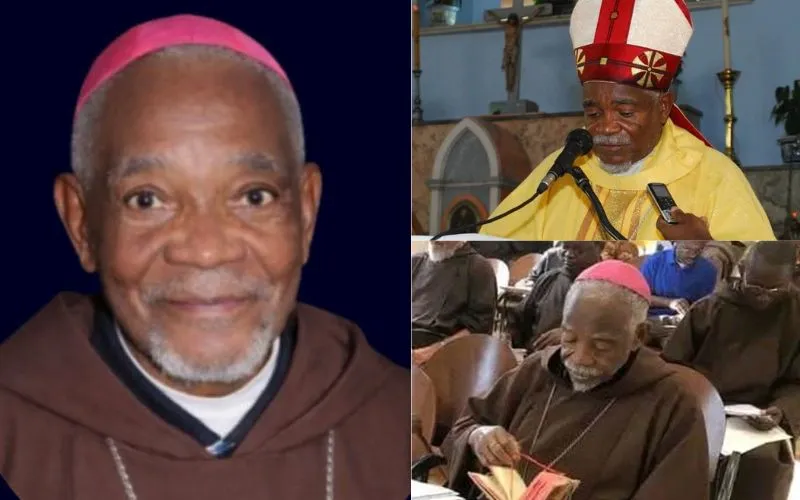
Late Bishop Serafim Shyngo-Ya-Hombo. Credit: Capuchins in Angola

The Local Ordinary of Angola’s Catholic Diocese of Mbanza Congo has remembered his predecessor, Bishop Serafim Shyngo-Ya-Hombo, who passed on aged 80 on January 1, as a pastor who faithfully carried the charism of members of the Order of Friars Minor Capuchin (OFM Cap), into his Episcopal Ministry.

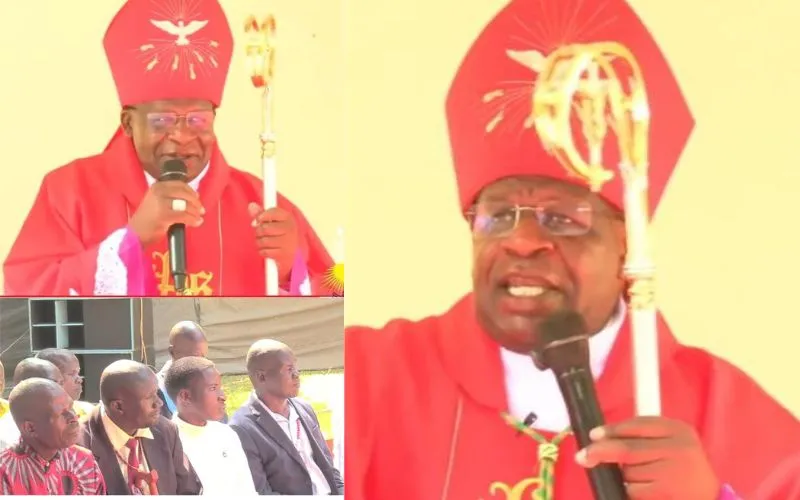
In an interview with ACI Africa, Bishop Vicente Carlos Kiaziku said the late Bishop’s enduring legacy was not material achievements, but the witness of a life entirely offered to God and to his people.

“He brought the Capuchin way of life to the Episcopal Ministry—an austere, authentic, prayerful, and deeply evangelical way of living,” Bishop Kiaziku told ACI Africa on Saturday, January 3, adding that the Angolan Capuchin who died at a hospital in the capital city of Namibia, Windhoek, “fought the good fight and remained faithful to the end.”

As a confrere in the Capuchin Order, he recalled that his predecessor lived the Franciscan spirit with consistency throughout his life. 

“Bishop Shyngo-Ya-Hombo was not just a Capuchin Bishop; he was a Bishop who was a Capuchin,” an expression he explained reflects fidelity to the spirit of St. Francis of Assisi, evangelical poverty, and closeness to the people.
Advertisement

According to the Angolan Capuchin Bishop, the late Bishop Shyngo-Ya-Hombo leaves behind a “legacy of an example of life.” 

He noted that Bishop Shyngo-Ya-Hombo did not leave behind grand monuments or material accomplishments, but something far more profound. 

“He leaves the testimony of simplicity, constant prayer, austerity, and humble service. That is his greatest legacy, and it is what must inspire the new generations,” Bishop Kiaziku said.

The Local Ordinary of Mbanza Congo highlighted Bishop Shyngo-Ya-Hombo’s missionary zeal, particularly in rural and marginalized communities. 

He recalled that the late Bishop often traveled to remote villages, sleeping on mats, enduring harsh conditions, and accepting whatever the people could offer, without complaint. 

More in Africa

“He evangelized especially in the peripheries, in places of sacrifice. He worked in silence, without drawing attention to himself, always faithful and always available,” ,” Bishop Kiaziku said. 

The Catholic Church leader also drew attention to the late Bishop’s dedication to pastoral vocations. 

As national coordinator of the Vocations Commission, Bishop Shyngo-Ya-Hombo traveled across Angola using public transport, without a car or driver, and without demanding Episcopal privileges. 

“Many were astonished to see a Bishop traveling like that. He could have demanded privileges, but he chose simplicity,” Bishop Kiaziku recalled.

The Catholic Church leader further noted that silence and discretion were hallmarks of his predecessor’s life. 

Advertisement

“He did not impose himself. He served with serenity, endured suffering, and offered everything for the Church. When he was not working, he was in prayer, with the Breviary and the Rosary in his hands,’ he said.

Born in Quibala in February 1945, the late Catholic Bishop took his vows as OFM Cap in October 1965; he was ordained a Priest in August 1971.

Since his Priestly Ordination, he served in several capacities, including Parish Priest, formator, Novice Master, and director of young professed OFM Cap. members, counsellor, and first Vice Provincial Superior in Angola. 

In March 1990, he was appointed Auxiliary Bishop of Luanda Catholic Archdiocese, and consecrated Bishop later in June.  

In 1992, he was appointed Bishop of the Diocese of Mbanza Kongo, where he exercised his pastoral ministry until he resigned in 2008 due to poor health.

(Story continues below)

When Bishop Kiaziku succeeded him in 2009, he said his predecessor shared a clear pastoral dream: to strengthen the missionary presence of the Church and expand beyond urban centers.

“At the time, there were very few diocesan Priests—only nine. His dream was to increase the number of missionaries, open new parishes, and reach the municipalities and communes,” Bishop Kiaziku recalled. 

He said he has continued to build on that vision, noting that the Diocese now has 34 Diocesan Priests and several new parishes and missions, despite challenges related to infrastructure and resources.

Bishop Kiaziku added that Bishop Shyngo-Ya-Hombo followed the growth of the Diocese with joy, offering guidance and encouragement as a trusted counselor. 

“The people were always happy to see their former Pastor return,” he said.

Reflecting on the years of war and post-war hardship in Angola, Bishop Kiaziku emphasized that his predecessor exercised his ministry under extremely difficult conditions. 

“Even amid insecurity, poverty, and lack of infrastructure, he remained close to the people and ensured the presence of the Church,” he said.

Bishop Kiaziku said the memory of Bishop Serafim Shyngo-Ya-Hombo remains alive as a spiritual and pastoral reference for the Church in Angola. 

“His greatest legacy is his example of life—simplicity, prayer, fidelity to the Mission, and love for the people of God. We pray that the Lord may receive him into His Kingdom. May his soul rest in peace,” he said.

João Vissesse is an Angolan Journalist with a passion and rich experience in Catholic Church Communication and Media Apostolate.