The Catholic Church leaders frame this reality as a violation of Catholic Social Teaching, emphasizing the preferential option for the poor and vulnerable and insisting that economic structures must serve human dignity.
They also draw attention to the devastating impact of climate change, particularly drought and environmental degradation.
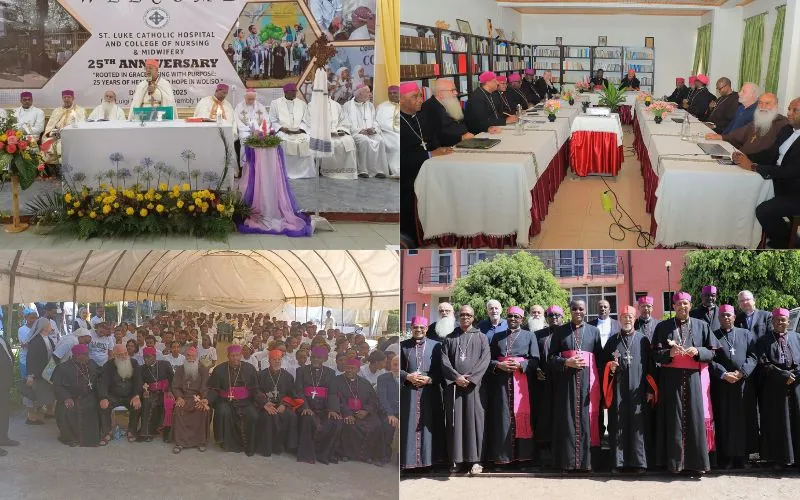
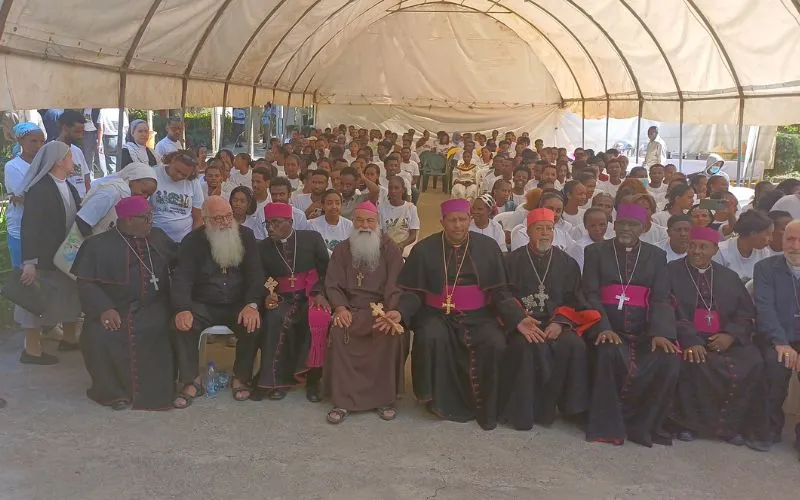 Members of the Catholic Bishops’ Conference of Ethiopia (CBCE). Credit: CBCE
“Imagine those who are dying of hunger in a country of plenty,” they write, calling for “ecological conversion” and quoting the May 2015 Encyclical Letter on care for our common home, Laudato Si’, on the need for “an overall personal conversion… which leads to heartfelt repentance and desire to change.”
Cultural fragmentation and the loss of the common good
(Story continues below)
The Catholic Bishops warn that Ethiopia’s social fabric is fraying under the weight of tribal conflicts, ethnic hatred, and ideologies of division, compounded by uncritical adoption of modern digital culture.
“The new culture shaped by digitization is doing away with our longstanding values,” they observe, warning that an “us vs. them mentality” amplified by social media is eroding the sense of the common good.
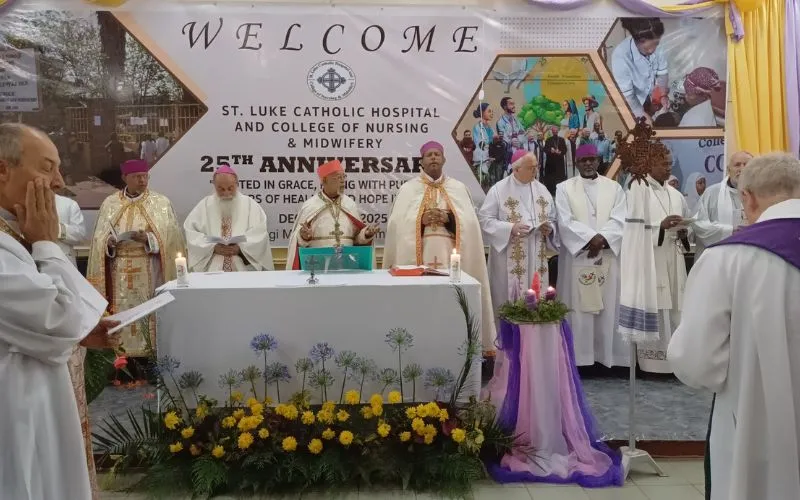 Members of the Catholic Bishops’ Conference of Ethiopia (CBCE). Credit: CBCE
“We risk losing the sense of common good – that the well-being of each is bound to the well-being of all,” they caution.
“Our land is soaked in pain”: Confronting conflict and displacement
Perhaps striking is the CBCE members’ forthright treatment of war and insecurity. “Our land is soaked in pain,” they write, pointing to civil war, ongoing local violence, and conflicts rooted in religion, ethnicity, and politics.
They insist that peace is not simply the absence of war. “The Catholic Church teaches us that peace is not merely the absence of war but the presence of justice and the flourishing of human dignity,” they say.
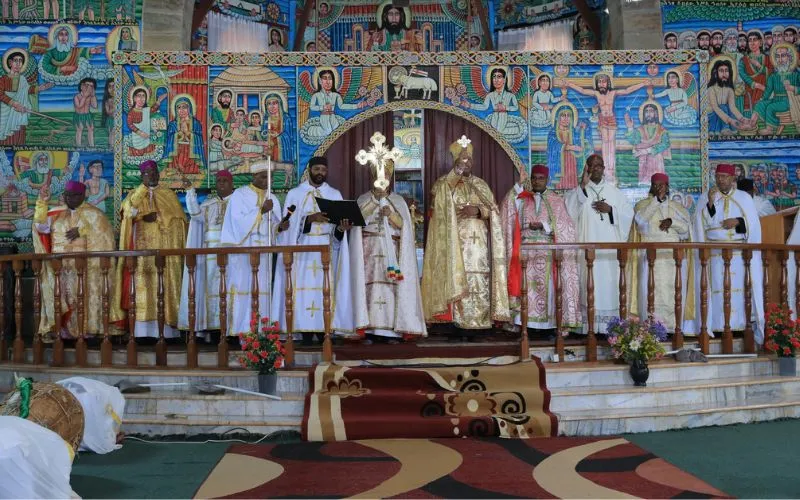 Members of the Catholic Bishops’ Conference of Ethiopia (CBCE). Credit: CBCE
They probe, “When will we have enough? When will we turn away from the cycle of violence and work towards healing and rebuilding?”
They describe the social consequences of conflict – economic collapse, cultural erosion, and widespread displacement – highlighting the plight of internally displaced persons (IDPs) and Ethiopians forced into precarious lives abroad.
“As a Church, we cannot remain silent in the face of such suffering,” they declare, and continue, “We are called to be instruments of peace, to advocate for the voiceless, and to work tirelessly for reconciliation.”
The failure to dialogue
Another wound CBCE members identified is the breakdown of communication at every level of society. “Our greatest failure may be our inability to dialogue,” they state, lamenting a “Babylon of confusion” where people no longer listen to one another.
They cite Pope Francis’ Encyclical Letter on human fraternity and social friendship, Fratelli Tutti, stressing that authentic dialogue requires “the ability to respect the other’s point of view and to admit that it may include legitimate convictions and concerns.”
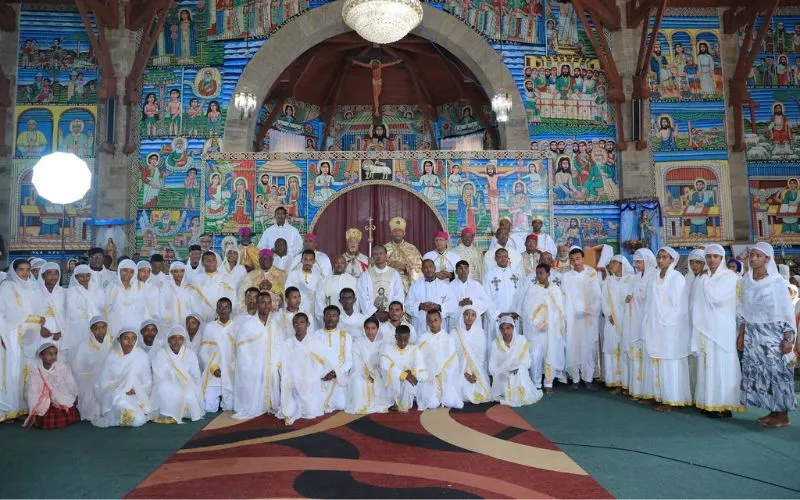 Credit: CBCE
Synodality as an act of resistance
Against this backdrop of fear, division, and violence, Ethiopia’s Catholic Bishops present synodality not as an abstract ecclesial process but as a prophetic response. “Walking together is an act of resistance against every force that divides and destroys,” they assert.
Quoting the Synod Vademecum, they remind the people of God that synodality is “the path along which the Church is called to walk… making everyone participate in a journey of common listening and discernment.”
CBCE members emphasize that this is “not merely a Church exercise; it is a prophetic witness and a concrete answer to the deep crises we face as a nation.”
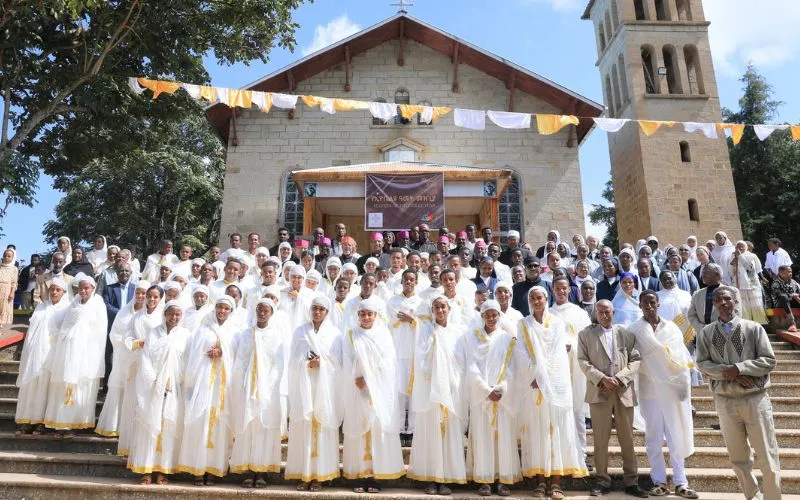 Credit: CBCE
“Do not be afraid”: A framework for courage
In one of the most pastorally detailed sections of the CBCE members’ message, the Catholic Bishops repeatedly exhort the people of God: “Do not be afraid.”
They urge Catholics to walk as “companions in the journey,” to listen deeply – especially to those on the peripheries – and to speak the truth “with courage and prudence.”
They insist that liturgical life and prayer remain central, encouraging Catholics not to fear “to keep intact your identity as Catholics as expressed in your liturgical life.”
CBCE members also call for co-responsibility in mission, urging the baptized to participate actively in evangelization and integral human development “to benefit all humanity regardless of their creed, tribe, religion or any background.”
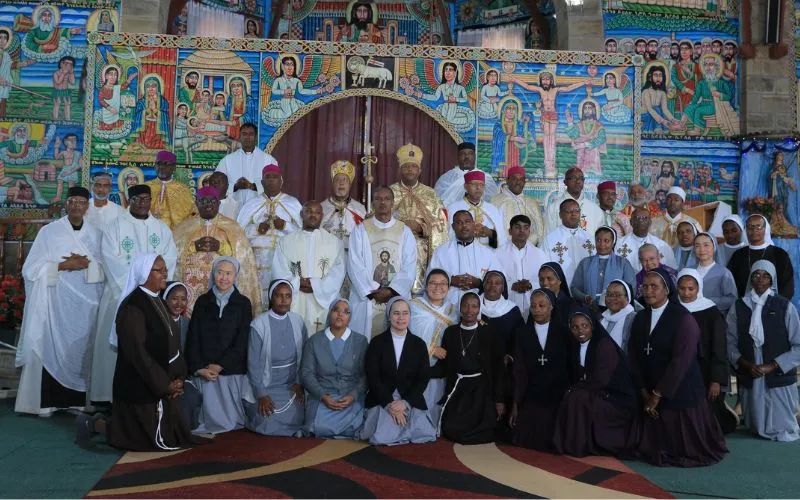 Credit: CBCE
Dialogue, ecumenism, renewed forms of authority as service, communal discernment, and formation in synodality are all framed by the same refrain: Do not be afraid.
Mary as the model of a Synodal Church
The message culminates in a Marian vision of the Church.
“We see the features of a synodal, missionary and merciful Church shining in full light in the Virgin Mary,” they write, describing her as the one who “listens, prays, meditates, dialogues, accompanies, discerns, decides and acts.”
Invoking Saint Paul VI, they recall that “the action of the Church in the world can be likened to an extension of Mary’s concern.”
A new public voice for a marginal Church
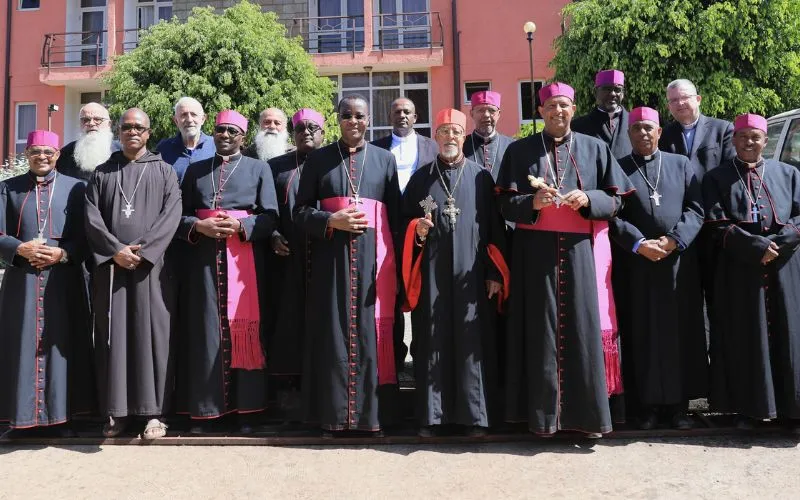 Members of the Catholic Bishops’ Conference of Ethiopia (CBCE). Credit: CBCE
By asking that their message be read aloud at parish Masses, Ethiopia’s Catholic Bishops are ensuring that its call to courage reaches even the smallest communities.
As the missionary source told ACI Africa, “Maybe this ‘don’t be afraid’ is a new start for a marginal church.”
In a nation wounded by fear, CBCE members are choosing to speak – with clarity, faith, and synodal conviction – proclaiming once more the angel’s words: “Do not be afraid; for behold, I bring you good news of great joy.”
ACI Africa was founded in 2019. We provide free, up-to-the-minute news affecting the Catholic Church in Africa, giving particular emphasis to the words of the Holy Father and happenings of the Holy See, to any person with access to the internet. ACI Africa is proud to offer free access to its news items to Catholic dioceses, parishes, and websites, in order to increase awareness of the activities of the universal Church and to foster a sense of Catholic thought and culture in the life of every Catholic.




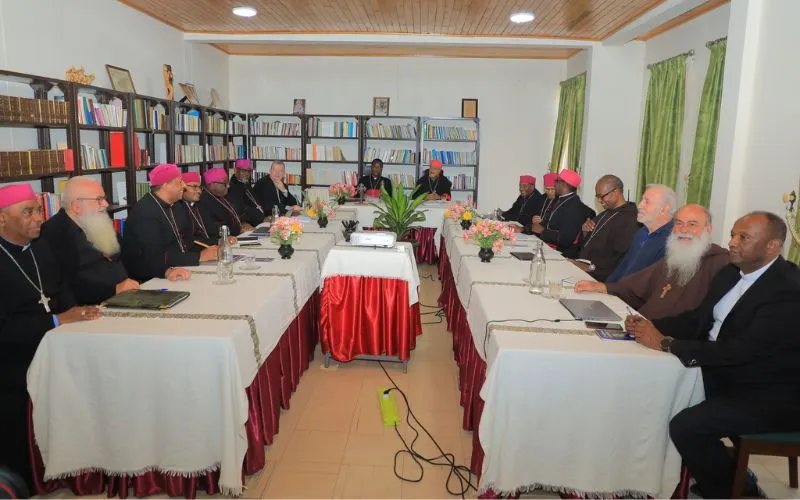 Members of the Catholic Bishops’ Conference of Ethiopia (CBCE). Credit: CBCE
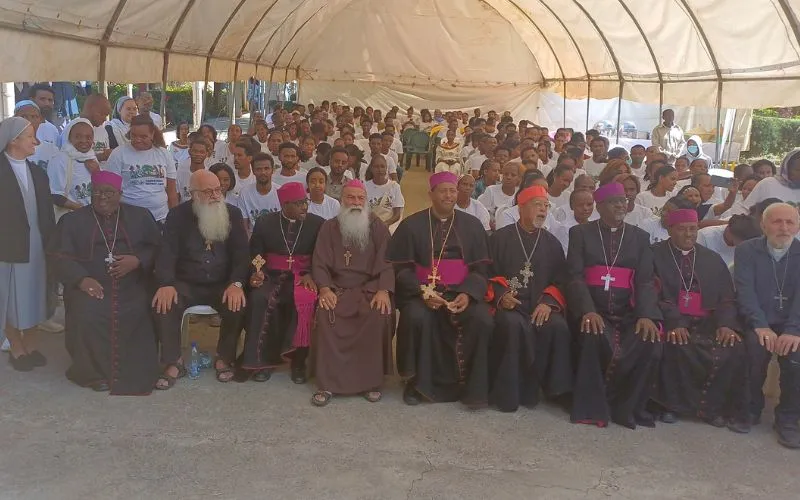 Members of the Catholic Bishops’ Conference of Ethiopia (CBCE). Credit: CBCE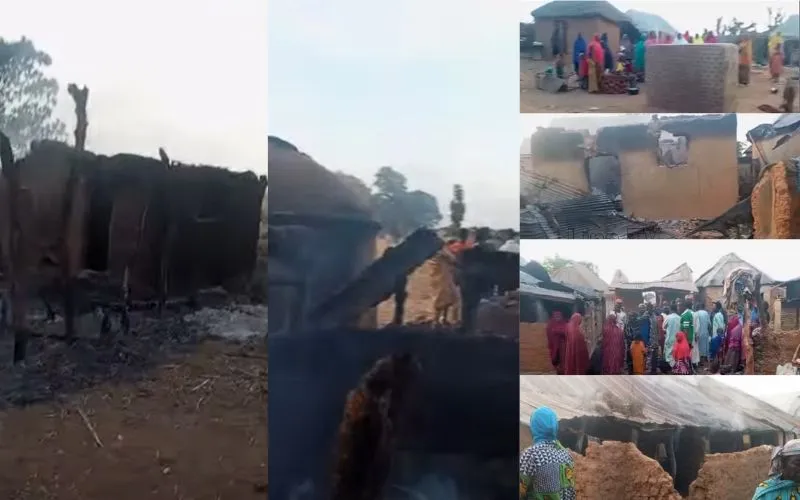
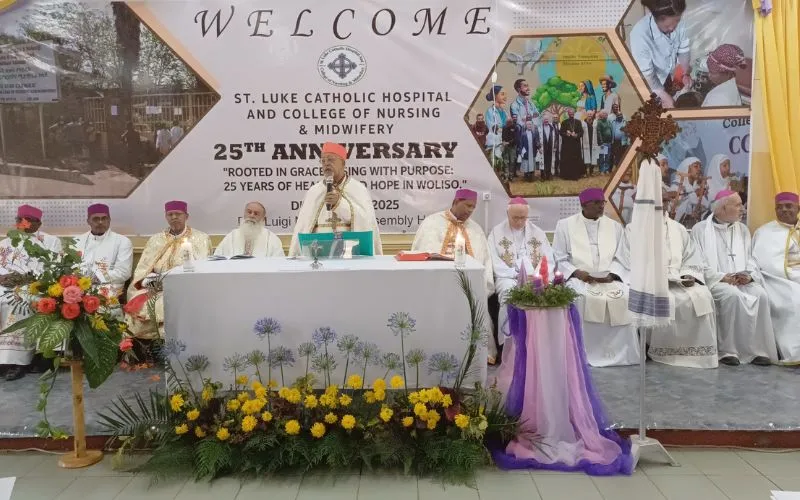 Members of the Catholic Bishops’ Conference of Ethiopia (CBCE). Credit: CBCE