“They were terrible days”: The Church under Apartheid
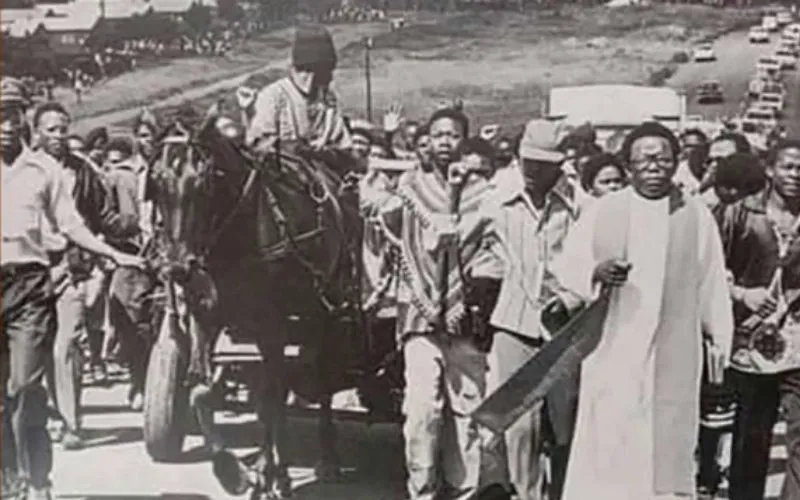
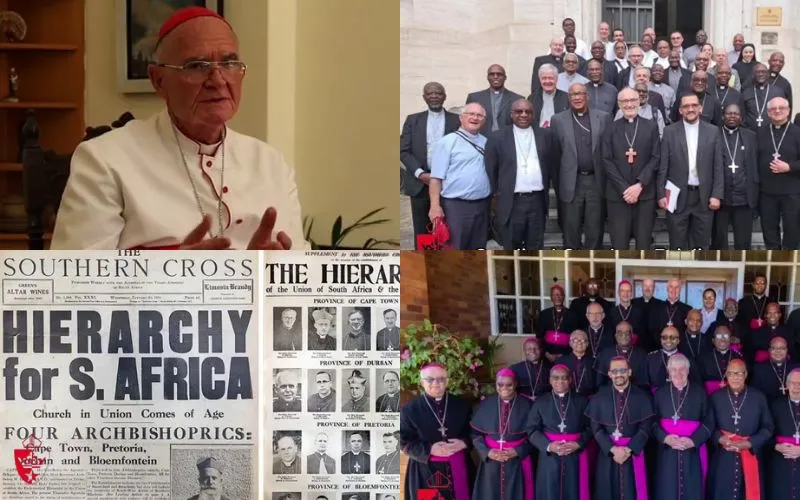
The establishment of the hierarchy in 1951 unfolded against the dark backdrop of Apartheid, which had intensified following the 1948 election. In the interview published on YouTube on January 4, Cardinal Brislin did not shy away from naming the pain of that era.
“South Africa, of course, you must not forget, was very dominated by Apartheid, and our concerns around Apartheid at the time,” he said.
 Credit: SACBC
The Church found itself confronting a system “of discrimination, of exclusion, of oppression,” while also facing direct attacks on its mission, he recalled.
(Story continues below)
“Think back to 1951,” the South African Cardinal reflected, adding that “this was a time when Apartheid was at its height… and the Church had to deal primarily with that system.”
Catholic education, a cornerstone of the Church’s evangelizing mission, came under severe threat, he said, and went on to recall, “There was this concerted attack on Catholic education, for example, the closing of so many of our Catholic schools, although we tried to hold out.”
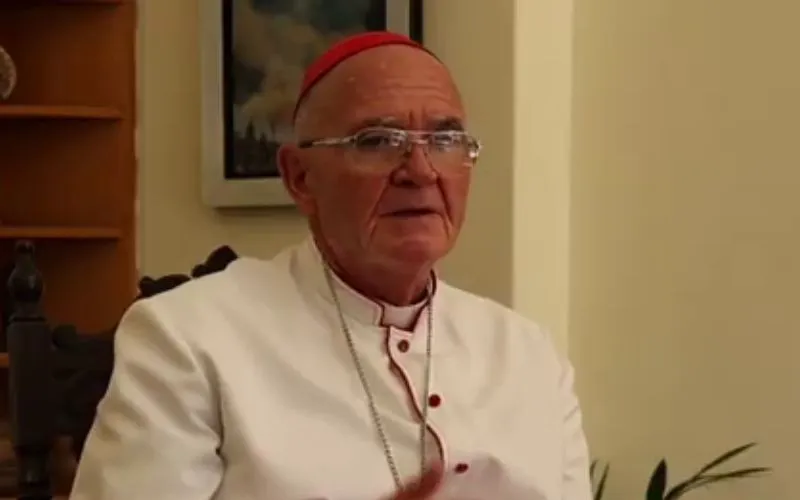 Stephen Cardinal Brislin. Credit: SACBC
More deeply still, he said, “the attack on the very principles of our Christian belief” cut to the heart of the Church’s witness. “They were terrible days,” the Local Ordinary of Johannesburg Archdiocese following his transfer from the Catholic Archdiocese of Cape Town in October 2024 emphasized.
Yet, those years also forged a Church that learned to speak prophetically, to suffer with its people, and to hold fast to the Gospel amid injustice—lessons that continue to shape its identity today, Cardinal Brislin said.
75 years on: A Church on a synodal journey
From those painful beginnings to the present moment, the Church in Southern Africa now stands within a synodal journey, guided by a common pastoral plan, he said.
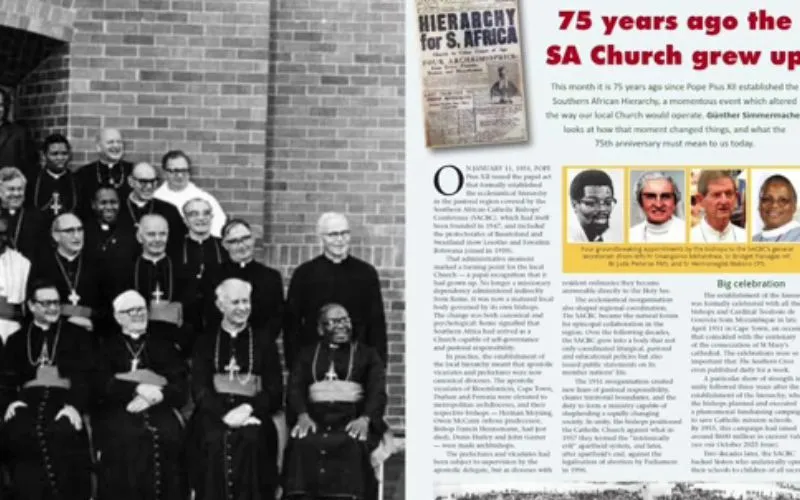 Credit: SACBC
Cardinal Brislin acknowledged that implementing such a plan is not a simple task. “In a sense, it’s a program that can never fully be implemented. It’s an ongoing process,” he said.
Each Diocese, he explained, discerns its priorities according to local realities. “Certain Dioceses will find certain aspects more urgent and more appropriate for their particular situations,” he noted, highlighting the plan’s necessary flexibility.
For the SACBC President, synodality is not a trend but a way of being Church. “It is an ongoing process, and it’s something that we’re very proud to be part of as the Church of Southern Africa,” he said.
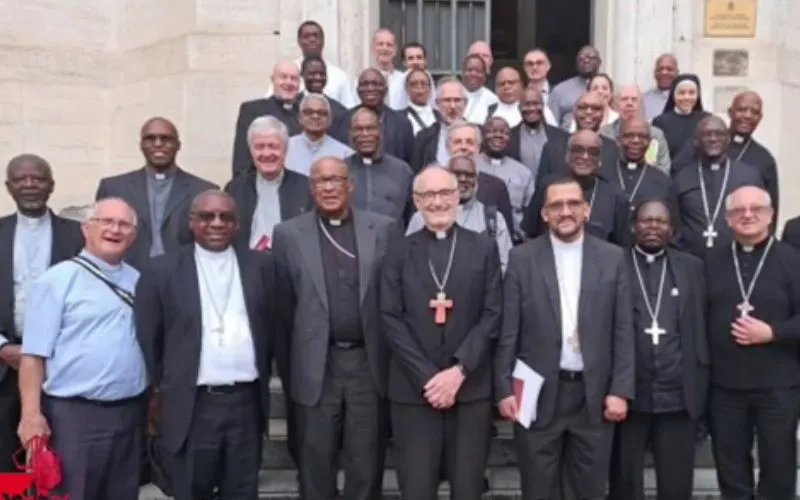 Credit: SACBC
Embracing uncertainty with faith, the Catholic Church leader who was among the 21 Cardinals that the late Pope Francis named on 9 July 2023 and created Cardinals during the 30 September 2023 Consistory added, “It is a journey of discovery. We don’t know what the end outcome will be.”
What is certain, however, is the spirit in which the journey is undertaken. “Together we go forward, each with our own particular roles and responsibilities,” Cardinal Brislin said.
New Year message: Choosing hope over despair
As 2026 begins, Cardinal Brislin’s message to the people of God is hopeful. “We have so much goodness in the world. There are so many signs of God’s presence. There’s so much beauty in the world,” he said.
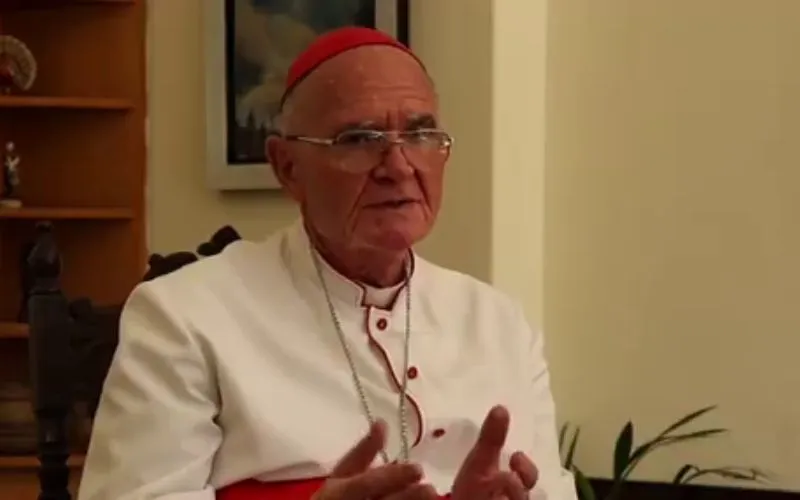 Stephen Cardinal Brislin. Credit: SACBC
While acknowledging the reality of suffering and injustice, Cardinal Brislin cautioned believers against being overwhelmed by negativity. “Let us not become negative and go into despondency and despair because of the bad things that happen,” he cautioned, adding, “Of course, the bad things are terrible. We’ve got to counteract them.”
Hope, for the Cardinal, who started his Episcopal Ministry in January 2007 as Bishop of South Africa’s Kroonstad Catholic Diocese is not naïve optimism but a theological virtue rooted in faith in Christ.
“We as Christians, we believe in salvation. We believe that Christ is with us at all times,” he said, encouraging the people of God to “keep that hope alive in our hearts” and to offer it to a world that often “doesn’t see a future… a light at the end of the tunnel.”
 Credit: SACBC
Celebrating the Jubilee: Gratitude and blessing
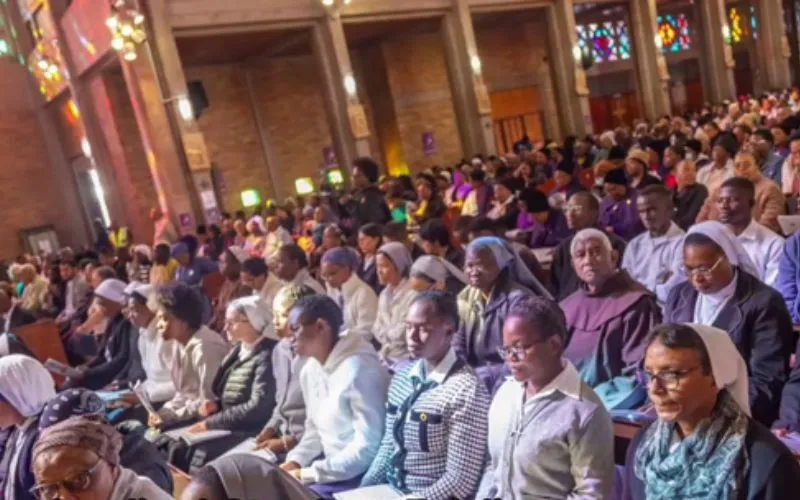
How, then, should the Church celebrate 75 years of the hierarchy? Cardinal Brislin envisages a year-long celebration, beginning with an opening Mass and continuing in diverse ways across Dioceses and Parishes.
Yet the heart of the jubilee lies closer to home, he said, and continued, “I think it’s very much in the odysseys of the parishioners to say, how can we make this a very, very special year.”
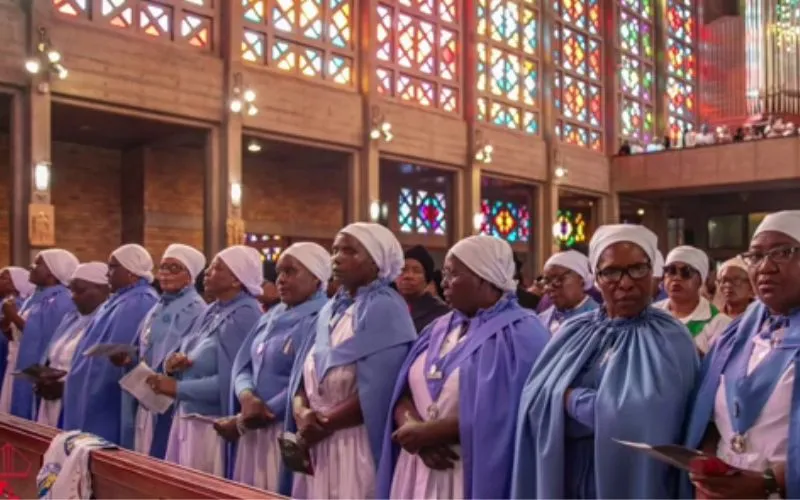
At its core, the celebration is Eucharistic and prayerful: “To give thanks to God, primarily to give thanks to God, and then to also ask for God’s blessing for the future.”
 Credit: SACBC
In communion with Rome: Pope Leo XIV’s First Consistory
The jubilee year also coincides with a significant moment in the life of the universal Church: Pope Leo XIV’s first consistory, to which Cardinal Brislin is traveling. He described the gathering planned for January 7-8 as “a very, very important step” by the new Pope.
Reflecting on the 2025 Conclave, Cardinal Brislin noted a challenge that the College of Cardinals faced. “A lot of the Cardinals didn’t know each other,” he recalled, explaining that circumstances had limited opportunities for encounter.
One of the requests made before the election of Pope Leo XIV, he revealed, was that the new Pope ensure regular meetings of the Cardinals, “who are supposed to be the closest advisors of the Holy Father.”
 Credit: SACBC
Among the topics to be discussed at the planned consistory is the liturgy, especially the celebration of Holy Mass. For Cardinal Brislin, this focus is profoundly significant. “The Mass is the source and summit, the Eucharist is the source and the summit of Christian life,” he said.
He expressed hope that discussions would renew a shared commitment to celebrating the liturgy “with dignity, with reverence, but also with joy, and with happiness, and with praise and worship of God.”
Faith as blessing and responsibility
 Stephen Cardinal Brislin. Credit: SACBC
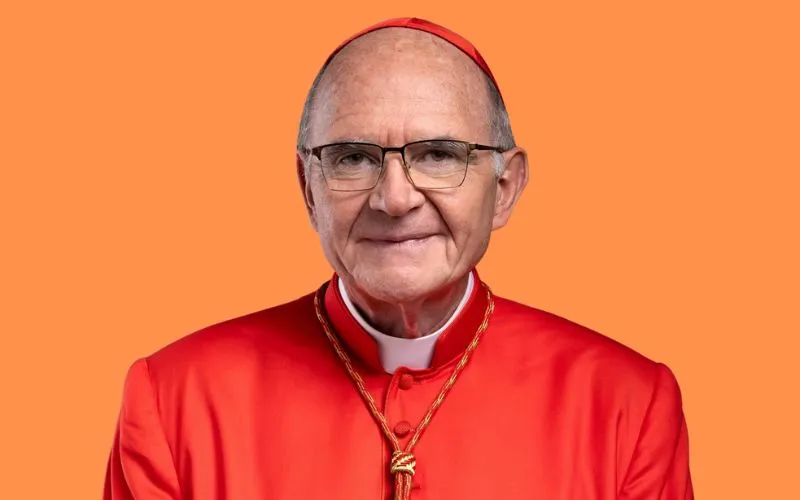
Towards the end of the interview with Ms. Pires, Cardinal Brislin returned to a theme that threads through all his reflections: gratitude for the gift of faith.
“We must never lose sight of the blessings that we have, and how privileged we are to be people of faith,” the member of the Vatican Dicastery for the Clergy following his appointment in August 2025 said.
His final exhortation was simple, yet profound: “Give thanks to God for your faith, and live your faith.”
As Southern Africa celebrates 75 years of ecclesial structure and witness, and as the universal Church gathers around Pope Leo XIV, Cardinal Brislin’s reflection is a reminder that the Church’s journey, marked by suffering and hope, continues best when “together we go forward.”
ACI Africa was founded in 2019. We provide free, up-to-the-minute news affecting the Catholic Church in Africa, giving particular emphasis to the words of the Holy Father and happenings of the Holy See, to any person with access to the internet. ACI Africa is proud to offer free access to its news items to Catholic dioceses, parishes, and websites, in order to increase awareness of the activities of the universal Church and to foster a sense of Catholic thought and culture in the life of every Catholic.




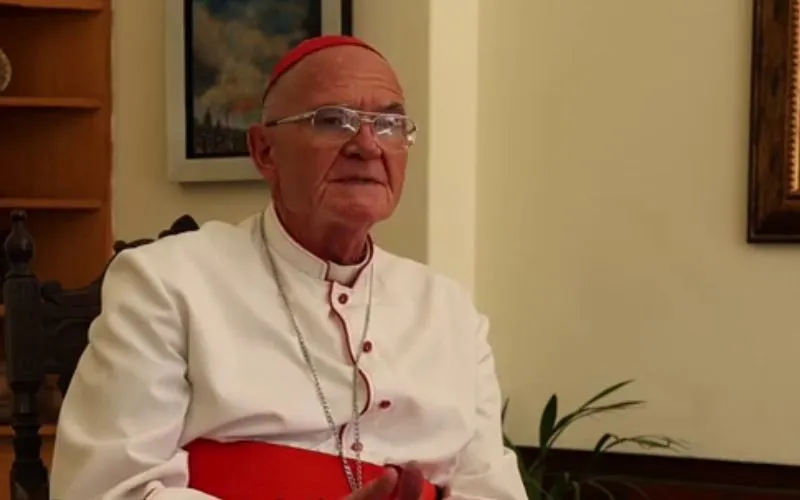 Stephen Cardinal Brislin. Credit: SACBC
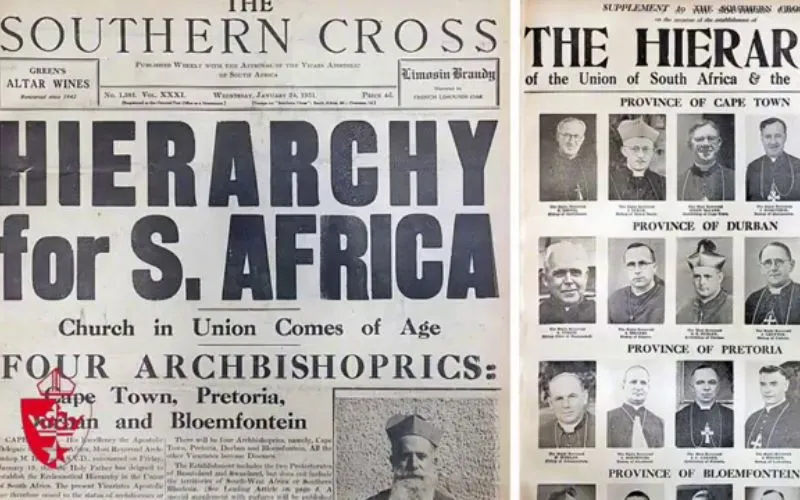 Credit: SACBC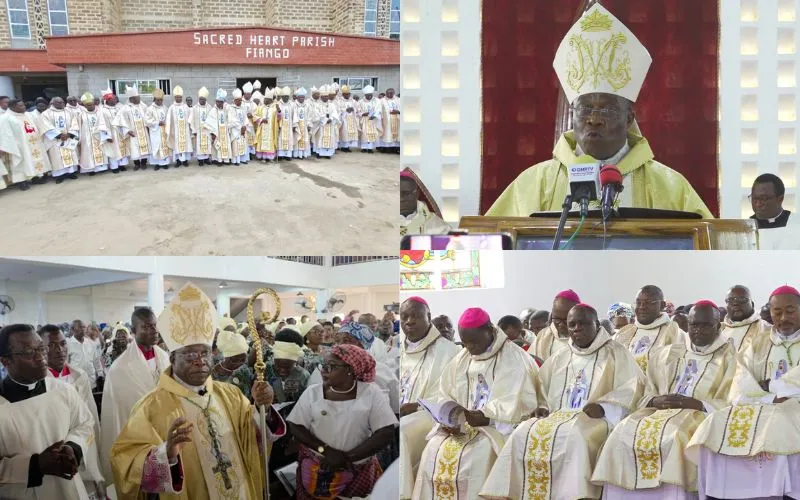
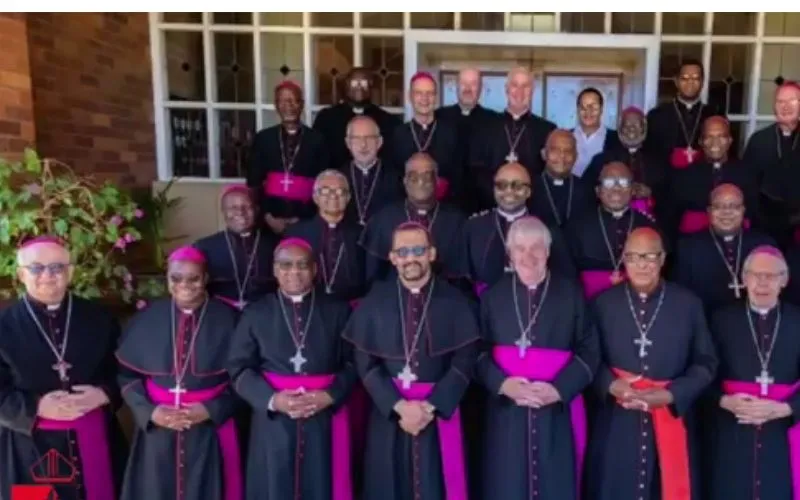 Credit: SACBC