


Advertisement

Church’s Jubilee Year has Helped Rekindle Hope Rooted in Christ amid Challenges: Nigerian Catholic Archbishop

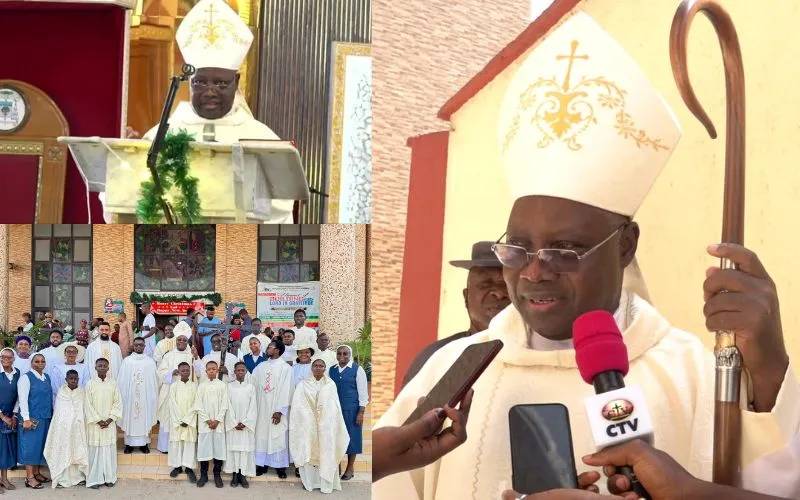
Archbishop Ignatius Ayau Kaigama of Nigeria’s Catholic Archdiocese of Abuja. Credit: ACI Africa

The Catholic Church’s 2025 Jubilee Year of Hope that is coming to an end has helped to rekindle hope firmly rooted in Christ among Clergy, women and men Religious, and lay faithful amid Nigeria’s social, economic, and security challenges, a Nigerian Catholic Archbishop has said.

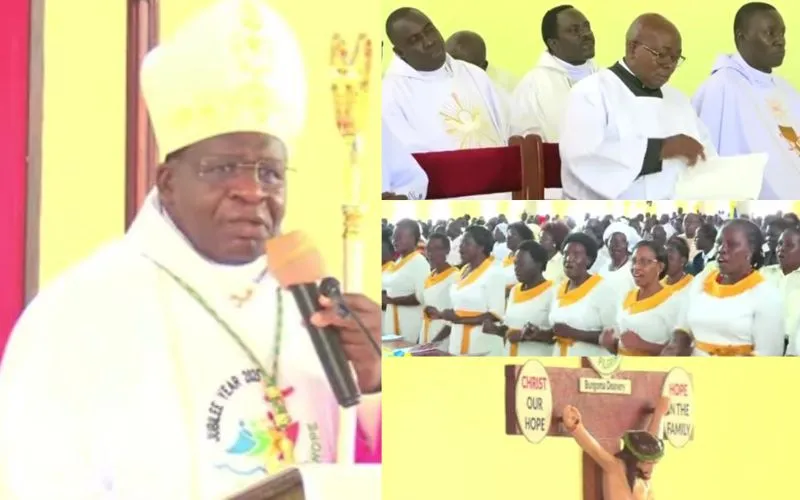
In an interview with ACI Africa on the sidelines of the Closing Mass marking the end of Abuja Archdiocese Jubilee Year of Hope, Archbishop Ignatius Ayau Kaigama said the spiritual initiative that the late Pope Francis officially launched on the Eve of Christmas 2024 “has borne rich spiritual fruits for the Catholic Archdiocese of Abuja by renewing the faith and interior life of Clergy, Religious, and the lay faithful.”

“The Jubilee has helped rekindle hope rooted in Christ, encouraging believers to return to the Eucharist, the Sacrament of Reconciliation, and the Word of God as sources of strength, healing, and perseverance,” Archbishop Kaigama told ACI Africa on Sunday, January 4.

He added, “Through pilgrimages, intensified sacramental life, communal prayers, and catechesis, many faithful have experienced a deeper conversion of heart and a renewed trust in God amid social, economic, and security challenges.”

Beyond personal spiritual renewal, the Archbishop of Abuja emphasized that the Jubilee Year of Hope also strengthened communion across the Archdiocese.
Advertisement

“Equally significant is the growth in communion and missionary zeal across the Archdiocese. The Jubilee Year has fostered a stronger sense of unity among parishes, ethnic groups, and ecclesial movements, promoting reconciliation, forgiveness, and solidarity,” he said.

The Catholic Church leader further said, “Inspired by the theme of hope, the faithful have been challenged to become signs of God’s mercy in society through acts of charity, justice, and peace-building.”

“In this way, the Jubilee Year of Hope has not only deepened personal spirituality but has also strengthened the Church in Abuja as a prophetic and compassionate presence in the wider community,” Archbishop Kaigama said.

He said, “After the conclusion of the Jubilee Year of Hope, the Catholic Archdiocese of Abuja is called to consolidate and sustain the spiritual gains of the Jubilee by translating its graces into lasting pastoral action.”

He said that the renewed emphasis on prayer, the sacraments, pilgrimages, and conversion of heart should be integrated into ordinary parish life, with continued encouragement for frequent receiving of the Eucharist and the Sacrament of Reconciliation.

More in Africa

The Nigerian Catholic Archbishop further said his Metropolitan see will also deepen catechesis on hope, synodality, and Christian witness, ensuring that what was celebrated during the Jubilee becomes a permanent attitude of faith “rather than a one-year experience.”

The late Pope Francis announced the start of a Year of Prayer on 21 January 2024 in preparation for the Church’s 2025 Jubilee Year, the second in his Pontificate after the Extraordinary Jubilee of Mercy in 2015.

He said that the 2025 Jubilee Year was to be “a year dedicated to rediscovering the great value and absolute need for prayer in one’s personal life, in the life of the Church, and in the world.”

Months later, on the Solemnity of the Ascension of our Lord Jesus Christ on 9 May 2024, he solemnly proclaimed the upcoming Jubilee Year 2025 at a ceremony in St. Peter’s Basilica, during which he delivered the Bull of Indiction of the planned Jubilee, “Spes non confundit(Hope does not disappoint).

The Jubilee Year provided the people of God across the globe an opportunity to participate in various planned jubilee events at the Vatican and in their respective Episcopal Sees and Institutes of Consecrated Life and Societies of Apostolic Life (ICLSAL).

Advertisement

In the Janaury 4 interview with ACI Africa, Archbishop Kaigama reflected on the theme of the Jubilee Year, “Pilgrins of Hope.”

“Let’s put our hope only in one mighty being, and that is God. Not in the money, not in the power, not in the president, not in the governors and senators,” he said.

The Nigerian Archbishop admitted that the country’s socio-political situation can be deeply discouraging, even for people of faith.

“Coming from this country where things are not done the way they should be done could be sometimes discouraging and frustrating even to me as a religious leader,” he said.

The Nigerian Catholic Church Leader maintained that hope remains a deliberate choice rooted in faith.

(Story continues below)

Archbishop Kaigama faulted systemic failures in governance and resource management, noting that Nigeria is blessed with abundant resources that are often misused to the detriment of the poor and vulnerable.

“The resources are there, but the way they are utilized don't benefit the poor and the needy,” he lamented.

The Nigerian Archbishop noted that corruption remains one of the most damaging obstacles to Nigeria’s national progress, eroding merit and fairness across sectors.

“Corruption has become so entrenched that it operates like a magnet, drawing people toward unethical behavior,” he said. 

Archbishop Kaigama however emphasized that responsibility for change does not rest solely with political leaders. 

While calling on those in authority to act justly and prioritize the common good, he also challenged ordinary Nigerians to examine their own conduct. 

“We don't just blame the leaders; we blame even the ordinary Nigerians,” he said.

He urged citizens to consciously reject dishonest practices in their daily lives, insisting that national renewal begins with personal integrity. 

“We have our own ways of doing corruption, so we should stop and refrain from this and we shall have a better country,” Archbishop Kaigama said.

Archbishop Kaigama expressed hope for a Nigeria characterized by justice, unity, and peaceful coexistence across religious and ethnic lines.

He envisioned a society where Muslims and Christians, as well as people from the North and South, live in mutual respect without suspicion or hostility.

“We shall enjoy mutual relationship, Muslims, Christians, North-South, all. There will be no division and no acrimony. So let's keep hoping, hoping against hope.” he said. 

Abah Anthony John is a Nigerian Catholic journalist with passion for Church communication and media apostolate. He holds a bachelor’s degree in mass communication from Benue State University, Makurdi in Benue State Nigeria. He has a background in print, electronic and multi-media production.