“Indeed, all of us have ‘paused’ in order to be here. We have set aside our activities for a time, and even canceled important commitments, so as to discern together what the Lord is asking of us for the good of his people,” he emphasized.
Not a group of experts, but a community of faith
In his homily, the Holy Father reminded those present that this gathering is not about a “mere group of experts” but “a community of faith. Only when the gifts that each person brings are offered to the Lord and returned by him, will they bear the greatest fruit according to his providence.”
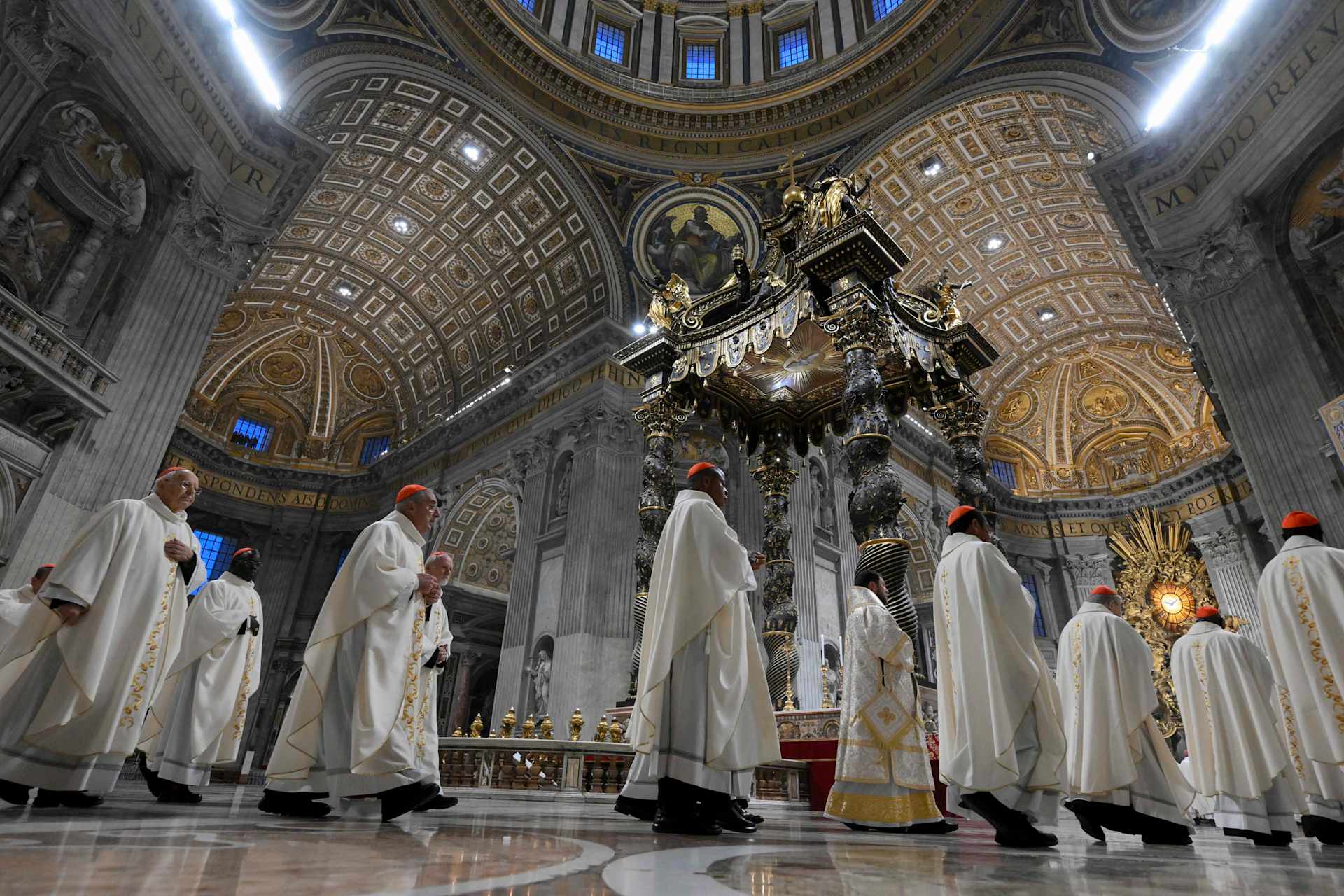 Cardinals arrive for the Mass during the consistory on Jan. 8, 2026, at St. Peter’s Basilica at the Vatican. | Credit: Vatican Media
The pontiff also recalled the words of St. Leo the Great to emphasize the communal dimension of ecclesial service: “In this way,” he said, “‘the hungry are fed, the naked clothed, the sick visited, and no one seeks his or her own interests, but those of others.’”
(Story continues below)
Referring to the challenges of today’s world, marked by profound inequalities and a widespread “hunger for goodness and peace,” the pope acknowledged the feeling of inadequacy in the face of the mission but encouraged them to face it together, trusting in providence.
“We will be able to help one another — and in particular, to help the pope — to find the “five loaves and two fish” that providence “never fails to provide,” he affirmed.
Leo XIV concluded his homily by offering the cardinals his “heartfelt thanks” for their service and reminding them that, even if they don’t always manage to find solutions to the problems they face.
‘We may not always find immediate solutions to the problems we face’
“We may not always be able to find immediate solutions to the problems we face. Yet in every place and circumstance, we will be able to help one another — and in particular, to help the pope,” he said, calling for collaboration.
“Beloved brothers,” the pope noted, “what you offer to the Church through your service, at every level, is something profound and very personal, unique to each of you and precious to all.”
According to what the director of the Holy See Press Office, Matteo Bruni, reported Jan. 7, of the 245 cardinals who currently make up the College of Cardinals, 170 are in Rome participating in the closed-door meetings that concluded Thursday.
This story was first published by ACI Prensa, CNA’s Spanish-language news partner. It has been translated and adapted by CNA.
As a journalist, Victoria Cardiel has specialized in social and religious news. Since 2013, she has covered the Vatican for various media outlets, including Europa Press and Alfa and Omega, the weekly newspaper of the Archdiocese of Madrid.



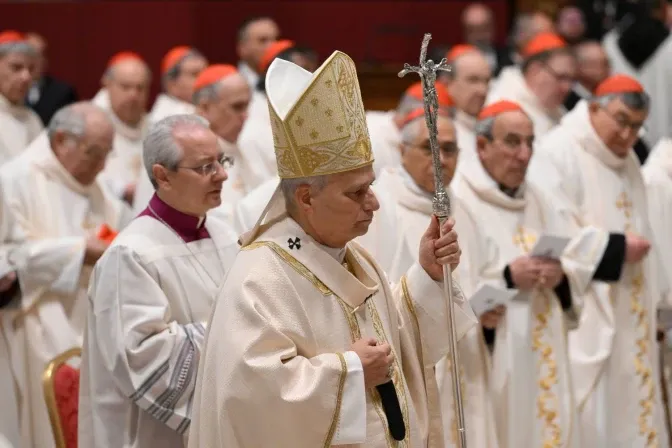

 Pope Leo XIV during the consecration at the Mass for the consistory of cardinals on Jan. 8, 2026, at St. Peter’s Basilica at the Vatican. | Credit: Vatican Media
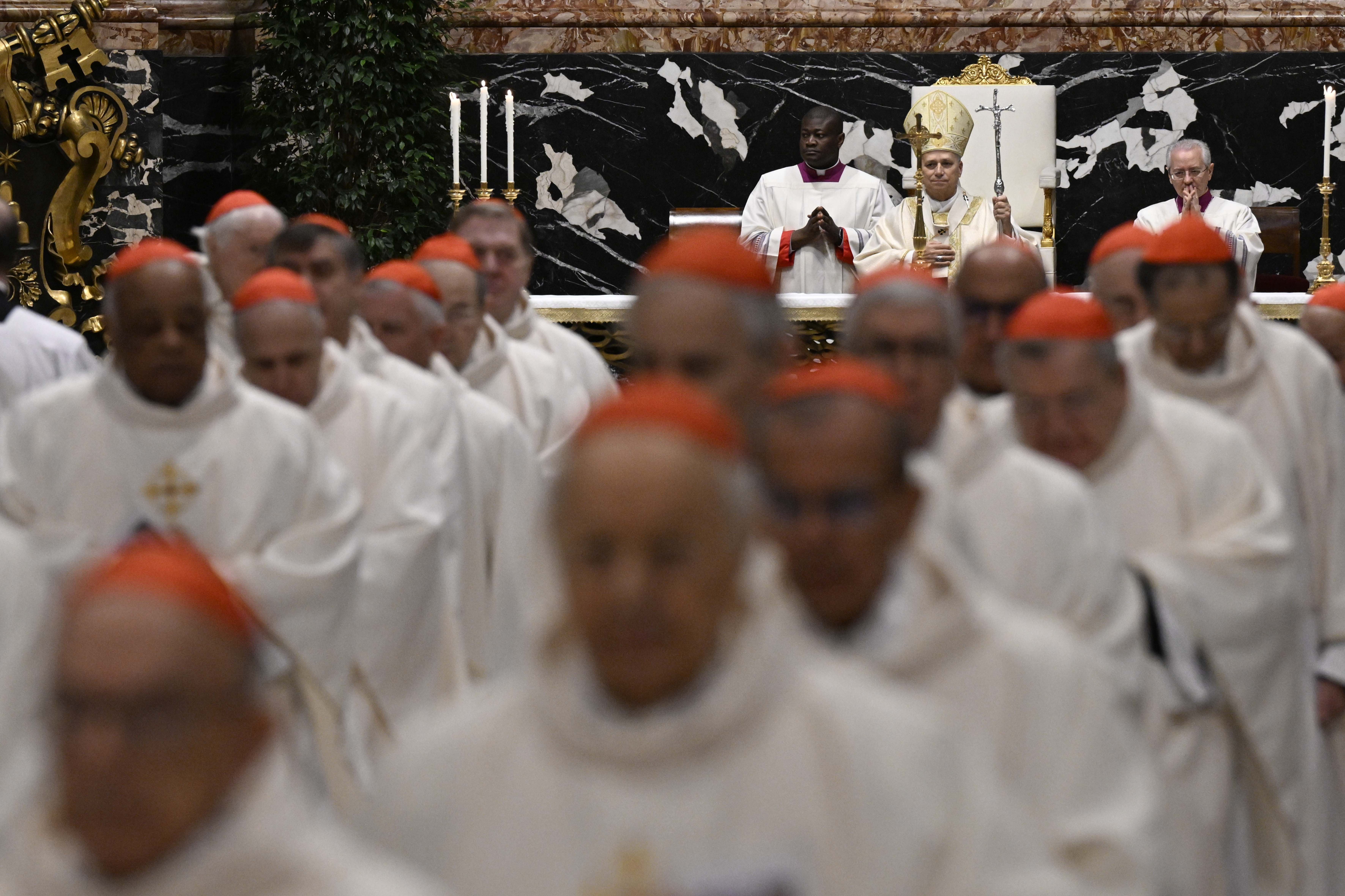 Pope Leo XIV celebrates Mass with cardinals at the consistory on Jan. 8, 2026. | Credit: Vatican Media