

Advertisement

Nigeria’s Democracy Moving “downwards and backward”: Cardinal Onaiyekan Warns of Consequences for 2027 Elections

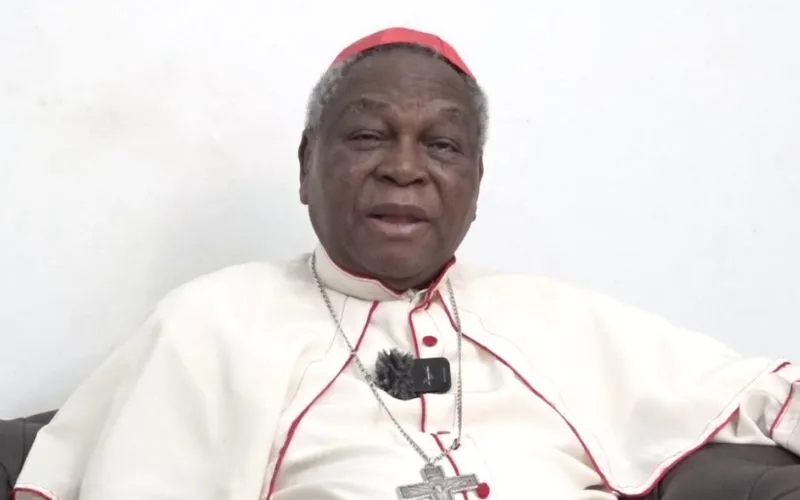
John Cardinal Onaiyekan. Credit: ACI Africa

John Cardinal Onaiyekan has warned that Nigeria’s democracy is moving “downwards and backward,” citing a steady erosion of democratic values driven by repeated leadership failures that have deepened poverty, insecurity, and public disillusionment – developments he cautioned could significantly affect the 2027 general elections. 

In an interview with ACI Africa on Saturday, January 17, on the sidelines of a thanksgiving Mass marking his 43rd anniversary of his Episcopal Consecration, Cardinal Onaiyekan lamented that decades after the end of military rule, citizens of the West African nation are yet to experience the dividends of democracy many had hoped for.

“After we got over military rule, we thought we had started to move into a democratic era. One of the things that makes me saddest of all is that instead of the democratic dispensation moving us forward, unfortunately, it has been moving us downwards and backward,” the Nigerian Cardinal lamented.

He linked the decline to rising poverty, insecurity, and corruption, noting that successive governments have failed to prioritize service, justice and care for the most vulnerable.

The Archbishop emeritus of Abuja Archdiocese argued that the essence of democracy, government of the people and for the common good, has been abandoned and replaced with a system driven by self-interest and exclusion.

Advertisement

“The basic rules of democracy, the government of the people, by the people, the pursuit of the common good, and the service of the people have been thrown overboard,” he said, adding that the situation appears to be “getting worse with every new government.”

According to him, the consequences are most visible among ordinary Nigerians, especially the poor, “who continue to struggle with poor infrastructure, rising cost of living, limited access to basic services and shrinking opportunities for social mobility”.

Cardinal Onaiyekan identified the conduct of elections as one of the clearest indicators of Nigeria’s democratic decline, arguing that electoral processes have steadily lost credibility over the years.

“A good gauge of it is how elections have gone, one after the other; the elections get from bad to worse,” he said. 

He faulted those in power for deliberately undermining the electoral process to retain control. 

More in Africa

“It all boils down to this, that those who have now captured power in Nigeria are not ready to allow us to elect them, they are prepared to hold on to power by all means,”  Cardinal Onaiyekan said.

He also faulted politicians seeking to return to power, saying their motivations are often rooted in personal gain rather than genuine love for the country. 

“If they tell us that they are doing that because they love Nigeria, they are only trying to deceive themselves, not us,” he said.

Describing Nigeria’s political environment as a struggle for control of resources, Cardinal Onaiyekan lamented that politics has become closely tied to wealth accumulation, with public office viewed as a shortcut to sudden affluence.

The 81-year-old Nigerian Cardinal questioned a system in which individuals who once lived modestly become extremely wealthy shortly after assuming office, while the majority of citizens sink deeper into poverty. 

Advertisement

This reality, he said, contradicts claims by some leaders that Nigeria has never experienced bad governance.

“They are holding on to the fact that there’s no bad government in Nigeria, but we know that there is bad government. And I think they do know also that there’s bad government,” the Catholic Church leader said.

He added, “For the poor, such abuse of power translates into fewer resources for education, healthcare, and social welfare, as public funds are been diverted away from meaningful development, which must stop.”

The Nigerian Cardinal warned that continued disregard for good governance could trigger widespread public unrest, urging leaders to pay attention to the growing frustration among citizens, particularly young people confronted by unemployment and economic hardship.

“I think the rulers should please wake up, because if they don’t wake up, there could be protests from the people, which may rise naturally,” he said.

(Story continues below)

While acknowledging that youth-led protests in recent times have largely been peaceful, he cautioned that prolonged injustice could produce unpredictable outcomes. 

“You don’t know who is going to lead that kind of protest, how they’re going to handle it, whether it will be peaceful or not,” he said.

Cardinal Onaiyekan emphasized that good governance ultimately benefits everyone, including those in power and their families. 

“I realize that even for the rulers, it is better to have a nation that is well ruled. It is better for them and their children,” he said. 

The Nigerian Cardinal called on leaders to return to the ideals expressed in Nigeria’s national anthem, particularly the vision of a country where no citizen is oppressed. 

“They should buck up and build a nation for us where no woman or man is oppressed,” Cardinal Onaiyekan said.

Abah Anthony John is a Nigerian Catholic journalist with passion for Church communication and media apostolate. He holds a bachelor’s degree in mass communication from Benue State University, Makurdi in Benue State Nigeria. He has a background in print, electronic and multi-media production.