


Advertisement

“The goal is heaven”: Kenyan Catholic Priest’s Guide on Centering 2026 Resolutions on Jesus Christ

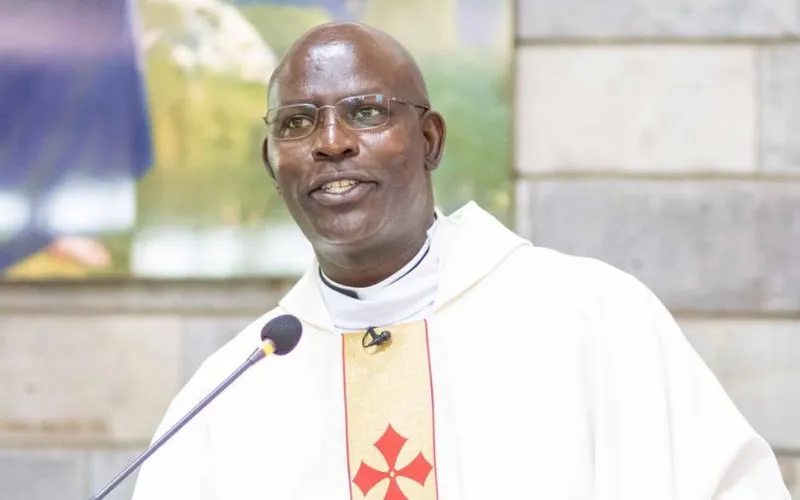
Fr. Charles Kinyua (CK). Credit: Fr Kinyua's online congregation

For those who like planning for the year, the dawn of 2026 signified a fresh start. The year 2025 had ended with the joy of ticking all boxes on the list of resolutions that were made at the beginning of the year and, for others, shaking off the disappointment over unmet resolutions.

ACI Africa had an interview with Fr. Charles Kinyua, popularly known on social media as Fr. CK, who spoke about handling unmet resolutions and making the 2026 goals Christ-centered for a change.

Fr. CK is a member of Clergy of Kenya’s Catholic Archdiocese of Nyeri, and is currently a doctoral candidate at the Institute of Social Transformation (IST) of Tangaza University (TU), the Kenya-based institution of higher learning that is jointly owned by some 22 Institutes of Consecrated Life and Societies of Apostolic Life (ICLSAL). His dissertation is on social media and social transformation.

He has been evangelizing digital peripheries for over 20 years. His platform, Fr Kinyua’s online congregation, has over 500,000 followers on Facebook alone. He previously served as Director of Radio Waumini of the Kenya Conference of Catholic Bishops (KCCB).

In the interview with ACI Africa on Monday, January 19, Fr. CK, who focuses on daily prayer and spiritual encouragement in his digital content, speaks about the importance of making new year resolutions, the mistakes that people make while coming up with new year goals, and how to handle unmet resolutions. He particularly gives Catholics tips on how to center their goals on the person of Jesus Christ as 2026 begins to unfold.

Advertisement

Why is it important to have resolutions as the year begins?

Resolutions help in planning the year ahead. Resolutions are also inspirational by themselves; they help put order into one’s life, especially for those who are procrastinators. 

Resolutions help one set timelines. One realizes that whatever must be done needs to be scheduled. For some people, nothing can be done without strict timelines. Largely, resolutions instil time discipline.

How have you seen people handle unmet resolutions?

The majority of people are not able to meet their resolutions. There are two ways of dealing with unmet resolutions. Number one is to incorporate them into the current ones. For some people, 2025 resolutions that were never fulfilled could find their way in 2026 goals. 

More in Africa

The other way, which I have seen in many people, is to abandon what was for 2025 and craft new ones for the year 2026. There are two ways. Either you merge them or you completely abandon what was for the previous year.

What are some of the mistakes people make while coming up with their resolutions?

Some people assume that there is a lot of time ahead.

Number two, especially where your resolutions touch on other people, there is the assumption that everybody is rooting for you. There is the assumption that everybody is supporting your goals and the assumption that everybody is headed where you are going. 

You may make the assumption that because you want to deepen your spirituality, everybody around you will be spiritual and help you along the journey. Not everyone may want to be spiritual, and they may sabotage your goal.

Advertisement

The third mistake is overconfidence. This is when we put a lot of trust in ourselves, not knowing what we are capable of. Sometimes we can put a lot of pressure on ourselves to the extent that we even lose what we have.

There may also be a lack of personal discipline. Time discipline, moral discipline, social discipline, religious discipline, and spiritual discipline.

What are some of the ways to center the 2026 goals to Christ, especially for Catholics?

One is to align our goals to the Pope’s intentions. Go through them and ensure that whatever you’re doing is aligning with the Holy Father’s intentions, and the intentions of your local Bishop.

Aim for personal development and social transformation. Ensure that you are becoming better than you were last year.  Also ensure that whatever it is that you are doing is pro-life and pro-family. This is being Christ-centered. Do this with consistency and discipline, and you will surely bring about social transformation.

(Story continues below)

Thirdly, embrace imperfection. Let us accept our limitedness this year. Accept also that life has never been fair. There's a lot of unfairness in life. And once we know that, we won't hit ourselves so hard, knowing that we are human beings prone to failure.

Embrace flexibility and plan for what philosophers call the worst-case scenario. Rigidity hinders growth. In whatever we plan, we must ask ourselves, if this does not work, what next? Or what is my plan A and plan B? I encourage young people to always talk about plan A and plan B. If this does not work, what else can I do?

It is important to know that there are always forces ahead of us that may affect our schedules. This could be our superiors, the government, even some family factors. Let’s therefore not be too hard on ourselves when some things do not go as we planned.

The goal is heaven. Our work is to one day see the face of God. But seeing the face of God is not automatic. Because even when we look at the life of the saints and the martyrs, they had their ups and their downs. In Matthew 25, we read that at the end of the day, we will face judgment. And the judgment is about the small things that we did or we didn't do.

Agnes Aineah is a Kenyan journalist with a background in digital and newspaper reporting. She holds a Master of Arts in Digital Journalism from the Aga Khan University, Graduate School of Media and Communications and a Bachelor's Degree in Linguistics, Media and Communications from Kenya's Moi University. Agnes currently serves as a journalist for ACI Africa.