Advertisement

Formators in Africa Cautioned against “expulsion” Methods that Create Hostility among Discontinued Candidates

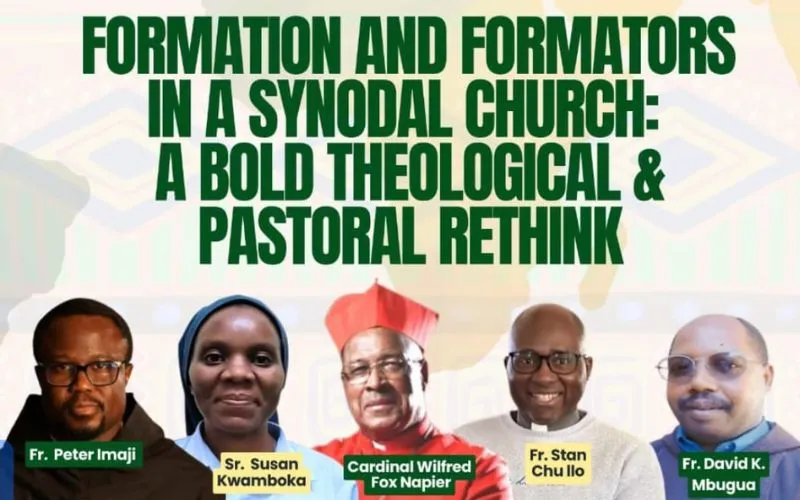
Poster announcing PACTPAN's "formation and formators" palaver. Credit: PACTPAN

Formators in Africa have been told to rethink their strategies for discontinuing their candidates, warning that “expulsion” that “lacks the face of Christ” is creating hostility towards the Church.

In his keynote address at the webinar that members of the Pan-African Catholic Theology and Pastoral Network (PACTPAN) Kenya Chapter organized in collaboration with the Association of Religious Formators for Kenya (ARFK), Fr. Stan Chu Ilo advised that those who are discontinued should be made to realize that a different path is possible.

“When a decision is made that someone cannot continue with formation, that decision should come in the context of synodality, conversation, hearing the other, so that people who leave realize that a different path is possible,” Fr. Stan said.

He added, “I don’t know about other places, but where I come from in Nigeria, there are many wreckages that we have created as a result of the kinds of formation that sometimes lack the face of Jesus Christ. People are discarded as if to say they're wrecks.”

“There are some of them that leave and they become really hostile to the Church,” the Coordinating Servant of PACTPAN said at the January 31 palaver that was realized under the theme, “Formation and Formators in a Synodal Church: A Bold Theological and Pastoral Rethink”.

Advertisement

Fr. Stan cautioned against the use of the word “expulsion” from the Seminary, noting that the word carries the connotation that the “expelled” person “is a virus.”

“You expel a virus, a toxin,” he said, and added, “Welcoming, forming and advancing people should be done as a conversation carried out in a bond of love and presented with the face of Jesus Christ.”

The palaver was a reflection and dialogue session for formators, including Clergy, members of Institutes of Consecrated Life and Societies of Apostolic Life (ICLSAL), and Laity on how to foster Synodality, a shared journey of listening, discernment and mutual understanding.

Conversations were centered on the question, “How can formation become more theologically transformative, equipping formators with the spiritual tools needed to respond effectively to pastoral realities?”

Fr. Stan underlined the need for good relationships between formators and those they are forming, noting that without healthy relationships, there can be no growth.

More in Africa

He proposed to formators a friendship model of pastoral care “that is synodal, that is relational, that is vital, and that is spiritual”.

Emphasizing the need for “hearing and heeding” between formators and the candidates, the PACTPAN official said, in reference to the late Pope Francis, “Sometimes it's not enough to hear, it's also important to heed.”

“In formation, for instance, when a candidate comes before you to complain or to share the innermost doubts or dreams that they have, do you heed? Or do you think that the person who comes before you does not know what she is talking about?” Fr. Stan said, adding that in formation, the synodal moment becomes a form of therapy.

“The process of synodality is not simply about hearing, but it's also about heeding. It's not simply about listening. It's also about responding. There are people who are lamenting, who are hurting. And the synod document says we need to heal the ruptures in our relationships,” the U.S.-based Catholic Priest said.

He went on to fault formators who stick to rules and books while disregarding the needs of the human person.

Advertisement

“There are some people who are slaves to systems, to rule books. Relationships and bonds are broken because of the intransigence of formators who cannot humble themselves, who are not flexible enough, who are not listening enough, who are doing formation by rules and books, forgetting that human beings are not simply automaton,” he said.

“In discernment of vocations, it is very important that we recognize that the candidates before us are not simply tabula rasa so that you pour everything into them,” Fr. Stan said.

He urged formators to make formation friendships rather than superior-inferior relationships.

“Your candidates need to be understood. Listen to them. Sometimes they might be selfish owing to their socialization. Speak to their needs. Some of the candidates might get emotionally low and afraid. Encourage their hearts. They want to be associated with something bigger than themselves. Help them to win, don’t turn them into losers,” he said.

Candidates, he continued, “want to become part of the Church. Prove to them that the Church wishes to become part of them. They are hungry for God. Feed their souls, don’t feed their fears. Many of the candidates are carrying hurt and wounds from their homes. Be their healer.”

(Story continues below)

Fr. Stan challenged formators in Africa to open the candidates they receive to the transformative grace of God, and added, “Deep within every heart there is at the deepest level of our fragility and vulnerability a very soft and tender spot that is always looking for the touch of love.”

“It is in that moment of encounter that you begin to produce human beings who are transformative, trinitarian and human being who have been crystallized and they become like crystals wherever they go, shining like the stars and passing on this love of God that is beyond measure,” he said.

Fr. Stan also reflected on the meaning of the “vital Church”, expressing the urgency for Africa to think about the health of the Church on the continent.

“We need to think of the vital Church. It is not every growing Church that is healthy, and it is not every healthy Church that is growing,” he said, and explained, “As we think of how we are getting a lot of vocations, with our seminaries bursting at the seams, the question is: are these the signs of a vital Church?”

Fr. Stan went on to caution, “We in Africa must be careful. God is blessing us right now with great numbers. That is why formation must aim at giving spiritual life to the Church.”

Agnes Aineah is a Kenyan journalist with a background in digital and newspaper reporting. She holds a Master of Arts in Digital Journalism from the Aga Khan University, Graduate School of Media and Communications and a Bachelor's Degree in Linguistics, Media and Communications from Kenya's Moi University. Agnes currently serves as a journalist for ACI Africa.