“The victims chosen for the program include families of widows, women-headed families, family members with disabilities and families with HIV positive persons,” she disclosed, and added, “With the help of the project steering committee, a finalized criterion to choose needy war victims for the program has been made.”
DMI members have selected 120 direct beneficiaries and initiated steps to form Kapuri Development Association (KDA), a body that will coordinate the entire rehabilitation project.
In order to accomplish the objectives of the project, the Nuns have organized the beneficiaries into manageable bodies to streamline service and information flow.
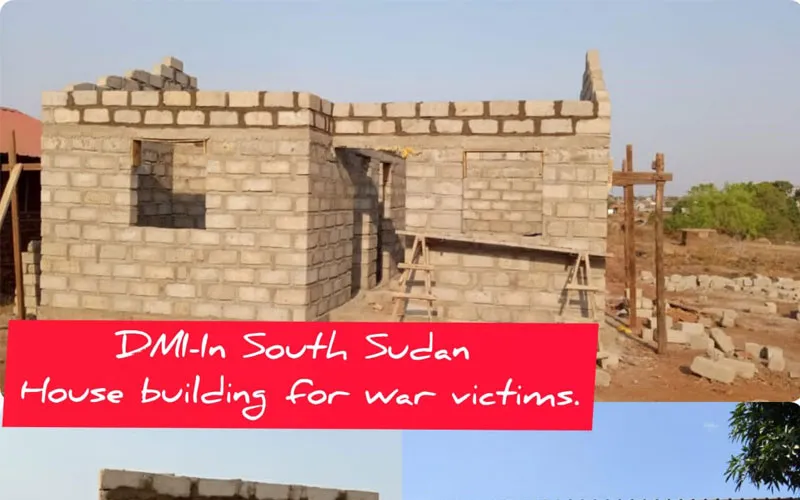
“With the help of a steering committee and KDA, we began steps in forming four Village Saving and Loan Association (VSLA) and commenced saving and internal lending,” Sr. Maila told ACI Africa, and added, “Our Congregation has planned to construct 25 houses for war victims in identified areas in South Sudan and already three houses are under the process of construction.”
She further said, referring to the initiative, “We have introduced the vocational skill training on masonry and beautician courses, which will help youth to earn additional income after detaching from camp humanitarian aid.”
As a way to have links with the local authorities, Sr. Maila said, “The team has initiated negotiation with village Chiefs to obtain cultivable land for landless war victims and we want to ensure that each war victims get two acres of land to cultivate.”
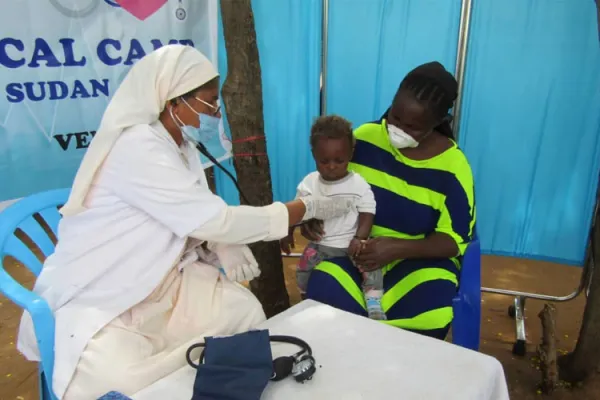
Some services to be offered in the Kapuri Village program, according to Sr. Maila, include health campaigns and periodical health camps in the entire village to improve accessibility to health services.
Although SDMIC operates in other South Sudanese episcopal sees such as Rumbek and Wau Dioceses, as well as Juba Archdiocese serving 87 communities with over 62,000 beneficiaries, the current housing project to benefit war victims has been earmarked for in Kapuri Village in Juba Archdiocese.
This project, according to Sr. Maila, is inspired by the formation of a transitional government of national unity that took place in February last year as part of the implementation of the September 2018 Revitalized Agreement on the Resolution of Conflict in South Sudan (R-ARCSS).
“The formation of the unity government in 2020 has brought new hope to sustain peace and South Sudanese are hoping for durable peace in the country and they aspire to improve their socio- economic situation,” she told ACI Africa.