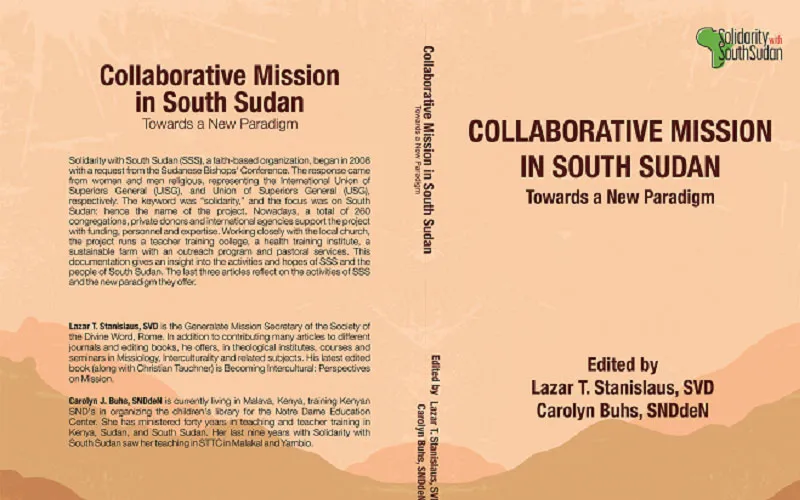
“While we joyfully launch the book with great appreciation of the rich information it gives about the people,” the Nigerian-born Catholic Nun said, “We need to remember that everything in the book is about the people, the flesh and blood people of South Sudan and their God-given heritage, their land with its enviable multi-dimensional rich resources.”
The member of the Society of the Holy Child Jesus (SHCJ) continued, “We need to see the book as being in function of or in service to the people of South Sudan. They existed first and the efforts to meet their daily needs and predicament brought about the Project of Solidarity with South Sudan and the book we are launching.”
She described the book as “a rare and laudable accomplishment” and added, “We should not lose sight of the people of South Sudan, the real subject of the Project which produced this book.”
“This book is inviting us, its readers, to get in touch with the people of South Sudan, the real subject of the book, to be collaboratively in solidarity with the people as the book title indicates,” Sr. Okure said.
Readers who might not have interacted with the people of God in South Sudan at a personal level can be in solidarity with South Sudanese, she said.
“The primary purpose of this book launch is to invite us who may not have the opportunity and privilege to physically visit or live in South Sudan, to be in solidarity with the people, as are those who have written the book and their members who have done so for ages,” Sr. Okure said about the 14-chapter book that is divided into three parts.
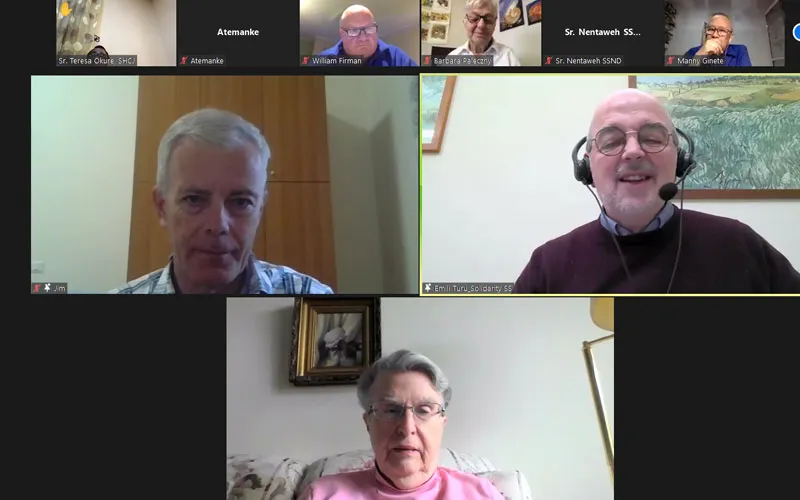
The book whose launch was held online to allow a greater participation from Religious Orders, Unions and other SSS partners not present in Rome invites the people of God across the globe to share with SSS “the experience of being in solidarity with the people of South Sudan,” she said.
“The book is calling us to reflect on, identify concretely how the actions, interests, greed and policies of our nations, possible including ours, may consciously or unconsciously contribute to in generating the current undesirable state of the people of South Sudan,” Sr. Okure added.
The professor of Scripture and gender hermeneutics at the Catholic Institute of West Africa (CIWA) in Port Harcourt further said that the new book calls upon people “to reflect together, collaboratively, on ways to address this situation in justice (truth in relationship) to the people of South Sudan.”
“The call to Solidarity with the People of South Sudan (SPSS) is the purpose of the book on the Project of Solidarity with South Sudan (PSSS),” Sr. Okure added.




 Sr. Teresa Okure during the April 21 book launch. Credit: Courtesy Photo
 Credit: Courtesy Photo