

Advertisement
Saints
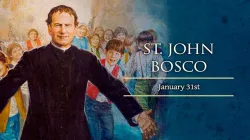
Today, January 31, we celebrate St. John Bosco, patron saint of young people
On Jan. 31, the Roman Catholic Church honors St. John Bosco (or “Don Bosco”), a 19th century Italian priest who reached out to young people to remedy their lack of education, opportunities, and faith.
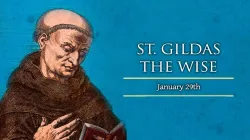
Today, January 29, we celebrate St. Gildas the Wise
St. Gildas was probably born around 517 in the North of England or Wales. His father's name was Cau (or Nau) and, came from noble lineage, and he most likely had several brothers and sisters. There is writing which suggests that one of his brothers, Cuil (or Hueil), was killed by King Arthur (who died in 537 AD), and it also appears that Gildas may have forgiven Arthur for this.
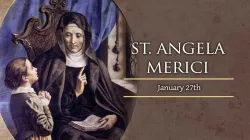
Today, January 27, we celebrate Angela Merici, foundress of the Ursuline Sisters
Angela Merici was born in the small Italian town of Desenzano on the shore of Lake Garda in 1474.
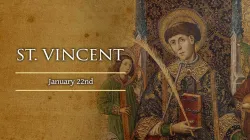
Today, January 22, we celebrate Saint Vincent, patron of vinegar-makers and wine-makers
St. Vincent was Deacon of Saragossa, and a martyr under Diocletian in 304. This most renowned martyr of Spain is represented in the dalmatic of a deacon, and has as emblems a cross, a raven, a grate, or a fire-pile.
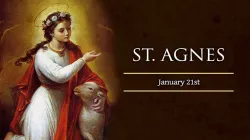
Today, January 21, we celebrate virgin and martyr St. Agnes
On Jan. 21, the Roman Catholic Church honors the virgin and martyr St. Agnes, who suffered death for her consecration to Christ.
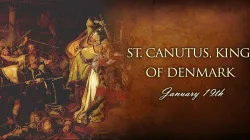
Today, January 19, We Celebrate St. Canutus, King of Denmark
Saint Canutus, King of Denmark, succeeded his elder brother Harold on the throne of Denmark in the year 1080. He began his reign by a successful war against the enemies of the state, and by planting the faith in the conquered provinces.
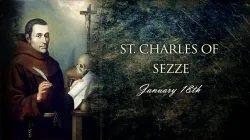
Today, January 18, We Celebrate St. Charles of Sezze
Saint Charles was born John Charles Marchioni in Sezze, Italy on October 19, 1613. His family was extremely pious. They lived in a rural area and as a child Saint Charles worked as a shepherd.
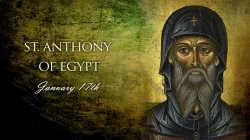
Today, January 17, We Celebrate St. Anthony of Egypt
On his Jan. 17 feast day, both Eastern and Western Catholics celebrate the life and legacy of St. Anthony of Egypt, the founder of Christian monasticism whose radical approach to discipleship permanently impacted the Church.
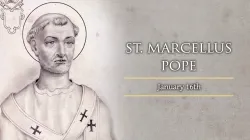
Today, January 16, We Celebrate St. Marcellus, Pope
Nothing of Marcellus' life before his papacy has survived the centuries. He became Pope at the end of the persecutions of Diocletian in aound 308-309. The persecutions had disrupted the Church so much that there had been a gap of over a year with no Pope. Once he was elected, he faced several challenges, including reconsituting the clergy, which had been decimated and whose remnant had practiced their vocation only covertly and with the expectation of martyrdom.
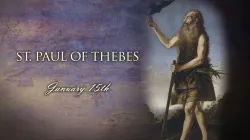
Today, January 15, We Celebrate St. Paul of Thebes
On Jan. 15, the Catholic Church remembers Saint Paul of Thebes, whose life of solitude and penance gave inspiration to the monastic movement during its early years.
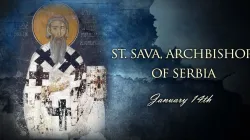
Today, January 14, We Celebrate St. Sava, Archbishop of Serbia
Originally Prince Rastko Nemanjic, he was the first Patriarch of Serbia (1219-1233) and is an important Saint in the Serbian Orthodox Church.
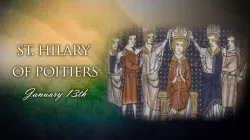
Today, January 13, We Celebrate St. Hilary of Poitiers
On January 13, Catholics celebrate St. Hilary of Poitiers, a fourth-century philosopher whose studies made him a champion of Orthodox Trinitarian theology during one of the most difficult periods of Church history. He protected the Church and its members by brilliantly defending the sacred humanity of Jesus while also defeating Arianism which denied Christ's placement within the Trinity.
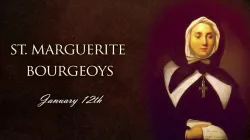
Today, January 12, We Celebrate St. Marguerite Bourgeoys
On Jan. 12, Roman Catholics remember Saint Marguerite Bourgeoys, who not only founded a religious congregation, but was also instrumental in establishing the Canadian city of Montreal.
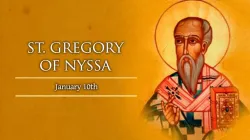
Today, January 10, We Celebrate St. Gregory of Nyssa
The son of two saints, Basil and Emmilia, young Gregory was raised by his older brother, St. Basil the Great, and his sister, Macrina, in modern-day Turkey. Gregory's success in his studies suggested great things were ahead for him.
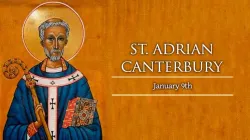
Today, January 9, We Celebrate St. Adrian of Canterbury
The famous Abbot of St. Augustine's in Canterbury, was likely born in Libya Cyrenaica, North Africa.
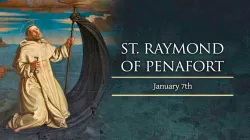
Today, January 7, We Celebrate St. Raymond of Penafort
Saint Raymond of Penafort, a Dominican priest who worked to aid Christian captives during the era of the Crusades and also helped organize the Church’s legal code, will be celebrated liturgically on Jan. 7.
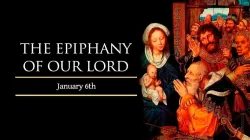
Today, January 6, We Celebrate The Epiphany Of Our Lord
The Epiphany of Our Lord is the Christian feast observed on Jan. 6, 2016. The word “epiphany” comes from the Greek epiphainen, a verb that means "to shine upon," "to manifest," or “to make known.”
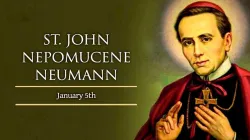
Today, January 5, We Celebrate St. John Nepomucene Neumann
John Neumann was born on March 28, 1811, in Bohemia, now part of the Czech Republic. His parents were Philip and Agnes Neumann. He had four sisters and a brother. After college, John entered the seminary. When the time came for his ordination, the bishop was sick and the date was never rescheduled as Bohemia had enough priests at the time.
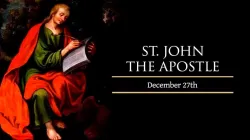
Today, December 27, We Celebrate St. John the Apostle
St. John, the son of Zebedee and brother of St. James the Great, was called to be an Apostle by our Lord in the first year of His public ministry. He became the "beloved disciple" and the only one of the Twelve who did not forsake the Savior in the hour of His Passion. He stood faithfully at the cross when Christ made him the guardian of His Mother.
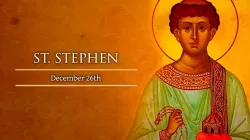
Today, December 26, We Celebrate St. Stephen
Just after Christmas, the Catholic Church remembers its first martyr, and one of its first deacons, Saint Stephen. Roman Catholics celebrate his feast Dec. 26, while Eastern Catholics honor him one day later.