Displaced people would come to Nairobi and in their search for cheap accommodation, with some renting tiny houses, which were made from corrugated iron sheets in what later became Mukuru slums. Before this influx, Mukuru was a large mass of land with a river cutting through it. Then, it was a haven for hard-core criminals.
He recalls the day, while he served as an Assistant Priest at Our Lady Queen of Peace Parish of the Catholic Archdiocese of Nairobi (ADN) that Sr. Mary approached him, asking for help to educate the slum children who did not have the money to be admitted in schools for the middle-class Nairobi residents.
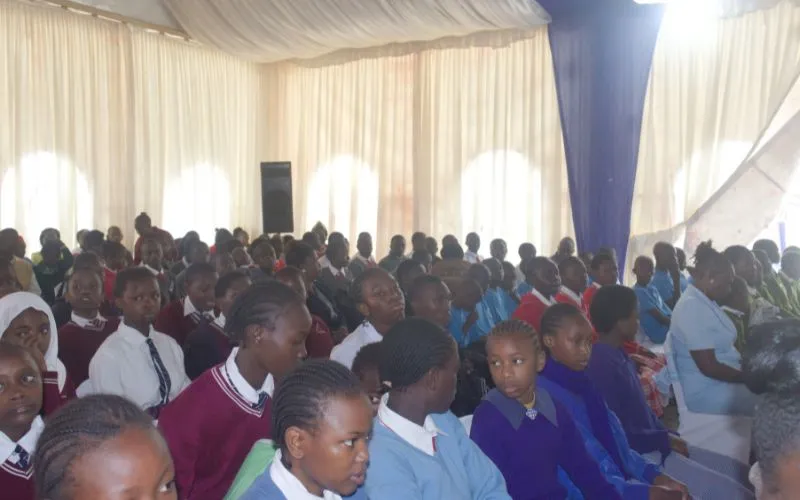
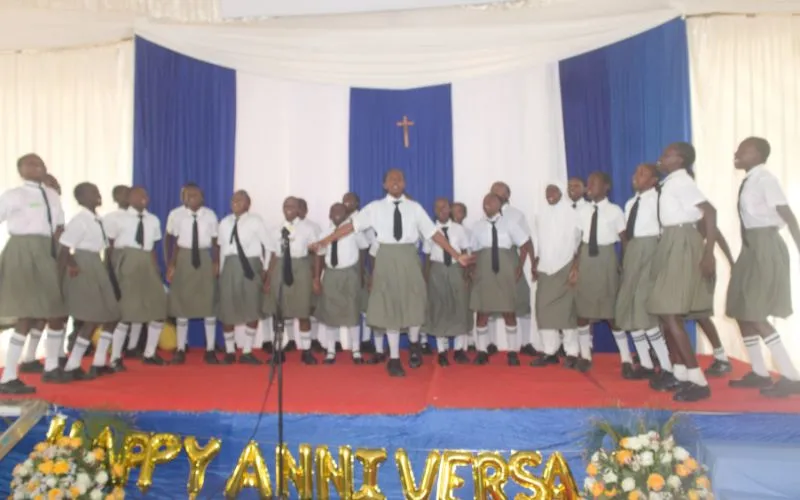 School children at the 40th anniversary of Mukuru Promotion Centre. Credit: ACI Africa
“Sr. Mary came to me, and we agreed that we needed to do something to get all the children in the slum to school. We decided to create an informal school where the children would come with no uniform, no school fees to pay, just to learn,” Fr. Manuel recalled during the May 21 interview with ACI Africa on the sidelines of the 40th anniversary celebration of MPC.
At that time, Sr. Mary was the head teacher of Our Lady of Mercy Primary School, just opposite Our Lady Queen of Peace Parish.
(Story continues below)
One day, some street children approached her, begging that she would help their younger ones to go to school. They told the Catholic Nun that while they were much older, and had engaged in crime on the streets, they believed that their younger siblings still had a chance to be successful in life.
 Credit: ACI Africa
At first, Sr. Mary took some 100 children from Mukuru slums to Our Lady of Mercy Primary School. The children could however not keep up with the life of the middle-class. Parents at the school were also against the idea of their children mingling with children from the slums, Sr. Mary told ACI Africa.
“The children had been on the streets, so they had street habits. They hadn't had access to water or soap, so they had scabies and ringworms. And they were older than the other children and they knew how to gamble. Some had even had experience of sex because they slept in one room with their parents,” the Dubliner Catholic Nun recounted.
She continued, “The parents of the middle-class children became scared their children were going to be spoiled by these children from the slums. And they were blamed for everything. If something was stolen, the children from the slums were blamed. We bought them their books, we bought them their shoes, their uniform. But after one week, they would have none of these things. Somebody had stolen it. It was very hard to maintain them at a middle-class standard.”
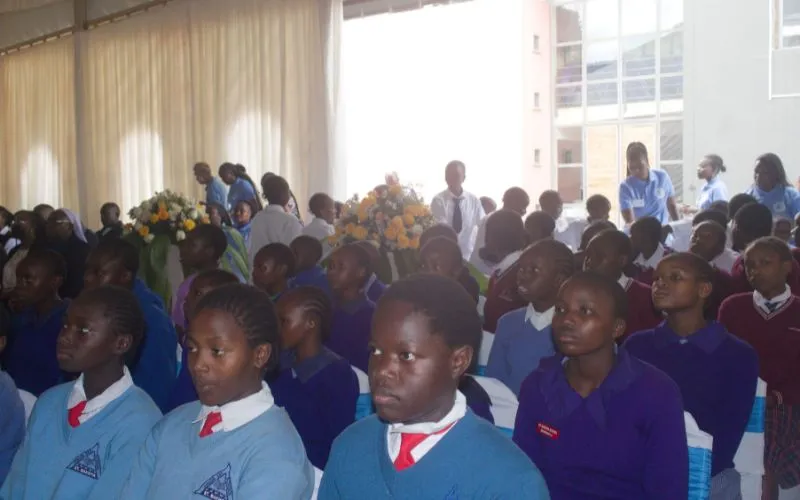
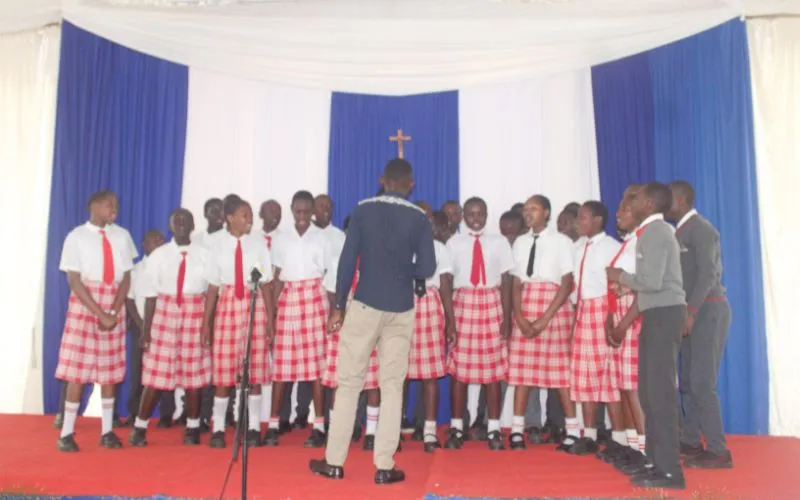 School children at the 40th anniversary of Mukuru Promotion Centre. Credit: ACI Africa
The idea to start an informal school where the children from the slums could feel comfortable came from Sr. Mary’s Superior General who had come visiting.
That’s when Sr. Mary approached Fr. Manuel for help. The two approached authorities and were shown a piece of land in Mukuru Kayaba, one of the slums in the vast informal settlement East of Nairobi city.
Fr. Manuel recalls that 200 children showed up for enrolment on the first day of the school, which was just a single classroom that had been made using corrugated iron sheets.
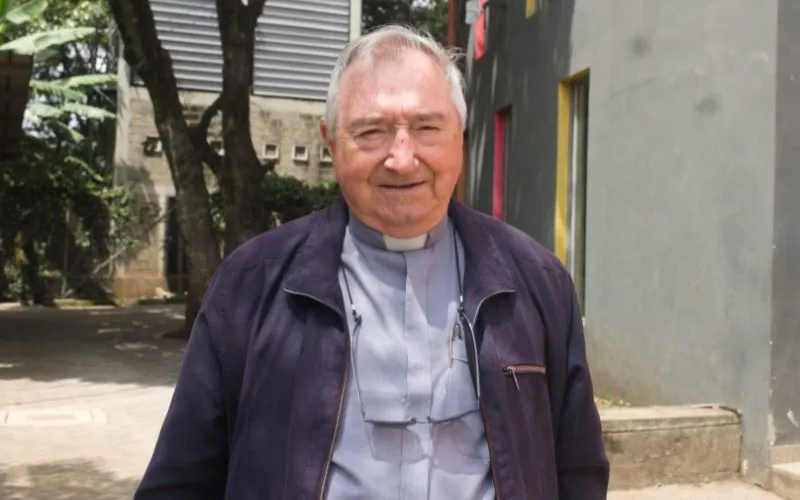 Fr. Manuel Gordejuala during an interview with ACI Africa Credit: ACI Africa
“There was a big influx of children,” the Spanish Priest recalled in the interview with ACI Africa, and explained, “The numbers in our school grew from week to week. By the first month, we had several hundreds of children already in the classroom. We had to continually put up more mabati (iron sheets) structures to accommodate the large population of children.”
He recalled that the thirst for education among the slum children was enormous.
“The need was there. The children were thirsty for knowledge. I didn't have to push them to work. They were pushing me to work more and more instead,” he said, and explained, “There was a tremendous need to do something for the children, because the system didn’t know how to handle the slum situation. The (Nairobi) city council saw the need, couldn't solve the need and didn't interfere with us. They tried to help as much as they could.”
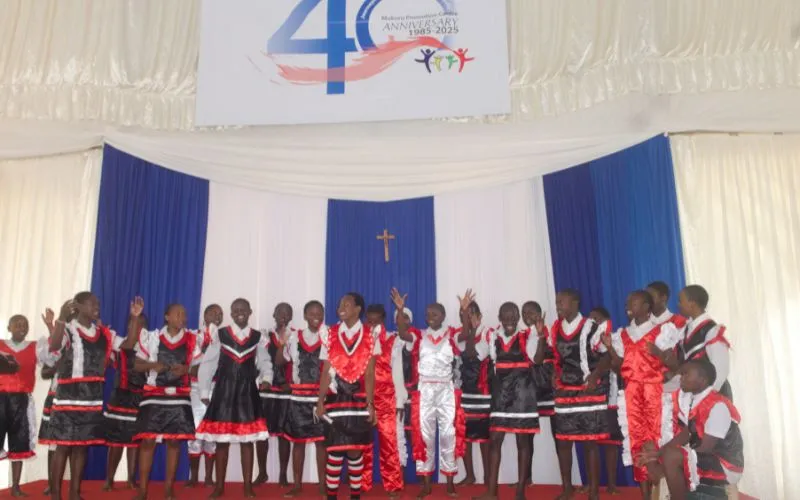 School children at the 40th anniversary of Mukuru Promotion Centre. Credit: ACI Africa
In a decade, Mukuru Informal Primary School had birthed six schools with a total of 6,000 children.
Unable to manage the large population of the pupils, MPC approached the Marianist Brothers and the Irish Christian Brothers from Australia for help. The two entities took over management of two schools, leaving MPC with four.
Mukuru Kayaba Primary School started in 1985 as an informal school with 200 pupils and four volunteer untrained teachers. Those admitted in the expansive slum’s first ever schools were over 10 years old, mostly with no prior classroom experience.
 Credit: ACI Africa
In 1989, the Sisters of Mercy appealed to Kenya’s Teachers Service Commission (TSC) to transfer Sr. Mary from Our Lady of Mercy Primary School to Mukuru Primary School as the school’s first official headmistress. From a population of 200 at inception, the enrolment for 2025 was 1,464 pupils.
The school that followed was St. Elizabeth Primary School, which opened its doors to the first cohort of leaners in 1991 in a temporary church structure within Lunga Lunga slum. It started with 150 pupils and in 2025, it admitted 2,415 new pupils.
Next came St. Catherine Primary School, which was started in 1991 near Wilson Airport to take care of the educational needs of street children. Starting with an enrolment of 150 pupils, the school has grown to the 2025 enrolment of 1,480 learners.
Every year, over a thousand pupils also join St. Bakhita Primary School, which shares its vicinity with MPC Head Offices, the Our Lady of Mercy Vocational Training Centre, and the St. Michaels Secondary Mixed Day School.
Our Lady of Mercy Vocational Training Centre was started in 1985 and currently offers skills in art and craft, special needs, computer packages, plumbing, welding and fabrication, among other skills to thousands of young slum residents in Mukuru.
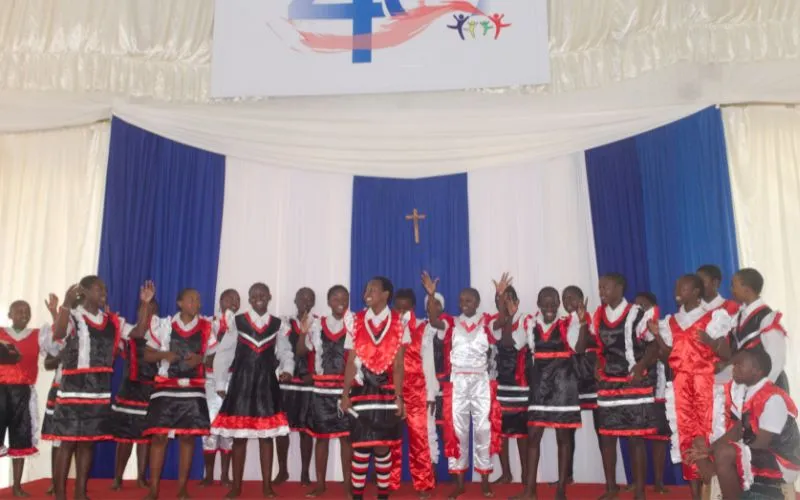 School children at the 40th anniversary of Mukuru Promotion Centre. Credit: ACI Africa
St. Michaels Secondary Mixed Day School opened doors to its first set of students in 2008 during the post-election violence, the worst in the East African country when many Kenyans were displaced and found themselves in Mukuru.
The first cohort at St. Michaels Secondary Mixed Day School had 45 students and seven members of staff. Today, over 500 students join the school every year.
MPC’s Adult Education Program has also transformed the lives of many Mukuru slum residents who did not have the opportunity to go to school in their childhood.
MPC also runs healthcare programs including Mary Immaculate Clinic that Sr. Mary started in 1990 to provide medical care for pupils at Mukuru Kayaba Primary School.
 Credit: ACI Africa
The clinic eventually expanded and now serves the entire slum community including bedridden Mukuru residents. The Centre runs other healthcare projects including nutrition programs, and a comprehensive care centre for HIV/AIDS across the slum population.
MPC also runs rehabilitation facilities for the handicapped, street children and ex-convicts, as well as children’s homes for orphans and other vulnerable children in the slums.
In partnership with donors drawn from across the globe, most of MPC’s establishments have received a facelift from corrugated iron-sheet structures to more permanent buildings.
Explaining how the MPC schools have managed to stand out in the slum over the years, Sr. Mary told ACI Africa, “Our schools are unique because in Kenya, education is becoming so expensive that soon no poor child will go to school. The government is not giving money in time and some Head teachers are making extra charges.”
She explained the agony of children being sent away all the time for school fees, saying, “We are in a very bad situation in Kenya where I think the majority of children who are very poor may not even go to primary school. There are very huge payments in schools.”
Sr. Mary told ACI Africa that MPC also makes its secondary school private so that children will not be sent away all the time for fees. All the schools also only admit day scholars to ensure that only deserving children benefit.
“We don't want any boarding because if you have boarding, people will bring children from all over the country. But if you have a day school, it's going to benefit only the locals,” she explained.
Sr. Mary continued, “We only want to serve Mukuru. Only those who really need it. Because the quality is good. And even my handicapped centre, people want me to make it boarding. If I make it boarding, people from all over will come pretending they live in slums and everything so it's better that children come in the morning. The parents can drop the child and go away to look for food. They then come back and collect the child in the evening. The children are fed and changed during the day and go back to their parents clean and well taken care of. This way, the parents maintain a close link with their children.”
 Credit: ACI Africa
At the May 21 anniversary celebrations, Davis Sagini who joined St. Michaels Secondary Mixed Day School in 2009 while staying in Fuanta Nyayo, a slum neighbouring Mukuru, shared that he was given full sponsorship after demonstrating that he was a high performer.
Davis proceeded to get grade A, topping the whole District and proceeded to university where he studied to become an engineer. MPC supported him financially through university, and he would serve on the support staff of St. Michaels Secondary School, where he was assigned some classes to teach.
Davis shared that St. Michaels Secondary School is a haven for most of its students. So are at MPC schools where students can find the quiet they need, away from the noisy slums and the poverty in their homes.
Sharing about the challenges that children face in the slums, apart from the lack of food, he said, “There are days we could go home and find our tiny house flooded. It is never easy in the slums.”
He told ACI Africa that in Sr. Mary, he sees “someone who has given herself completely to serve people.”
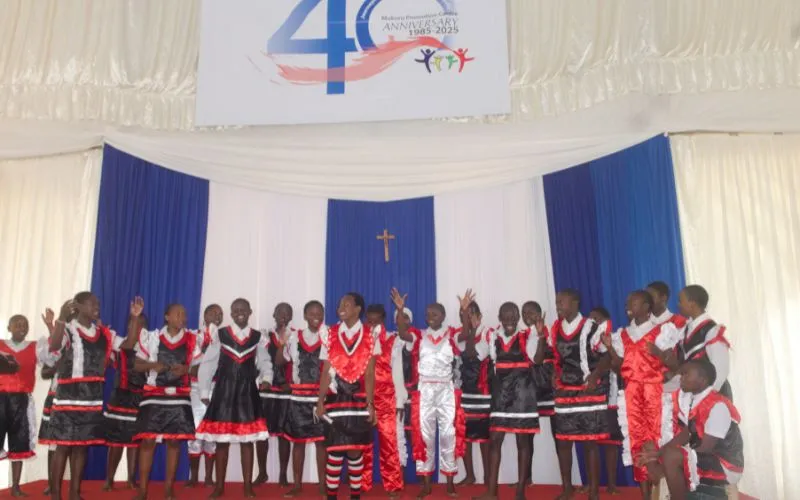
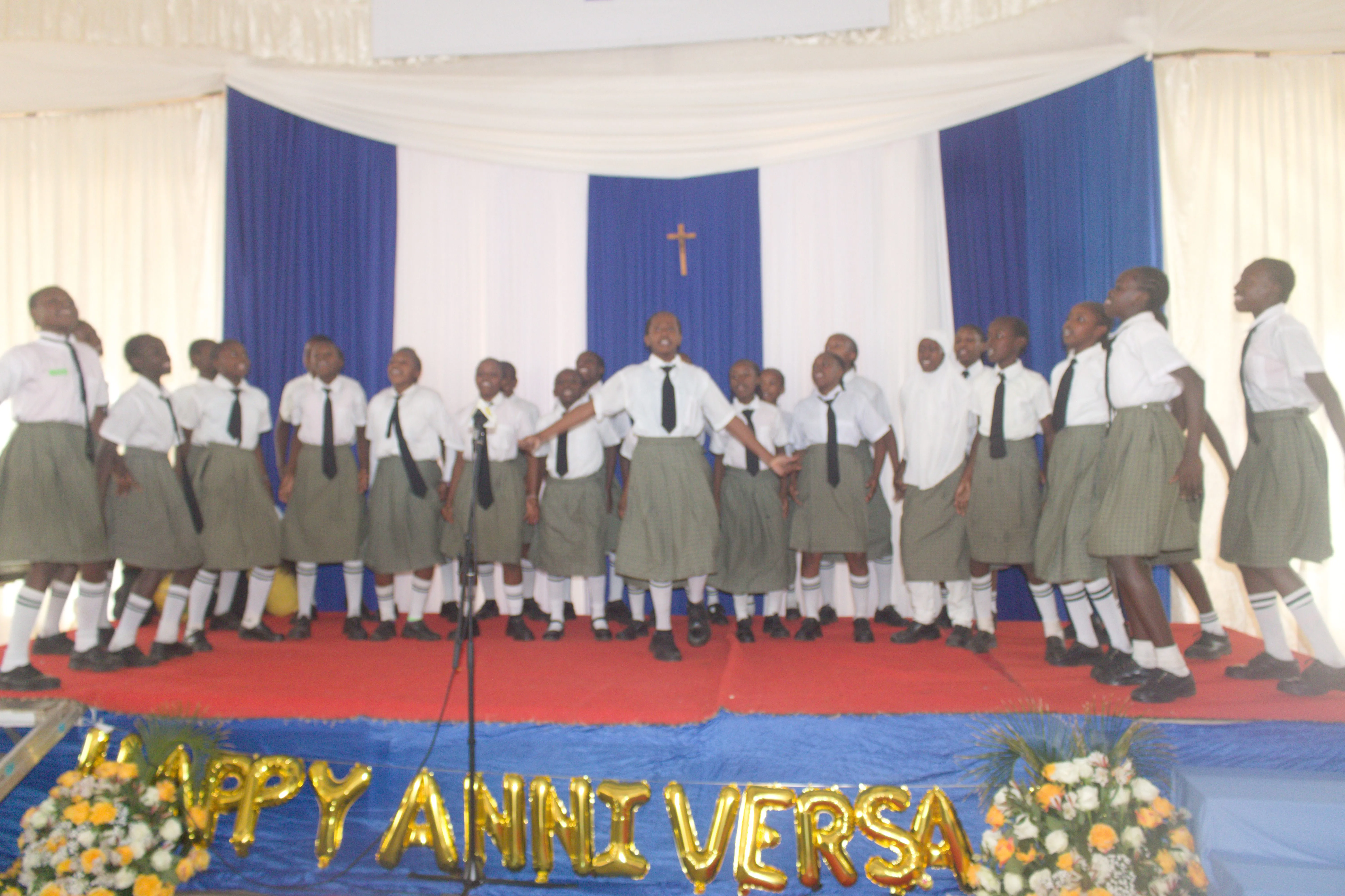 School children at the 40th anniversary of Mukuru Promotion Centre. Credit: ACI Africa
“I think Sr. Mary exemplifies what humanity is. It is not about oneself, but about other people,” Davis told ACI Africa, and added, “If everyone could have this principle in their lives, the world would be a better place.”
“Sister has impacted so many lives. I have three cousins who went through this program. Every family has people who went through this centre,” he said, and added, “We look forward to starting to give back by taking up needy students for sponsorship. At the moment, I serve on the board of St. Michaels Secondary School, where we motivate students to work hard and change their backgrounds.”
Felester Ochieng, a resident of Mukuru Kayaba since 1986, lauded the Catholic Nun’s motherliness, saying, “Sr. Mary has helped everyone here. I can’t think of any family that has not benefitted from her. Be it in the primary schools, the secondary school, the technical training college, the hospital and even the facility for the people living with disability. She is the mother of Mukuru. She has given us everything we needed to survive.”
“Whoever is not educated in this slum has no one to blame but themselves because Sr. Mary gave everyone the opportunity to go to school,” Felester, whose six nephews and nieces have gone through MPC establishments said.
She added, “Whoever took the opportunities that Sr. Mary provided went to school and got skills to be useful in life. I have nephews who were trained and are now gainfully engaged in building construction. My nieces were also trained as hairdressers and are doing very well.”
In her message to those who have continued to partner with MPC, Sr. Mary said, “If you're a donor already, continue with it. Because it's the thing that will give you life. You can't carry anything out of this life with you. You can only carry out the good deeds you've done.”
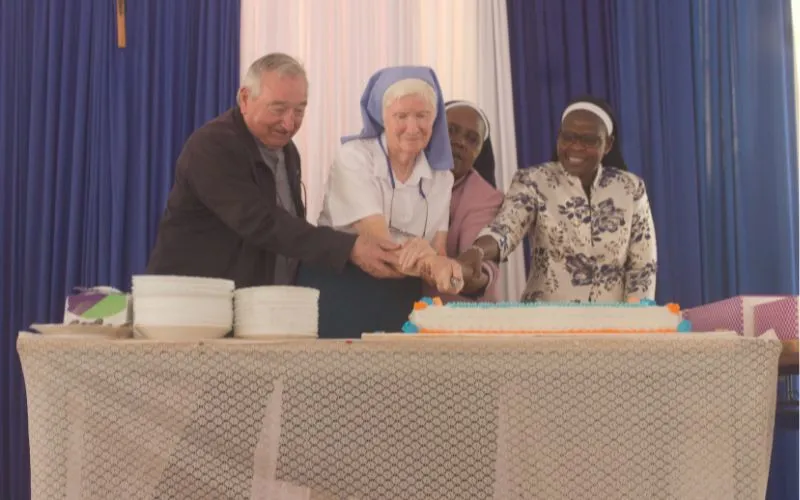 Fr. Manuel Gordejuala and Sr. Mary Killeen at the celebration of the 40th anniversary of Mukuru Promotion Centre which they co-founded. Credit: ACI Africa
“And if you're not helping somebody poorer than yourself, begin today. Because, you know, sometimes you can feel you're poor. But you can help somebody who's poorer. It gives you great satisfaction,” she said.
Asked about what motivates her to help others, Sr. Mary said, “From when I was young, I always felt sorry for children that were out of school or children in trouble with the law. And I'm so happy to be able to help such children.”
“My biggest motivation is to lift up people who don't have opportunities. My hope is for every human being to be able to live with dignity. It is lovely to see the people who were begging or people on the streets or people drunk or people without any hope get an opportunity,” the Irish-born RMS member told ACI Africa on May 21.
Agnes Aineah is a Kenyan journalist with a background in digital and newspaper reporting. She holds a Master of Arts in Digital Journalism from the Aga Khan University, Graduate School of Media and Communications and a Bachelor's Degree in Linguistics, Media and Communications from Kenya's Moi University. Agnes currently serves as a journalist for ACI Africa.



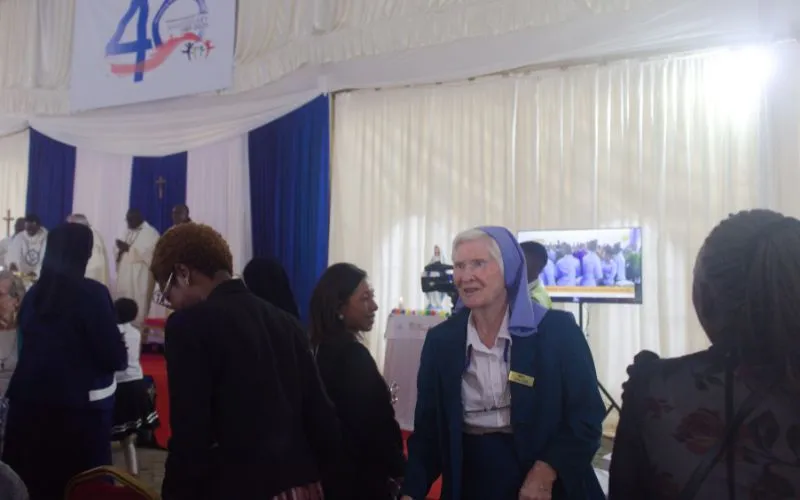 Sr. Mary Killeen, the Director of Mukuru Promotion Centre interacts with guests at the centre's 40th anniversary. Credit: ACI Africa
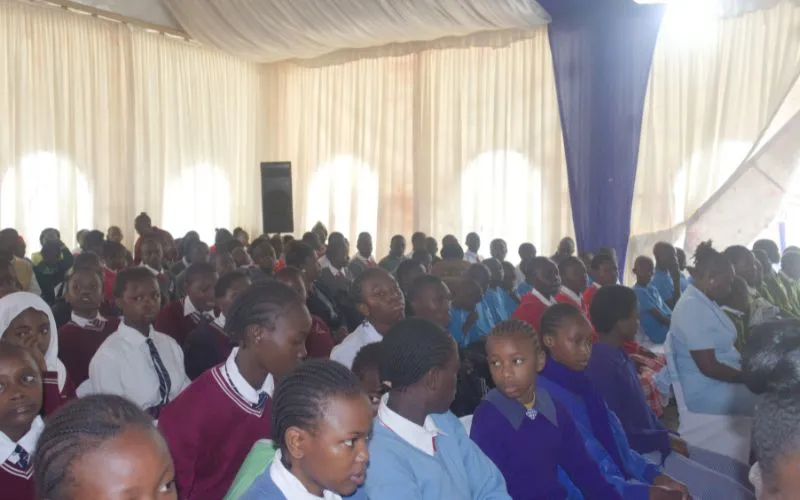 Credit: ACI Africa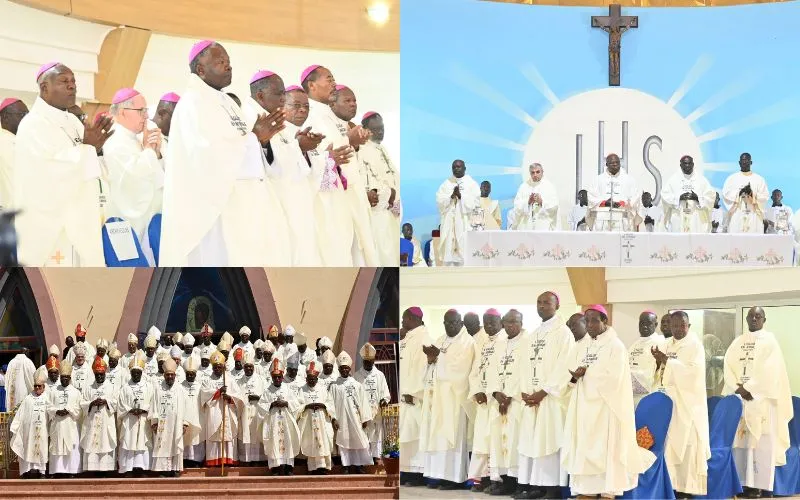
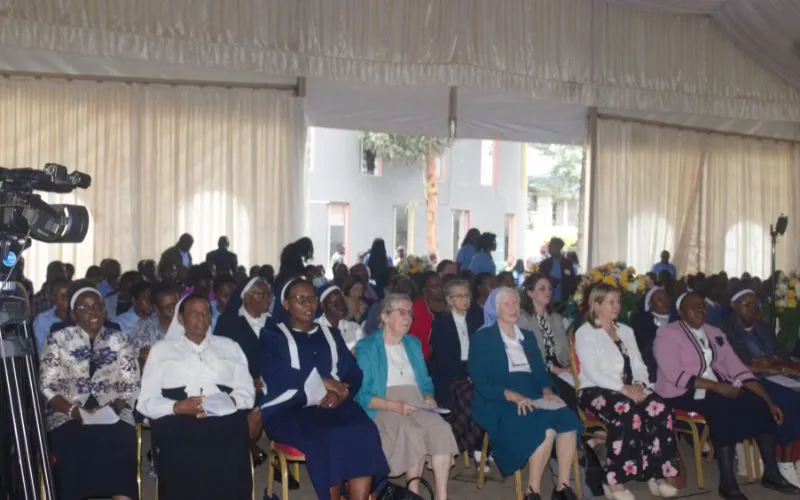
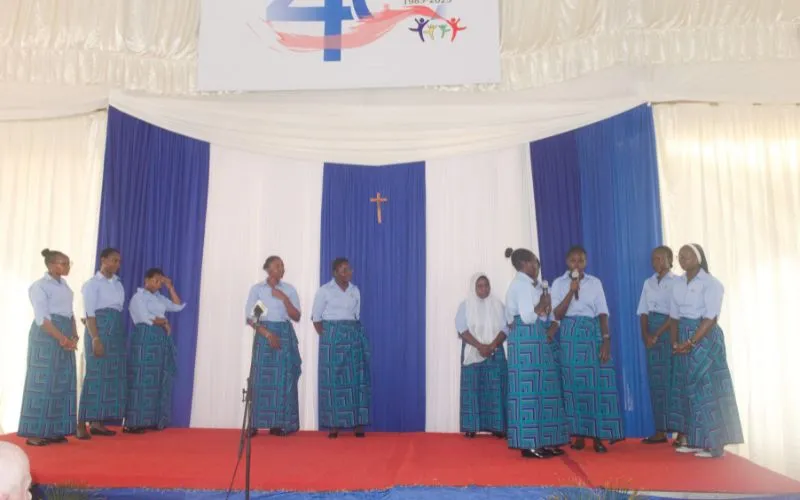 Young Sisters of Mercy at the 40th anniversary celebration of the Mukuru Promotion Centre. Credit: ACI Africa