The fostering of communion in Africa has also been through “intercontinental and ecumenical partnerships” as well as “raising Africa’s voice on global issues such as climate change, justice, and peace,” SECAM Secretary General says in the July 15 Press Statement shared with ACI Africa.
In a Concept Note on the Kigali Plenary Assembly, SECAM leadership indicated that having “a common vision” in credibly witnessing “hope, reconciliation, and integral development” on the continent is so vital that it was being made the focus of their 20th Plenary Assembly.
The needed “common vision” would be “rooted in synodality, shaped by the lived experiences of the people, and capable of transforming the continent over the next 25 years,” SECAM leadership stated in the Concept Note.
According to the leadership of SECAM, the main objective of the 20th Plenary Assembly is “to define and adopt a coherent and prophetic vision for the Church in Africa over the next 25 years, especially as it responds to the continent’s urgent needs for peace, justice, healing, and integral human development.”
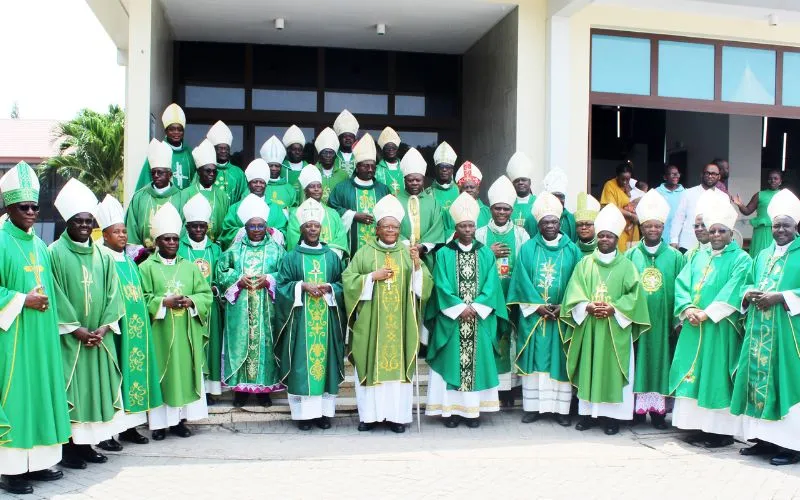 Some Bishops after the final Mass of a seminar for new bishops in Africa, in Accra, Ghana, in February 2025. Credit: SECAM
(Story continues below)
Pastoral challenges and cultural realities
According to SECAM leadership, “One major issue under review” during the Kigali Plenary Assembly “will be the pastoral accompaniment of Catholics in polygamous unions, a complex cultural reality in African societies and beyond.”
This is in line with the call from the delegates of the multi-year XVI Ordinary General Assembly of the Synod of Bishops, the Synod on Synodality, which the late Pope Francis officially inaugurated in 2021 and later extended to 2024.
Following the first session from 4-29 October 2023 that concluded with a 42-page summary report and the second one from 2-27 October 2024, which concluded with a Final Document of the XVI Assembly, Africa’s Catholic Bishops were called upon “to promote theological and pastoral discernment on the issue of polygamy”.
SECAM members were encouraged to foster “the accompaniment of people in polygamous unions coming to faith.”
In this regard, SECAM leadership says that “theologians across the continent” have been engaged “to explore” the topic of polygamy both “theologically and pastorally.”
At the Kigali Plenary Assembly, participants can look forward to a presentation of a pastoral document on “Accompaniment of Persons in Polygamous Situations”, Fr. Simbine says in the July 15 Press Statement.
Other presentations envisioned include a theological reflection on“Christ, Source of Hope, Reconciliation and Peace” and draft document titled, “The Vision of the Church–Family of God in Africa and its Islands: 2025–2050”.
According to the Secretary General of SECAM, these presentations are “to be complemented by plenary discussions, working groups, liturgical celebrations, departmental reports, and a concluding message to the Church and society.”
12 “pillars of the Church’s future”
The 12 “pillars” key in realizing “a long-term vison” for the people of God in Africa were identified during the “high-level seminar” that SECAM leadership realized earlier in April in Accra.
They include evangelization that should include “Catholic education and theological formation”, a Church that is self-reliant, family-based models of leadership, missionary discipleship characterized by synodality, and the care for creation.
Others are youth engagement that combines with ecclesial renewal, the fostering of justice, peace, and integral human development, ecumenism and interfaith dialogue, as well as the aspect of Church and political engagement.
Digital evangelization, the health and well-being of the people of God in Africa, and the liturgical life on the continent are along among the 12 “pillars” of the long-term vision of the Church in Africa that will be contained in a “strategic vision document”.
“This strategic vision document will be presented for discussion and possible adoption” during the Kigali Plenary Assembly, SECAM Secretary General has said.
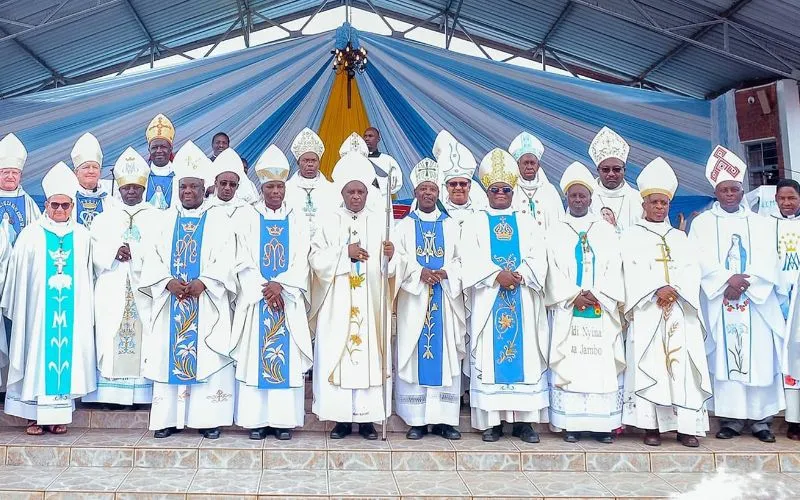 Some Bishops and priests after Mass in Kibeho, Rwanda, during the SECAM Standing Committee meeting in Kigali, in November 2024. Credit: SECAM
Africa’s Socio-Political Challenges
Delegates of the 20th SECAM Plenary Assembly are expected to “assess current political and social dynamics across the regions of Africa,” Fr. Simbine has said in the July 15 Press Statement.
Some of the challenges to be examined include governance and public leadership, human rights and social justice, and poverty and debt.
Other challenges SECAM Plenary Assembly delegates are to assess are climate and environmental stewardship, dialogue, peacebuilding, and interreligious relations, and safeguarding and youth protection.
SECAM members are drawn from eight regional associations, which include ACEAC, the Association of Member Episcopal Conferences in Eastern Africa (AMECEA), the Association of Episcopal Conferences of Central Africa Region (ACERAC), and the Regional Episcopal Conferences of West Africa (RECOWA/CERAO).
Other regional associations are the Assembly of the Catholic Hierarchy of Egypt (AHCE), the Regional Episcopal Conferences of North Africa (CERNA), Madagascar, and the Episcopal Conferences of Indian Ocean (CEDOI), and the Inter-Regional Meeting of the Bishops of Southern Africa (IMBISA).
ACI Africa was founded in 2019. We provide free, up-to-the-minute news affecting the Catholic Church in Africa, giving particular emphasis to the words of the Holy Father and happenings of the Holy See, to any person with access to the internet. ACI Africa is proud to offer free access to its news items to Catholic dioceses, parishes, and websites, in order to increase awareness of the activities of the universal Church and to foster a sense of Catholic thought and culture in the life of every Catholic.


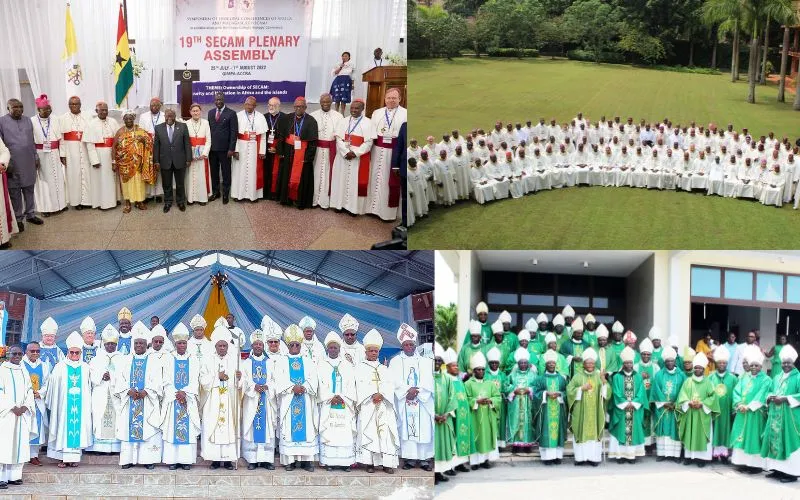

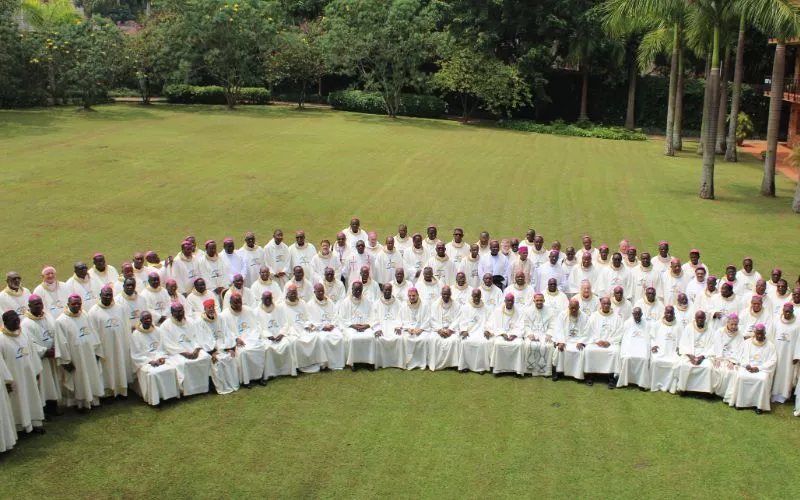 Some Bishops during the SECAM Plenary Assembly in Kampala, Uganda, in 2019. Credit: SECAM
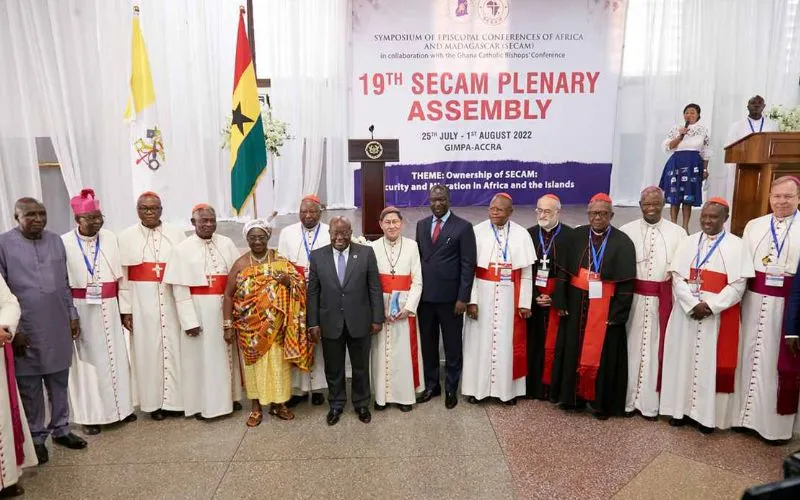 Some Bishops with Ghanaian authorities during the SECAM Plenary Assembly in Accra, Ghana, in 2022. Credit: SECAM