Advertisement

Investing in Formation Key to Building a Synodal Church: African Communication Official at Synod on Synodality

Credit: Sheila Pires

Sheila Leocádia Pires, who served as Secretary of the Commission for Information at the multi-year Synod on Synodality that Pope Francis extended to 2024 has underlined the need for ongoing formation on synodality for all members of the Church, especially within the African context.

In an interview with ACI Africa on Tuesday, July 22 after she facilitated training sessions for theology Seminarians at Father Leonardo Sikufinde Major Seminary in Angola’s Catholic Archdiocese of Lubango, Ms. Pires said formation is essential for the Church to truly embody the “walking together” spirit called for by the Second Vatican Council and renewed by the late Pope Francis through the 2021-2024 Synod.

The journalists who serves as the Communications Officer of the Southern African Catholic Bishops’ Conference (SACBC) noted that in times of persistent clericalism and exclusion of the Laity from decision-making processes, “synodality restores to the Church its true identity: a people of God in co-responsibility.”

“One cannot speak of a Synodal Church without investing in the formation of its members, because a mistaken understanding of the Church’s structure has generated pastoral practices marked by exclusion, where decisions are centralized, and the voice of the laity, especially women and youth, is silenced or ignored,” she said.

Ms. Pires added, “We cannot build a synodal Church with only formed laity. If Bishops and Priests do not understand Synodality, if they do not live it, it will never become a reality.”
Advertisement

“Formation must begin with the leaders—not as an imposition, but as pastoral conversion. Pope Francis speaks of a ‘synodal conversion,’ and this conversion is urgent,” the Mozambican-born South Africa-based Catholic journalist told ACI Africa.

She recalled that “Pope Francis has insisted on overcoming clericalism” noting that this can only be done through education and spiritual, pastoral, and theological empowerment of the entire people of God.

“Every baptized person has a role, a gift to offer. And every baptized person has the right to be heard in pastoral decisions,” Ms. Pires said.

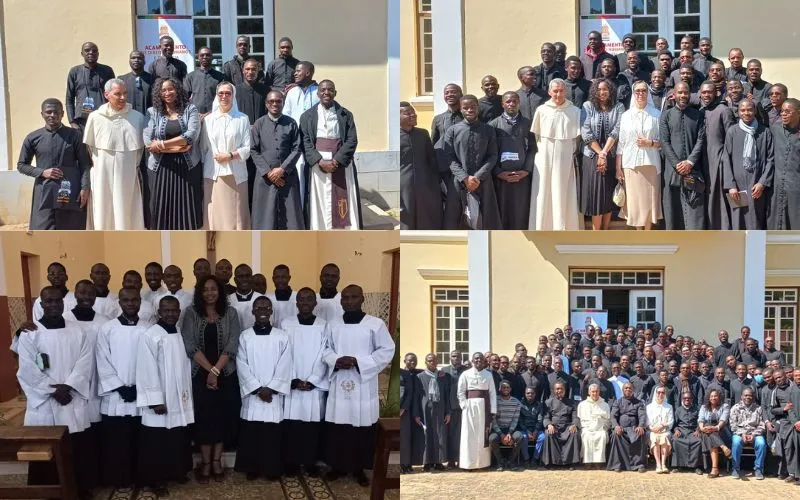
The Communication official at the Synod on Synodality served as a trainer at the July 15-20 Human Rights and Theology Seminar at Father Leonardo Sikufinde Major Seminary. She had three presentations with 120 third year Theology Seminarians on Synodality.

Organized by Mosaiko—Institute for Citizenship, the six-day event featured discussions on key themes from the Synod’s final document, such as inclusion, active listening, and fair treatment of religious workers, with special attention to the often-overlooked contributions of religious women.

More in Africa

Among beneficiaries of Ms. Pires’ input were Major Seminarians from various Angolan Catholic Episcopal Sees, including Luanda, Huambo, Benguela, Lubango, and Kwanza-Sul.

Ms. Pires addressed fundamental themes of the final Synod document published in October 2024, including co-responsibility, active listening, inclusion, overcoming clericalism, valuing the laity, and fair remuneration for all working for the Church, with special emphasis on religious women, who are often invisible. 

In the July 22 interview, Ms. Pires said formation on Synodality remains a fundamental priority for the Church, especially in Africa, where she said many Christians live in remote communities without regular access to the sacraments or physical presence of Priests. 

Underlining the need for formation on Synodality, she said, “We need to revive the parish synodal groups created in 2021, give them updated training, and empower them to train others. This is how we create a synodal movement, a true culture of synodality.”

According to her, “formation must happen at all levels and contexts: from Bishops to children in catechesis, all must learn what synodality means because it concerns everyone.”

Advertisement

The SACBC Communication Officer noted that in a Synodal Church, decisions are not made top-down, but through processes of listening and consultation. “The Priest or Bishop still has the final responsibility to decide, but it is a decision informed by the community. This requires humility, openness, and a new style of ecclesial leadership,” she said.

Ms. Pires also discussed with future priests the responsibility of the laity within the growing context of clericalism.

“We often think clericalism is only a problem of priests, but it is also fed by the laity who treat priests as untouchables or superhumans. A synodal Church challenges this mentality. We are all brothers and sisters, with equal baptismal dignity,” she said.

Ms. Pires spoke about the role of youth and women in a Synodal Church, emphasizing that “the youth are not the future of the Church, they are the now. And women need to be heard, recognized, and valued not only in pastoral ministries but also in decision-making spaces, councils, offices, and commissions.” 

Speaking about the African reality, Ms. Pires highlighted the important role of Catechists in rural areas and communities where priests cannot be regularly present. 

(Story continues below)

“Many of these communities see a priest only once a year or less. Those who sustain the faith of these communities are the Catechists, ministers of the Word and Eucharist. They need to be well-formed in synodality because they are the true animators of faith in ecclesial peripheries,” she said.

Ms. Pires was one of the only two women that represented the Laity in Africa in the multi-year Synod on Synodality that was concluded on 27 October 2024 in Rome.

Asked what advice she would give to young women who wish to serve the Church through communication, Ms. Pires said, “My advice is to listen to God’s voice. Often, we make plans for our lives, but God has a much better plan. The secret is to surrender, let God guide us even when we do not understand. Work hard, with dedication, but always put God first.”

She also encouraged young people not to be afraid to get involved with the Church, saying, “The Church needs you. Your energy, creativity, and faith are essential. Don’t wait for someone to call you. Step forward. And remember: humility, knowing how to listen, and praying with faith are keys that open doors.”

She emphasized that African episcopal conferences must take synodality as a transversal axis of their activities and formations. 

“It cannot be a passing project. It must be permanent, institutionalized. We need synodal formation centers, seminaries that teach Theology of Synodality, Catholic universities that promote participation, listening, and diversity,” Ms. Pires told ACI Africa.

João Vissesse is an Angolan Journalist with a passion and rich experience in Catholic Church Communication and Media Apostolate.