In order to use this technology “for good,” a number of Catholics are starting companies that are working to use AI “for the Church’s mission of evangelization,” Usselmann said. “It’s pretty exciting and amazing that there are so many out there that are thinking that way.”
AI technologies created by Catholics include Longbeard, Magisterium AI, and Truthly, which offer daily Mass readings and liturgical resources at the click of a button. Some of them are even drawing from the pontifical universities in Rome’s libraries to have access to “tremendous theological and philosophical knowledge.”
Many of the Catholic AI tools provide sourcing and give footnotes that explain where in the Church’s teaching the information was found. “And that’s phenomenal because it’s helping us learn,” Usslemann said. “It’s being a research tool, but it’s not taking away our own ability to discover.”
“There’s also a prayer app called the Grace app,” Usselmann said. “It’s a generative AI model that’s … not replacing traditional spiritual guidance in the Church, but it gives personalized spiritual guidance or companionship to help somebody grow in their faith.”
Usselmann said of course she “questions it,” but also “it’s really interesting.”
(Story continues below)
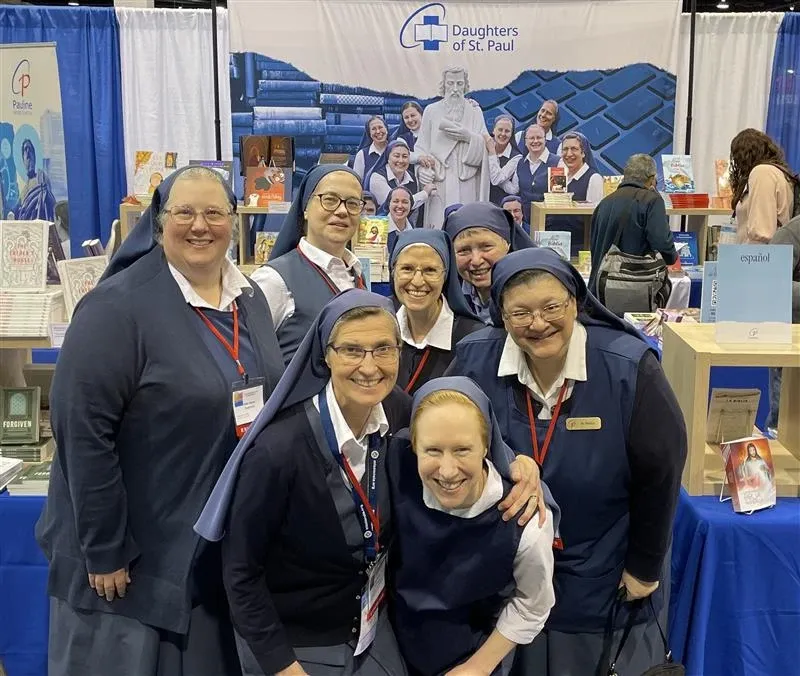
The sisters, and other Catholics working in the media, she added, need to “help people think and question” AI. People need to understand why they are using it and then use it in ways that are “supportive of human dignity” and that don’t “take away from our own ability to reason and think through problems.”
Only humans can create
While AI has many capabilities, it cannot create the same way human beings can because, according to Usselmann, it doesn’t have the “soul” to do so.
“Human beings create, machines generate. So they’re just generating based on information that’s out there — learned algorithms and learned practices that it’s being fed. But human beings, we have this amazing gift of creativity because we are made in God’s image and likeness. God, who is the creator, endowed us with this spark, this element of God-likeness, which is creativity.”
“It comes from the depth of the person, body and soul, where we reflect and can think and be self-aware and give self-expression, and have moral agency, which is something a machine cannot do … Can AI generate beauty and art? Maybe. But where does beauty and art come from? It comes from our God-likeness, being made in God’s image and likeness.”
Usselmann plans to continue to expand her knowledge of AI and keep the conversation around the technology open. This fall, she will attend the Builders AI Forum hosted by the Pontifical Gregorian University at the Collegium Maximum in Rome.
The event reported that it “aims to foster a new interdisciplinary community of practice dedicated to supporting the development of AI products that serve the Church’s mission.” The gathering will “bring together companies leading in Catholic AI, venture capital and angel investors, as well as prominent AI thought leaders and researchers.”
While many are going as “creators and investors,” Usselmann is attending as an “investigator.” She explained that guests will discuss “innovative new ideas,” while “having the educators and theologians helping to ask questions,” to help keep future AI “in line with the Church’s understanding of Christian anthropology.”
Tessa Gervasini is an intern for Catholic News Agency and a fellow of the College Fix. She recently graduated from Texas Christian University with a bachelor’s degree in strategic communication.