They say the commission has facilitated “peace dialogues, election monitoring and mediation initiatives in conflict areas.”
The commission, according to the report, has also facilitated research, awareness campaigns and capacity building for the pastoral care of migrants, through “management of the Migrant Pastoral Project of Catholic nuns, including training, data collection and networking.”
Through Laudato Si’ principles, the Bishops say that SECAM has fostered environmental protection by supporting “regional campaigns on climate change, land rights and resource management.”
In the report, the Bishops say that through the communications department, they have been able to play “a crucial role in enhancing the visibility” and reach of SECAM through SECAM’s Website and digital platforms, Partnership with APO Group and Media and public relations.
Challenges
(Story continues below)
The Bishops highlight the lack of financial resources as one of the major challenges faced during the three-year period.
They say that the reduction in diocesan contributions, which were supposed to support SECAM, meant that the organization was mainly dependent on aid from foreign partners, thus compromising the realization of its essential activities.
Without financial autonomy, the Bishops said, they could not control SECAM’s destiny, plan long-term projects or “autonomously strengthen its mission.”
The Bishops in Africa further report having lacked “formal legal authority”, a situation they say hindered SECAM’s ability to effectively coordinate the Church's progress on the continent.
They explain that the lack of legal backing limited their power to implement common actions, even when its deliberations are approved in plenary assembly or by the Permanent Council.
As a result, they say, “some Bishops' Conferences recognize and follow SECAM's directives, while others regard them as mere opinions or recommendations, thus compromising the unity and effectiveness of common action.”
They also highlight ineffective regional representation within SECAM as another challenge, saying, “The structure of representation, based on delegates rather than influential presidents or vice-presidents, hinders SECAM's ability to lead, coordinate and facilitate greater participation by the bishops' conferences in defining common strategies.”
The configuration they say, “limits the effectiveness of the consultation and collaboration essential to a unified, synodal Church.”
Communication was also a challenge, the Bishops say, and explain, “Insufficient circulation of accurate, up-to-date information between the Bishops' Conferences has hampered the integration and driving role of the various regions in building a more participative Church.”
“This limitation compromises processes of shared reflection, the mobilization of resources and the implementation of common actions, thus hindering the realization of a truly synodal and collaborative Church,” they say.
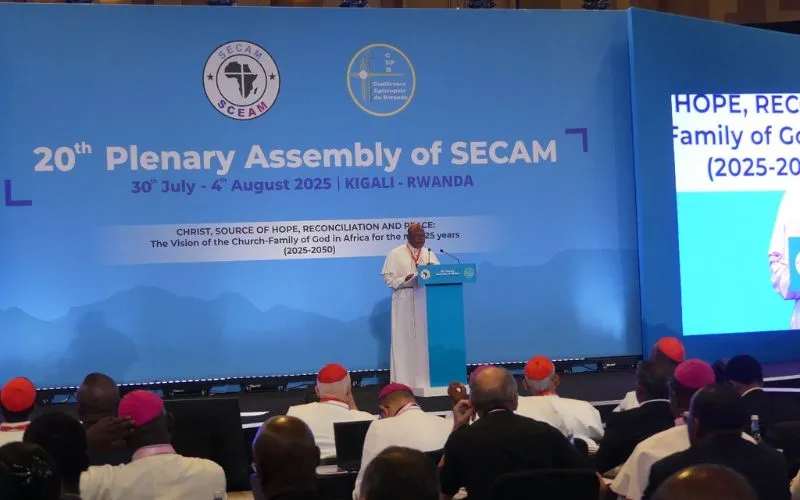
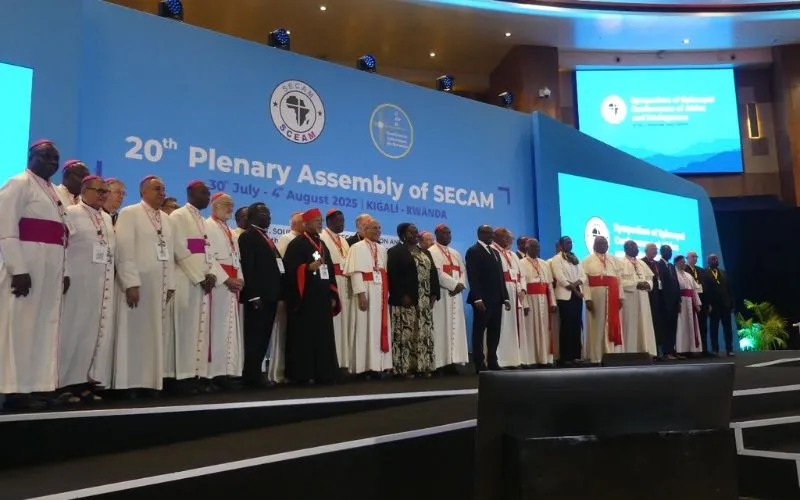 Credit: ACI Africa
In the report, the Bishops also highlight the challenge of insecurity and political instability as another major challenge in Africa.
“The presence of armed conflicts, political crises and high levels of insecurity in several regions of the continent has had a profound impact on SECAM's activities throughout its mandate,” they say.
These unfavorable conditions, SECAM members say in the report, “have considerably hampered SECAM's presence and ability to support local conferences.”
“The Church in Africa is called to be prophetic, inclusive and transformative. Through its various commissions and departments, SECAM guides the continent's Church towards a future rooted in faith, justice and hope,” the Bishops say in the report.
Silas Mwale Isenjia is a Kenyan journalist with a great zeal and interest for Catholic Church related communication. He holds a Bachelor’s Degree in Linguistics, Media and Communication from Moi University in Kenya. Silas has vast experience in the Media production industry. He currently works as a Journalist for ACI Africa.



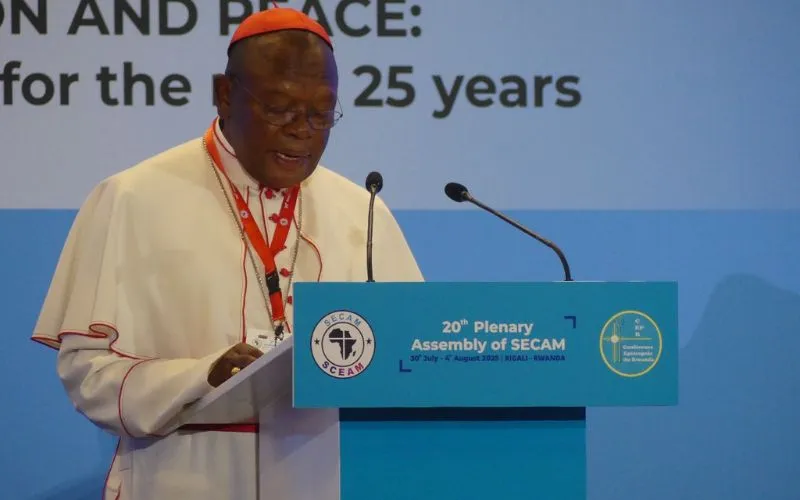 Fridolin Cardinal Ambongo. Credit: ACI Africa
 Credit: ACI Africa