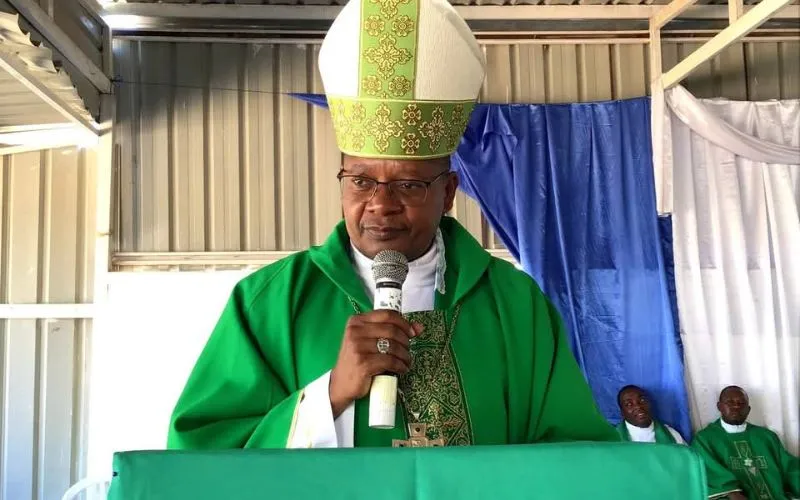
Bishop Hipunyati said that the topic demands deep reflection due to its significant impact on the maturity of Christian faith and social harmony.
He noted that accusations of witchcraft often target successful individuals and are frequently driven by envy and unfounded suspicion.
“Those accused of witchcraft are always successful people. Have you ever seen a poor person accused of being a witch?” the Catholic Church leader posed.
He continued, “The persistence of belief in witchcraft shows that many Christians have yet to develop a secure and firm faith. This attitude weakens Christian witness.”
“Are we truly an evangelized community? Have we genuinely renounced Satan? And if so, why do we still believe in witchcraft? A community that believes in witchcraft is immature, not only in faith but also in humanity. It is trapped by fear, dependent, and unable to live in peace,” Bishop Hipunyati said.
He called for a genuine practice of faith, grounded in trust in Christ and the power of the sacraments, saying, “Christians must flee sin and evil, including the belief in witchcraft. The sacraments strengthen faith; they are not mere social rituals. Receiving them is a commitment to live according to faith. Sacraments are acts of faith, celebrated and lived with faith.”
Beyond denouncing witchcraft, Bishop Hipunyati addressed the relationship between faith and culture, stressing that evangelization must transform negative local traditions.
“The Good News of salvation offered to all people must illuminate and purify our cultures. The joy of the Gospel must free us from the harmful aspects of our traditional culture,” he said.
Bishop Hipunyati called attention to cultural practices that harm human dignity and require purification in the light of the Gospel to foster a liberating Christian life.
Another pastoral challenge highlighted was the material support of the Church and its structures.