Advertisement

Launched Youth Vocational Skill Centre in Nigerian Archdiocese to Foster “self-reliance, community development”

Credit: ACI Africa

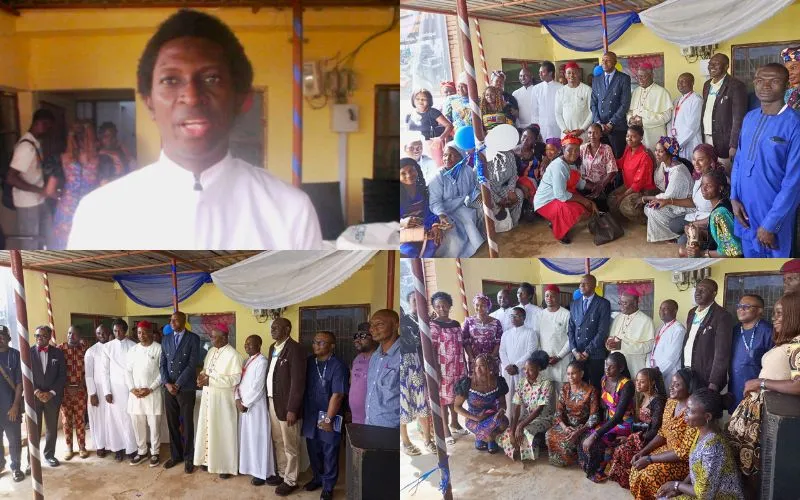
In a bid to combat youth unemployment and promote economic self-sufficiency, the  Catholic Archdiocese of Abuja has launched a vocational training centre through its Justice Development and Peace Caritas Initiative (JDPCI).

The initiative, which Archbishop Ignatius Ayau Kaigama unveiled officially on Tuesday, August 5, addresses youth unemployment and provides practical alternatives to white-collar job dependency.

In an interview with ACI Africa on the sidelines of the event,  the Executive Director of JDPCI Abuja explained the motivation behind the centre. 

“We identified a gap in the lives of our youth. Many are graduates, but they roam the streets without jobs. Government employment is not enough, this centre provides youth with technical skills that can lead to self-reliance and community development,” Fr. Sebastian Sani told ACI Africa.

Fr. Sani noted that the program offers training for a hundred youths in various fields, including cinematography, video editing, printing technology, artificial intelligence, cyber security, app development, carpentry, solar installation, CCTV, catering, and more.

Advertisement

“This initiative is the Church’s response to unemployment and poverty. After training, we empower the youth with startup kits and connect them to markets. For example, those trained in fashion will receive sewing machines to begin their businesses,” he explained

The Nigerian Catholic Priest urged young people to embrace skills development, saying, “White-collar jobs are not enough. Gone are the days when certificates were all you needed. Now, if you want to be globally relevant, you must add skills to your certificates.”

Speaking at the launch, Archbishop Kaigama described the initiative as a response to the rising unemployment and hopelessness among Nigerian youth. 

“This humble beginning is like the mustard seed we talk about in the Bible. It’s going to grow. I congratulate JDPCI and the entire Archdiocese of Abuja for this initiative. By the grace of God, we hope to continue getting support from individuals, corporate bodies, and even the government,” he told ACI Africa during the August 5 event.

The Nigerian Catholic Archbishop acknowledged the Ministry of Youth Development’s presence at the event and its promise to collaborate. 

More in Africa

“We hope they will key in, and we shall expand the scope of this project. This is just the beginning. We can replicate this in other parts of Abuja and even beyond,” Archbishop Kaigama said.

Acknowledging the economic hardship in Nigeria, the Catholic Church leader encouraged young people not to give up, saying, “The seeds we are planting will grow. Things are not too good now, but they will be better. Giving up means going into criminality or immorality. So, we ask the youth to remain stable, consistent, and trust that God will provide.”

Also speaking at the same event, Barrister Godwin Odo, who represented the United Nations Children's Fund (UNICEF) Nigeria, lauded the Church’s role in addressing social needs.

“The centre targets vulnerable and less privileged. A lot is expected from it. This is a departure from the norm. These days, we often see churches asking what people can give to them. But here, the Catholic Church is giving back, uplifting the less privileged,” Odo told ACI Africa.

On his part, the Country Representative of Catholic Relief Services (CRS) expressed the body’s commitment to the success of the JDPCI initiative. 

Advertisement

“It is an honor and privilege for CRS to be part of this occasion. Since 2022, CRS has partnered with JDPCI on the Youth Entrepreneurship Development and Empowerment Scheme (YEDES),” Akin Kikonda told ACI Africa.

According to Mr. Kikonda, the initiative was inspired by the commitment of Archbishop Kaigama to empowering youths in underserved communities.

 “Over 200 youth have already received training through YEDES. We are confident they will use their skills to generate income and support their households,” he said.

Speaking on behalf of Nigeria’s Minister of Youth Development, Dr. Obinna Ebirim described the new centre as “a symbol of possibility, dignity, and hope for young people in Abuja, and a model of what is possible nationwide.”

He praised the Catholic Archbishop of Abuja and JDPCI for stepping in where the government could not, saying, “For doing our job, the job that government should be doing, you are doing it, and for that, we are very grateful.”

(Story continues below)

Some of the beneficiaries also shared their experiences at the vocational center.

Onyinye Agbakoba, who was trained in the fashion and design department, expressed gratitude to the program organizers, saying, “This program started in March, and so far, we’ve learned how to cut and make dresses. I made what I’m wearing today.”

Ms. Agbakoba urged her peers not to depend solely on office jobs. 

“There’s a lot of money in skill acquisition. At least if you learn one or two, you can sustain yourself, your family, and even contribute to the country,” she said.

Ms. Agbakoba said that JDPCI continues to support graduates by offering them opportunities to return as tutors. 

“It’s a cycle. They give you, and you give back while still earning. I was unemployed for a very long time until this opportunity came and I grabbed it wholeheartedly,” she said.

Another beneficiary, Benjamin Ikeotuonye, who trained in ICT and focused on web design and cyber security, said, “Over the last few months, I’ve developed skills in web design, cyber security, ethical hacking, and more. I’ve always loved coding, and this program gave me the opportunity to deepen that passion.”

Mr. Ikeotuonye underscored the value of blending formal education with practical skills, saying, “It’s not just about certificates. Having something at your fingertips increases your means of income and allows you to support others.”

He continued, “Cyberspace is full of threats like cyberbullying and fraud. With my new skills, I can contribute to making digital platforms safer and more accessible.”

Mr. Ikeotuonye recounted how churches and non-governmental organizations (NGOs) could benefit from his skills, saying, “Many churches need websites. I can now help them develop secure and functional platforms. It’s one way I can give back to the community and the Church.”

Abah Anthony John is a Nigerian Catholic journalist with passion for Church communication and media apostolate. He holds a bachelor’s degree in mass communication from Benue State University, Makurdi in Benue State Nigeria. He has a background in print, electronic and multi-media production.