Advertisement

In Cameroon, “anti-gospel acts” Causing Discontent ahead of 2025 Presidential Poll: Catholic Archbishop Urges Fraternity

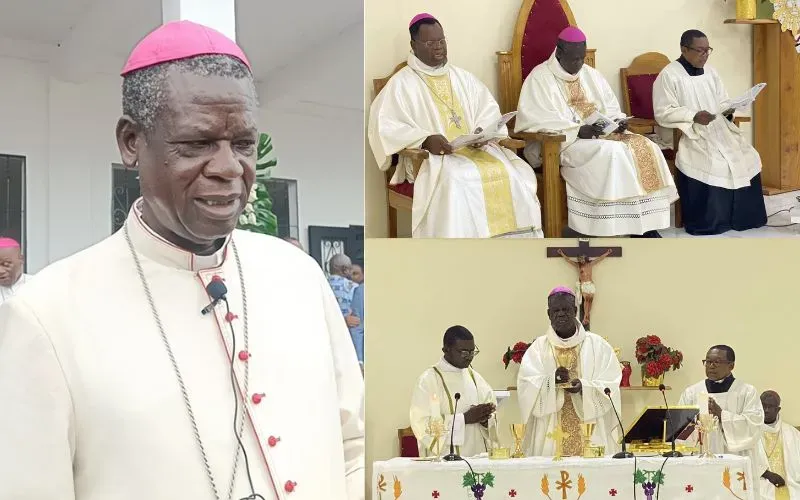
Archbishop Samuel Kleda of Cameroon’s Catholic Archdiocese of Douala in Cameroon. Credit: ACI Africa

Archbishop Samuel Kleda of Cameroon’s Catholic Archdiocese of Douala has denounced what he has termed as “anti-gospel acts”, including corruption and bad governance that he says are causing discontent among Cameroonians as they prepare for October presidential election.

In his pastoral letter shared with ACI Africa on Tuesday, August 12, Archbishop Kleda says that the Central African nation is “shaken by multiple evils that afflict all social strata,” and is in a great need for peace, justice and reconciliation especially during this electioneering period.

“The malaise that is eating away at our country at the present time, and which is causing widespread discontent in the hearts of citizens in this pre-electoral period, has its roots in the anti-gospel acts that are being instituted in the management of our country,” he says.

The Cameroonian Catholic Archbishop also highlights the absence of democracy, widespread poverty and unemployment, illegal immigration, poor road network, difficulty in accessing water and electricity as additional acts causing discontent among his compatriots. 

In his pastoral letter addressed to Clergy, women and men Religious, and the Laity, Archbishop Kleda also highlights the “nebulous management of oil,” mining injustices and security crisis in the country’s northern region as additional factors behind discontent. 
Advertisement

“These ills, so often decried, pervert relations between citizens and those in power, and give rise to abuse of power and injustice,” the Local Ordinary of Douala says.

Amid all the misdeeds, the Cameroonian Catholic Archbishop says that “at the present time and at all times, our country is thirsty for social justice expressed through respect for human rights and the development of everything that enables people to flourish and fulfil their vocation.”

On bad governance and graft, Archbishop Kleda says, “We have repeatedly denounced corruption in our country without any effective action being taken by the public authorities to eradicate it.”

“Today, we have to recognize that our country, Cameroon, is gangrened by the serious phenomenon of corruption,” he laments, adding that this vice is manifested in all areas of social life, including ordinary life, administration, education, finance, public procurement, the army, the police, the gendarmerie, justice, religion and public health.  

He says that corruption in Cameroon not only manifests itself in the pillage and waste of public resources but is exacerbated by the exponential lifestyle of members of the government, at the expense of the vast majority of citizens who he says are starving.

More in Africa

“The consequence is that corruption paralyses the very functioning of the State, creates injustice and inequality within the population and plunges the whole of society into despair in the face of an uncertain and mortgaged future,” he says.

To address the menace of corruption and bad governance, Archbishop Kleda appeals to the “conscience of those in power and their direct or indirect, passive or active supporters to address all these evils that are helping to destroy Cameroon and mortgage the future of millions of people, especially young people.”

In the absence of democracy, the Catholic Church leader underlines the need for dialogue which he says is “a fundamental pillar of democracy.” He cautions, “If political players do not engage in dialogue, this praxis cannot produce good results.”

“A democracy in which political players are scorned, bullied and imprisoned is doomed to failure,” he says, and adds, “Through democracy, we have a duty to consolidate peaceful coexistence, at a time when some people are accentuating identity-based isolationism.”

He says that as the country prepares for the presidential election in October, Cameroonians must commit themselves to building a future together based on justice, fraternity and love.

Advertisement

Recognizing poverty and unemployment as “obvious signs of a collapsing economy”, Archbishop Kleda says that he finds it unfortunate that the number of people out of work in the country “increases dangerously every year.”

To address this challenge, the Catholic Archbishop urges the country's leaders to “respect and apply the notion of the common good”.  He explains, “This means that they must do everything possible to ensure that our country's wealth benefits all its citizens.”

“Work is an absolute right and a necessity for every person. It enables them to fulfil their vocation as persons, to participate in the development of society and to be at the service of others,” he says.

In his pastoral letter, Archbishop Kleda also reflects on illegal immigration, which he says is “draining our country of intelligent, qualified young people, scientists, engineers and health professionals, who are leaving for countries offering better living and working conditions.”

He laments that amid widespread injustice in the country, recruitment is done based on recommendations, to the detriment of those who have no one in government.

(Story continues below)

The Local Ordinary of Douala, who started his Episcopal Ministry in Cameroon’s Catholic Diocese of Batouri in February 2001 also decries the poor road network which he says has a considerable impact on development as almost all agricultural areas are landlocked. “Our roads are also marked by potholes and gaping cracks, which cause many fatal accidents,” he laments.

He also says that the level of drinking water coverage in Cameroon is still far from satisfactory especially in a country with enormous hydraulic potential.

Amid all the challenges, including the injustices in mining areas, and the insecurity in the north, Archbishop Kleda says that it is the Church leader’s “pastoral duty to call for a general awakening of all social actors with a view to reconciling hearts and normalizing social life by embarking on new paths.”

To achieve this, he says, “every Cameroonian must resolve to do his or her bit in the fight against the many ills that are destroying the country.”

“I invite all people of goodwill to change their mentality and attitude, to undergo a profound inner transformation, to walk a new path and renew our lives so that we can be ‘peacemakers’”, the Local Ordinary of Douala since November 2009 says.

Silas Mwale Isenjia is a Kenyan journalist with a great zeal and interest for Catholic Church related communication. He holds a Bachelor’s Degree in Linguistics, Media and Communication from Moi University in Kenya. Silas has vast experience in the Media production industry. He currently works as a Journalist for ACI Africa.