CM members also partner with government agencies such as the National Agency for the Prohibition of Trafficking in Persons (NAPTIP) and the police, especially in cases that require prosecution.
In the August 16 interview, Sr. Ani noted that the most challenging part of the work is rehabilitating survivors who often suffer deep trauma. She recalled a difficult case of a young woman who had attempted suicide after being rescued.
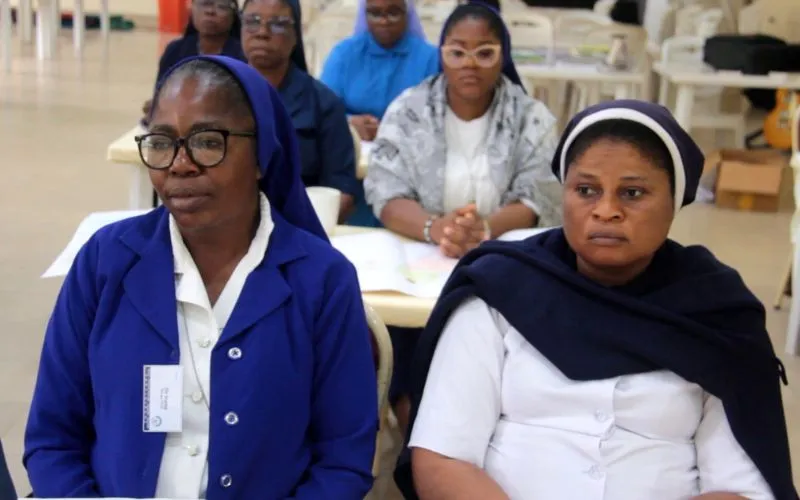 Credit: ACI Africa
“Trying to talk to her and counsel her was not easy. That makes trauma-informed training very important because it equips us to handle survivors and vulnerable youths better,” she said.
The CM member admitted that rehabilitation remains the toughest challenge, as many survivors suffer deep trauma, recalling cases of attempted suicide among those rescued.
(Story continues below)
The August 10-16 training, held at the Abuja-based Psycho-Spiritual Institute (PSI) with support from Arise Foundation, aimed to strengthen the Sisters’ skills in handling cases of trauma.
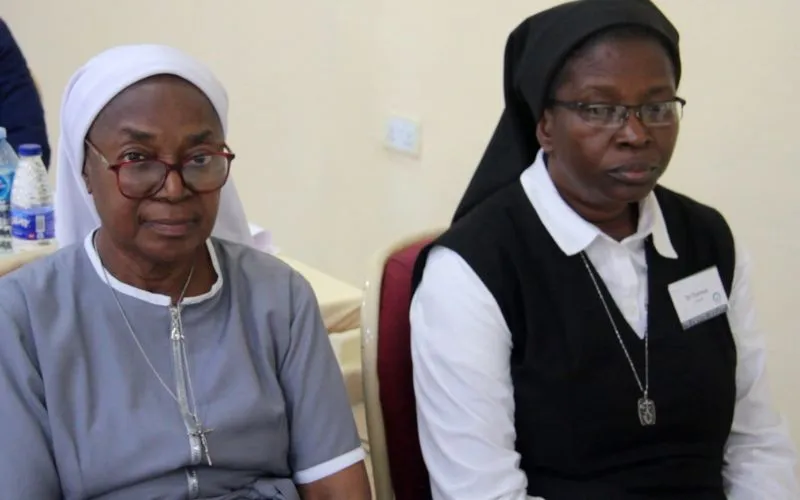 Credit: ACI Africa
“This program has enlightened us. We now have the skills to accompany survivors in their healing process—and we are going home healed. The one who cares for the sick is also wounded in some way. Trauma-informed care benefits both survivors and caregivers,” Sr. Ani said.
In separate interviews with participants in the August 10-16 training, they shared the training’s impact. Sr. Clara Azubike of the Sisters of St. Louis (SSL) who runs a shelter in Lagos, noted that many returnees at her Lagos shelter remain traumatized, some unable to sleep without lights due to captivity experiences.
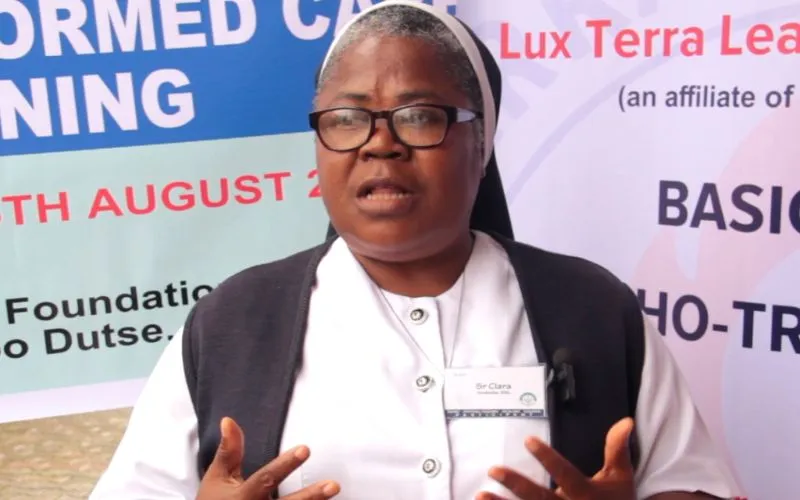 Sr. Clara Azubike. Credit: ACI Africa
“The training has helped me to be trauma-informed and to recognize signs of deep trauma. Listening is a very important skill we are taking home,” Sr. Azubike told ACI Africa.
On her part, Sr. Monica Onwuneli of the Missionary Sisters of Our Lady of Apostles (MSOLA) said the workshop gave her new insights into dealing with survivors.
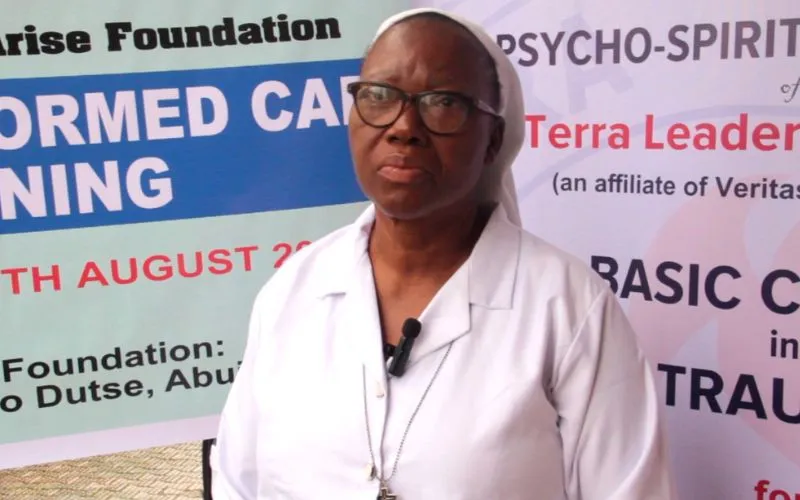 Sr. Monica Onwuneli. Credit: ACI Africa
“Some of the girls struggle with forgiveness. One girl I worked with returned from Europe completely broken after her journey through the desert and the sea. Today, she is married with two children. For me, this is a joy and proof that healing is possible,” Sr. Onwuneli said.
Also speaking to ACI Africa on August 16, Sr. Beatrice Akuweze Acholike of the Handmaids of the Holy Child Jesus (HHCJ) underscored the importance of psycho-spiritual healing.
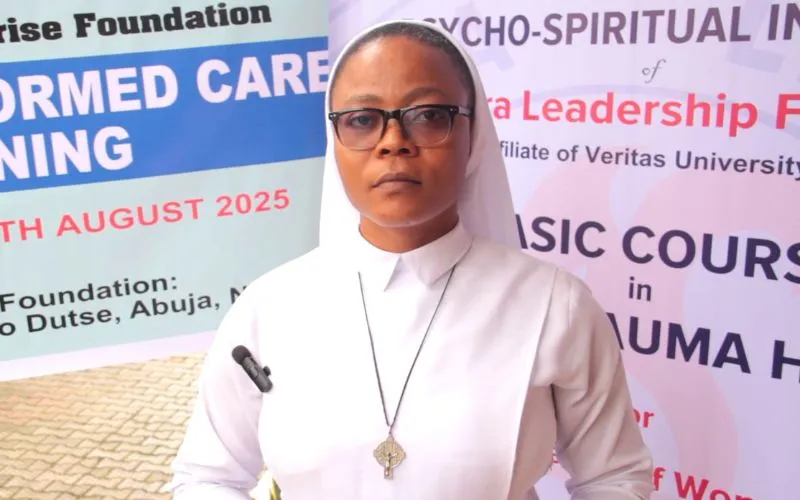 Sr. Beatrice Akuweze Acholike. Credit: ACI Africa
“One lesson that struck me during this training is that healed people heal people. This is my message to other Sisters. We must first forgive ourselves and then pass the message of forgiveness to survivors. Human trafficking is not only about prostitution; it also involves organ harvesting and other crimes. Poverty and greed are the biggest drivers,” she said.
Sr. Acholike acknowledged that trauma-informed care is essential not only for survivors but also for caregivers.
“Working with survivors exposes us to secondary trauma. This program has helped us to heal so we can be better companions to those we serve,” she said.
In another interview with ACI Africa on the sidelines of the training programme, Sr. Okachi Antonia Ibe of the Medical Missionaries of Mary (MMM) described the training as a personal reawakening.
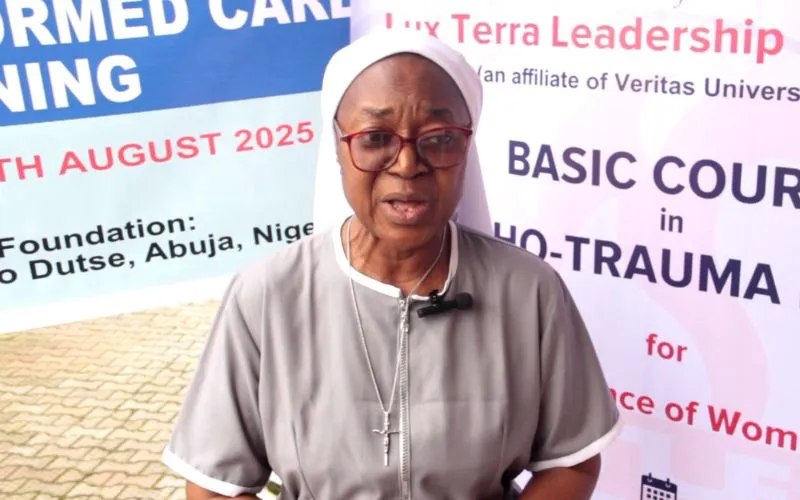 Sr. Okachi Antonia Ibe. Credit: ACI Africa
“I came thinking I already knew how to handle trauma, but this program showed me that even caregivers are traumatized. Nigeria itself is traumatized, and this affects the girls we care for. The training has helped me to work on my healing, which is necessary before I can help others,” she said.
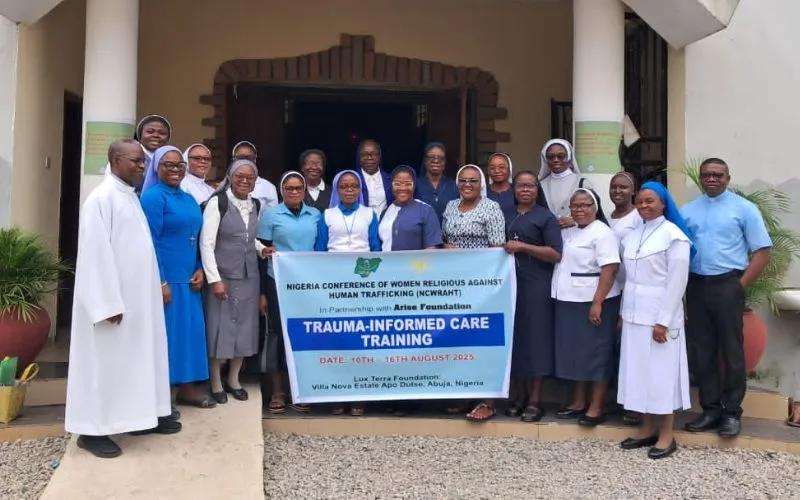 Credit: ACI Africa
Sr. Okachi underscored the need for resilience among survivors, saying, “We must teach them not to lose hope despite what they have gone through. With God, everything is possible. We also need to forgive ourselves and one another as part of healing.”
Abah Anthony John is a Nigerian Catholic journalist with passion for Church communication and media apostolate. He holds a bachelor’s degree in mass communication from Benue State University, Makurdi in Benue State Nigeria. He has a background in print, electronic and multi-media production.


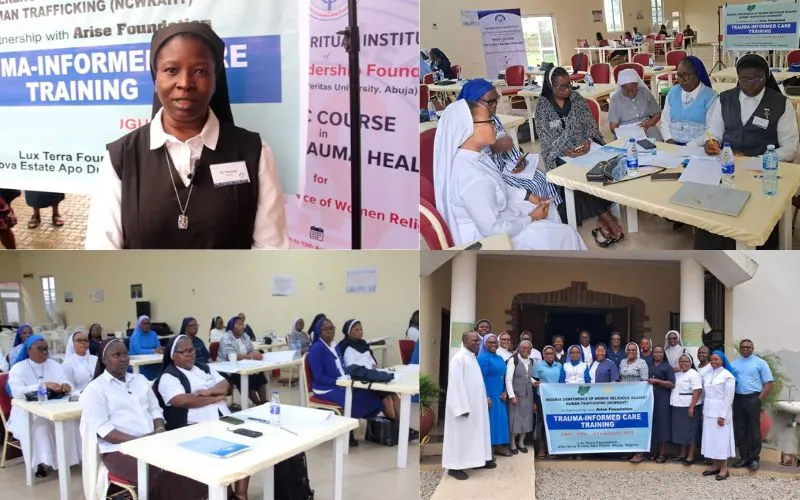

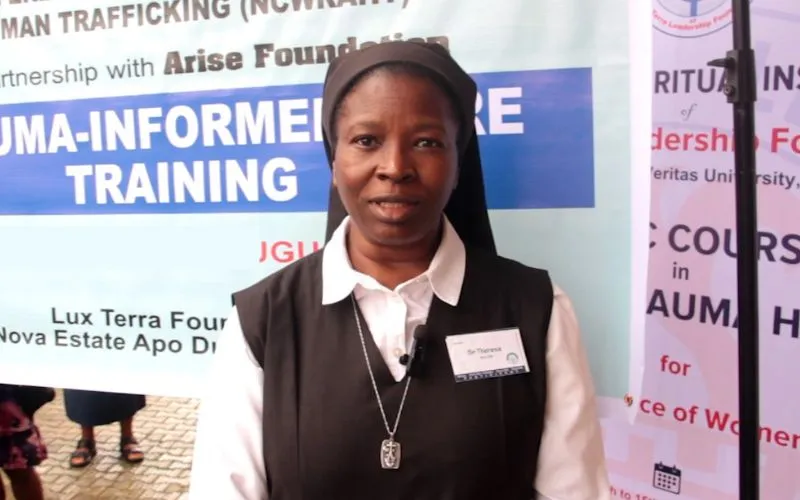 Sr. Theresa Ani. Credit: ACI Africa
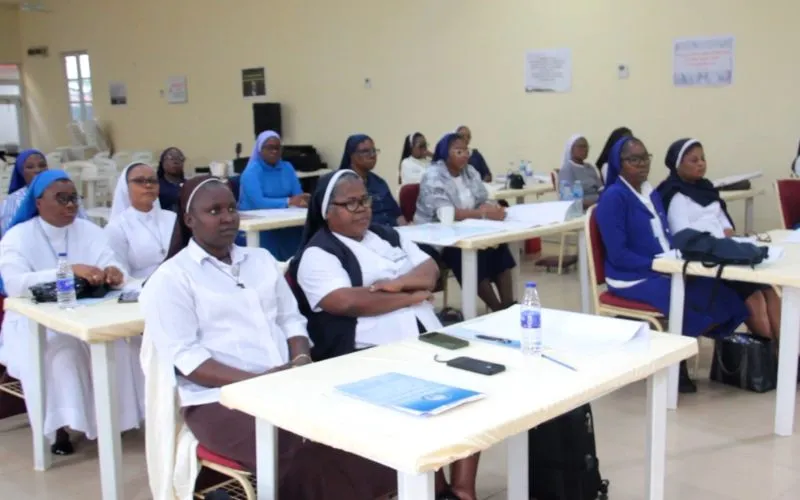 Credit: ACI Africa
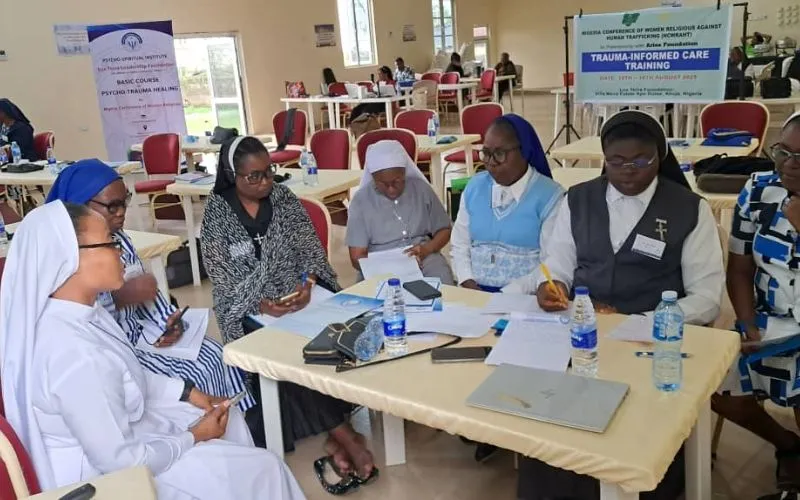 Credit: ACI Africa
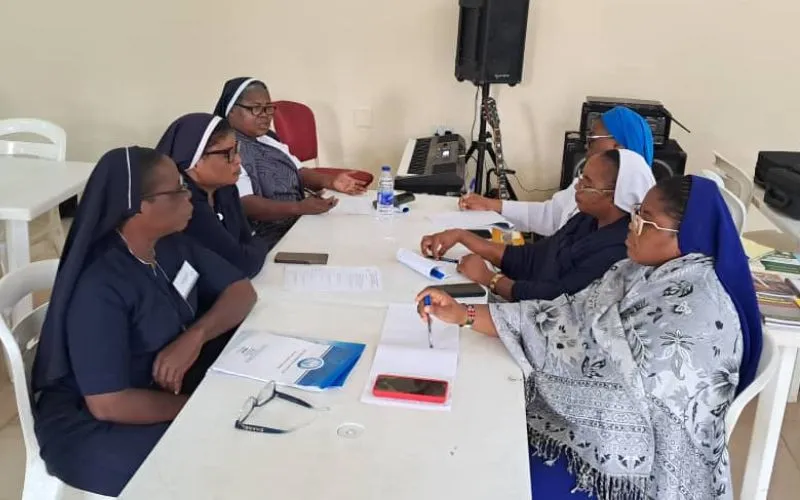 Credit: ACI Africa
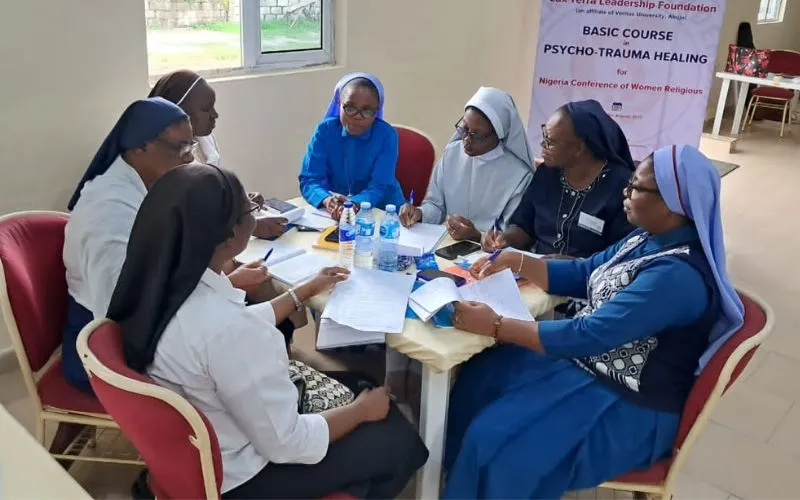 Credit: ACI Africa