Advertisement

“Our hearts are heavy”: Catholic Archbishop in Nigeria Concerned about Increase in IDP Camps amid Terrorist Attacks

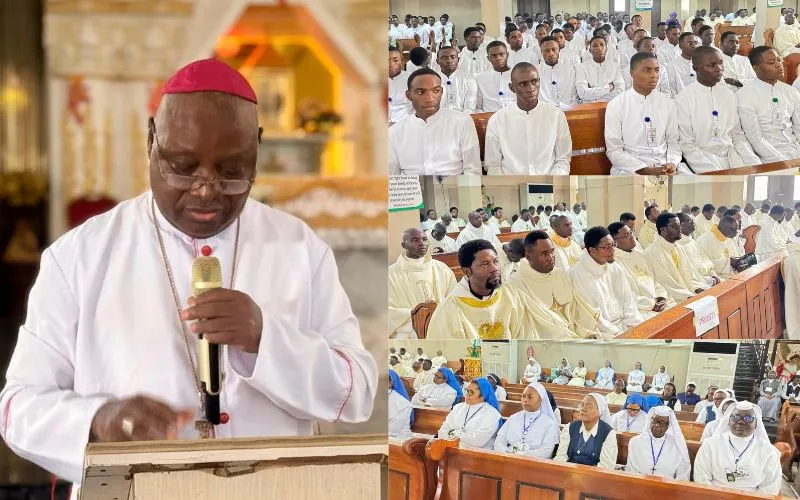
Archbishop Ignatius Ayau Kaigama of Nigeria's Abuja Archdiocese. Credit: Abuja Archdiocese

The Archbishop of Nigeria’s Catholic Archdiocese of Abuja has called for an end to “the incessant killings”, terrorism, and banditry in the West African nation, noting that camps for the Internally Displaced Persons (IDPs) in the country have increased owing to insecurity.

In his statement that was published on Sunday, August 31 at the end of the Archdiocese’s 6th General Assembly, Archbishop Ignatius Ayau Kaigama called for respect for human life.

“Our hearts are heavy with concern for the persistent challenges facing our nation,” Archbishop Kaigama said at the end of the event that was held at Our Lady Queen of Nigeria Pro-Cathedral from August 28-30.

He added, “Because of our shared humanity, we cannot but be profoundly concerned for the dignity of every human life, from conception to natural death. Every life matters.”

“We collectively, as an Archdiocese, echo an urgent appeal to the government, joining our voices to that of the Catholic Bishops of Abuja Province, to rise up to the occasion and take definitive actions to stop the incessant killings, terrorism, banditry, and economic hardships ravaging our people,” he said.
Advertisement

The Local Ordinary of Abuja condemned the June 13-14 attacks in the country’s Benue State that reportedly resulted in the death of some 200 people.

On June 13, Islamist Fulani militants attacked the town of Yelewata in Nigeria’s Benue State, killing at least 200 persons in what international aid organizations  termed the “worst killing spree” in the Nigerian region.

The Nigerian Archbishop decried the increase in IDPs, and expressed concern that their camps are currently “competing with estates in the cities.”

He said that attacks against innocent civilians are “a grave affront to human dignity and a direct challenge to the fundamental right to life, as upheld in the Social Teachings of the Church and the Constitution of our dear country, Nigeria.” 

In his statement following the three-day assembly was realized under the theme, “Faithfulness to the Liturgy: A Liturgical Vision for a Hopeful Future in Abuja Archdiocese”, Archbishop Kaigama decried the rise of Liturgical abuses in Nigeria.

More in Africa

He said, “In recent times, there has been a growing concern on the direction our Liturgy is taking, no thanks to the unnecessary improvisations and embellishments.”

“Liturgical abuses and aberrations from both the clergy and the laity tend to obscure the Liturgy, which is the central mystery of our Christian faith, and this does not only affect the celebration of the Liturgy but has a negative impact on the people and the future of the Church,” he said.

The Local Ordinary of Abuja called on Catholics under his pastoral care to strive to make their worship true, their faith strong, and their hope steadfast. 

He noted that the Liturgy, faithfully celebrated, “is indeed the wellspring from which we draw the courage to face the challenges of today and build a brighter tomorrow.”

“We therefore, urge the priests and the participants of this great General Assembly to step down the deliberations of this Assembly in their various pastoral units, pious societies and organizations,” he said.

Advertisement

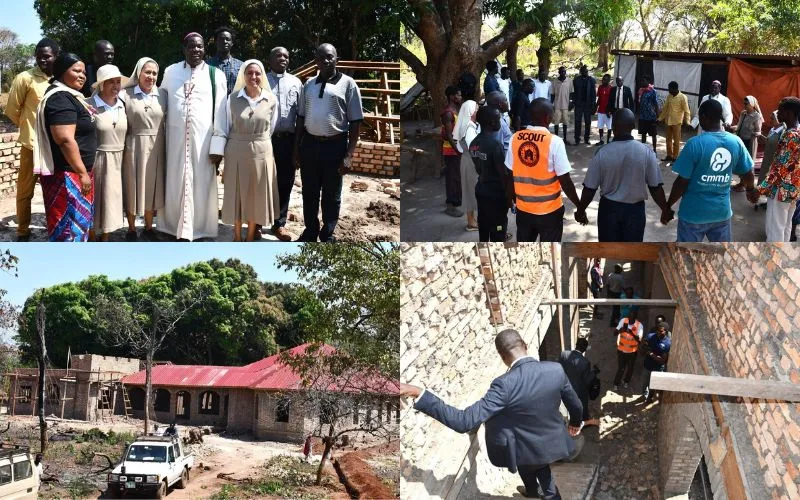
In his statement, Archbishop Kaigama highlighted the Archdiocese’s ongoing projects, and thanked the people of God in Nigeria who he said are committed to supporting the Church despite their economic hardships.

“We thank the people for their resilience, support and commitment to making extra-ordinary sacrifice for the good of the Church,” he said, and added, “There is still a lot more to be done. We therefore call on all well-meaning and good spirited individuals and groups to join forces to build the Archdiocese of Abuja we hope to see.”

Sabrine Amboka is a Kenyan journalist with a passion for Catholic church communication. She holds a bachelor’s degree in mass communication from St. Paul's University in Kenya.