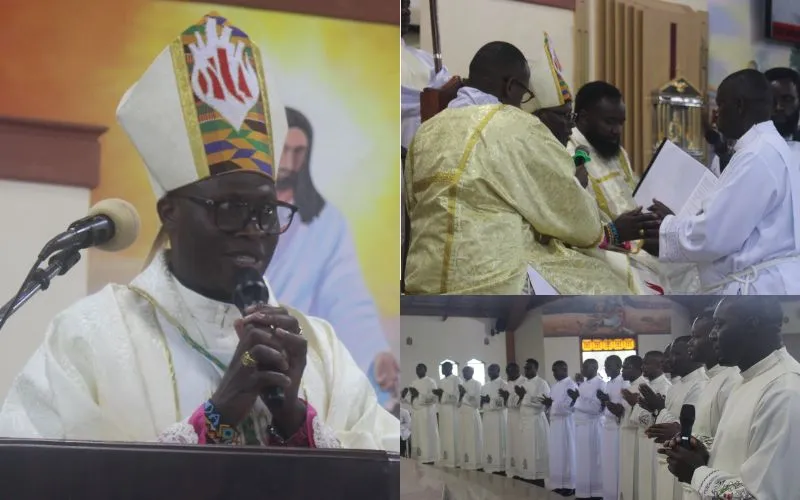
The Local Ordinary of Lodwar Diocese since his Episcopal Consecration in June 2022 went on to highlight specific gaps in his Episcopal See from the education sector to that of health among others.
“There are many children who have never been to school and who need scholarships in order to access education,” he said, and added, “There are also many young men and women who have completed college but remain unemployed, making youth unemployment an urgent issue that needs to be addressed.”
“The health services, especially in the most interior areas, are wanting, really wanting, and many people are losing their lives because these services are not available,” he lamented, and added, “In most areas, people have to travel very long distances, sometimes just to access a single Panadol.”
Bishop Mbinda continued, “The roads are rough and winding in some places, and at times you are not even sure whether you will make it back when you go out.”
In the September 19 interview on the sidelines of the Diaconate Ordination of 12 Spiritans and their three counterparts from the Congregation of the Most Holy Redeemer (Redemptorists/CSsR), Bishop Mbinda also expressed concern about adverse effects of climate change in his Episcopal See including prolonged drought and the rising waters in Lake Turkana.
“You know we are living in a desert, and livelihoods are not easy. The Turkana keep livestock, but their herds continue to diminish because of famine and recurrent droughts. There is therefore a need to address livelihoods and explore what can be done,” he said.
He added, “We are also affected by the phenomenon impacting all the lakes within the Rift Valley, the rising waters of Lake Turkana, formerly called Lake Rudolf, has swallowed villages. As a result, we have displaced people who are now seeking support: food, clothing, and anything that can help them live a decent life.”
The Kenyan Catholic Church leader also pointed to the plight of refugees fleeing violent conflicts in neighbouring countries and sheltered in the Kakuma refugee camp, describing their situation as another pressing pastoral need that requires support.
“Refugees continue to arrive in Kakuma, and with reduced funding from the US, it seems they are now looking to the Church for support,” he said.
He acknowledged the efforts of the Catholic Justice and Peace Department in his Diocese, particularly in offering counselling and other humanitarian services, but emphasized the need for additional support, “particularly in providing food and other basic necessities.”