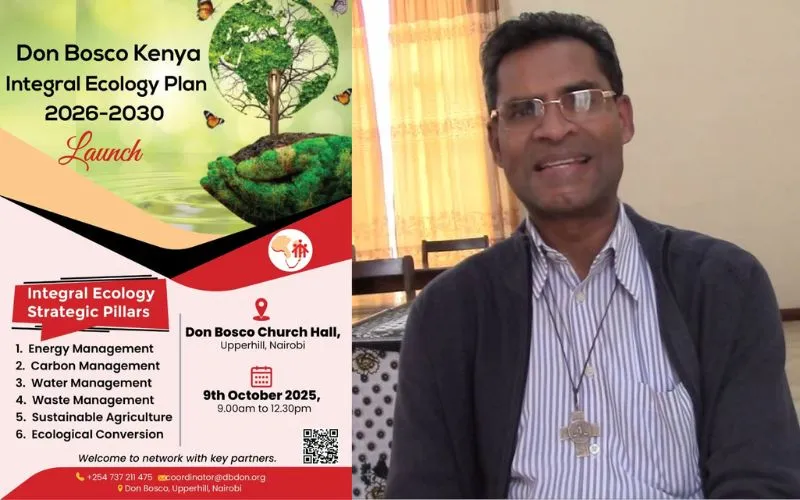
The document indicates that the energy management pillar “promotes the shift to renewable energy, energy efficiency, and responsible consumption through infrastructure, education, and formation.”
Carbon management, he said, “focuses on reducing greenhouse gas emissions through reforestation, agricultural transformation, and awareness-building around the carbon and methane cycles.”
The document indicates that the third pillar, which is water management, “addresses the conservation and equitable use of water resources, protection of wetlands, rainwater harvesting, and groundwater recharge.”
On waste management, the document says that it seeks to “minimize waste generation and maximize resource recovery by promoting the 3Rs (Reduce, Reuse, Recycle), managing e-waste, and fostering a culture of environmental dignity.”
Sustainable agriculture, the document says, “promotes environmentally responsible farming practices that empower youth, restore degraded land, and ensure food security, through agroecology, training farms, youth-led cooperatives, and context-specific innovations.”
(Story continues below)
Lastly, the document indicates that the pillar of Ecological Conversion “integrates ecological formation across academic, technical, pastoral, and spiritual programmes—especially in Salesian formation houses and youth ministry settings.”
According to the document, each of the six pillars is presented in three interrelated sections, three Ps: Principles, Processes, and Projects.
The principles articulate the scientific, moral, and theological foundations of each pillar. The sections draw from Church teaching – especially Laudato Si’ – as well as Salesian documents, national policy frameworks, and current environmental science.
“The sections are designed to inform and inspire reflection, especially within education and formation. This section provides the content for our information and formation,” the document indicates.
It also indicates that the processes translate principles into pathways of change, describing “the mindsets, institutional shifts, and daily practices that Don Bosco centres must adopt to live out integral ecology.”
“These sections pay particular attention to formation processes – both for young people and for Salesians in initial and ongoing formation. In a sense, this section contains the Integral Ecology Policy of Don Bosco Kenya,” the document indicates.
It further indicates that the projects propose time-bound, measurable, and locally adaptable initiatives aligned with each pillar.
“Each project includes a clear objective, timeline, and distribution of responsibilities among provincial offices and local communities. This section lists a preliminary scheme for seeking project funding to support the implementation of the Integral Ecology Plan,” the document says.
Silas Mwale Isenjia is a Kenyan journalist with a great zeal and interest for Catholic Church related communication. He holds a Bachelor’s Degree in Linguistics, Media and Communication from Moi University in Kenya. Silas has vast experience in the Media production industry. He currently works as a Journalist for ACI Africa.