Advertisement

Jesuit Entity Strengthens Mental Health, Psychosocial Support in South Sudan amid Cuts to Humanitarian Aid

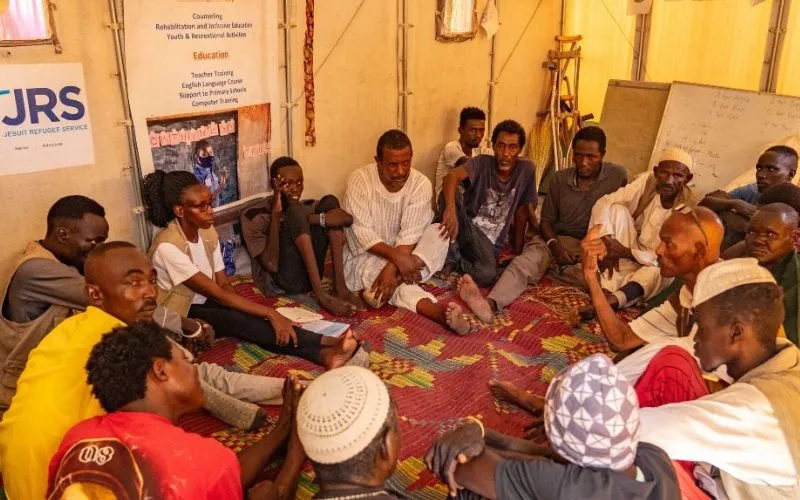
JRS conducting MHPSS activities in Renk, South Sudan, as part of the response to the conflict in Sudan (Jesuit Refugee Service). Credit: JRS

Jesuits Refugee Service (JRS), the international Catholic entity of the Society of Jesus (SJ/Jesuits), is enhancing its mental health response in South Sudan, as the country grapples with the effects of reduced humanitarian aid.

In a report dated October 10, JRS officials reflect on the growing challenge of sustaining Mental Health and Psychosocial Support (MHPSS) services, noting that the organization has had to adopt a community-based approach that empowers people to support one another.

“In South Sudan, drastic cuts to humanitarian aid have reduced or even eliminated life-saving MHPSS services, further straining an already fragile system heavily reliant on humanitarian actors,” the officials say.

In response to this crisis, the officials of the Catholic entity say that “JRS has continued to strengthen its community-based approach to MHPSS. This has been crucial in keeping services going, even if on a smaller scale.”

“The idea behind this approach is simple: communities themselves are the foremost experts in their own wellbeing. They are the first to respond, drawing on their knowledge of local resources, culture, and coping strategies,” JRS officials explain.
Advertisement

JRS officials commend the community-based approach, saying that “Even in the absence of extensive funding, communities can continue supporting one another organically when effectively facilitated.”

Due to the reduced humanitarian aid that led to the cutting of mental health services, JRS officials say that harmful coping mechanisms have increased, especially among young people, alongside rising levels of psychological distress and a worrying escalation in suicide attempts.

“Many people who once found stability through integrated psychosocial programming are now struggling again, with some experiencing relapses or a worsening of their symptoms,” they officials say.

They explain that “families with children with special needs who depended on MHPSS services integrated with other essential programmes, such as supplementary nutrition and physiotherapy, have been severely affected. Their children have died.”

JRS officials emphasize that “aid cuts are undoing much of the progress made in strengthening community-based mental health and psychosocial support. They are weakening the way organizations once coordinated and worked together and are leaving vulnerable people without the help they need.”

More in Africa

To address the challenge, JRS officials say that they collaborate with local leaders, church members, paracounsellors and home visitors from both refugee and host communities who help in identifying needs, initiate activities, and refer individuals for further and more specialized assistance.

“Home visitors live and work within the communities,” the officials say, and add, “JRS trained them in basic counselling skills, equipping them with the necessary tools to offer immediate psychosocial support while linking people to specialized services.”

In situations of protracted crisis, the officials of the Jesuit Catholic entity say, “investing in local communities is fundamental to ensuring the sustainability of psychosocial support.”

“The community-based approach is built on co-creating solutions with communities, strengthening local capacities, supporting existing self-help mechanisms, and reinforcing community resources and safety nets,” they say.

For the community-based model to succeed, JRS officials say, “it is essential to consolidate these capacities and care for the well-being of those who play this role of support within the community.”

Advertisement

Silas Mwale Isenjia is a Kenyan journalist with a great zeal and interest for Catholic Church related communication. He holds a Bachelor’s Degree in Linguistics, Media and Communication from Moi University in Kenya. Silas has vast experience in the Media production industry. He currently works as a Journalist for ACI Africa.