Advertisement

Holistic Formation Essential for Promotion of Safeguarding in Africa: Canon Law Scholar in Kenya

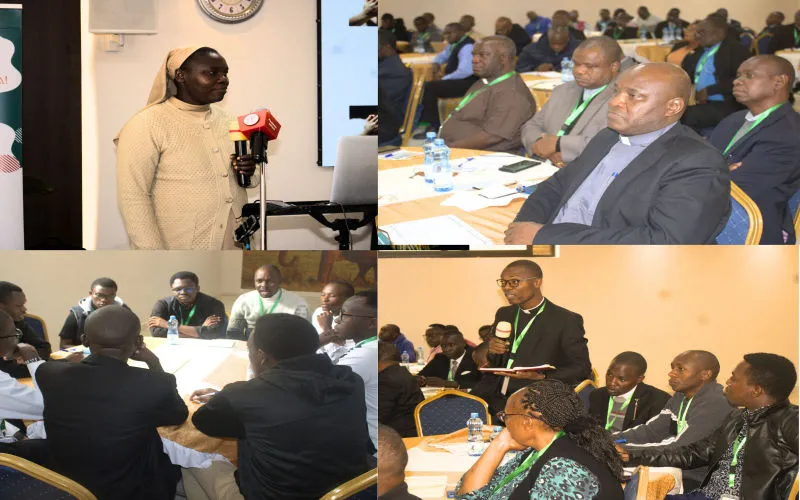
Sr. Dr. Jacinta Auma Opondo, Deputy Principal for Academic Affairs at the Jesuit Hekima University College. Credit: ACI Africa

The Deputy Principal for Academic Affairs at the Jesuit Hekima University College in Kenya has emphasized the need for a holistic approach in the formation of Priests and the men and women Religious to ensure the effective fulfillment of their respective ministries.

In an interview with ACI Africa on Wednesday, October 22, on the sidelines of the October 21-24 regional learning forum for safeguarding in seminaries, Sr. Dr. Jacinta Auma Opondo said holistic formation is essential for the promotion of safeguarding within the Church in Africa.

“Safeguarding is part of holistic formation and should be intrinsic to it because it is part of the mission,” said Sr. Opondo during the interview at the three-day event the Pastoral Department of the Association of Member Episcopal Conferences in Eastern Africa (AMECEA) hosted at Roussel House of Donum Dei Missionary Sisters in Karen, Nairobi.

She added, “All of us can become vulnerable at certain moments. The Church intends that safeguarding be part and parcel of this formation; it is not a separate addendum.”

Citing developments in canon law that recognize not only minors but also vulnerable adults, Sr. Opondo emphasized that those in positions of authority have a special responsibility toward those under their pastoral care. 
Advertisement

“The revised Code of Canon Law brings this out quite clearly. Because apart from minors, we have vulnerable adults and those whom the Church gives recognition as being similar to vulnerable adults,” she said.

She added, “Those who work under you can be vulnerable because they have to respect the one in authority. We are supposed to form people who are capable of providing safety for those around them and capable of coexisting peacefully with others.”

In the October 22 interview, the member of the religious institute of the Franciscan Sisters of St. Anna (FSSA) underscored the need to view formation as a comprehensive process that addresses every dimension of the human person.

“Holistic formation is very important because a human being is a complex being. A human being has physical, psychological, social, and moral dimensions, and all these faculties must be formed,” she explained, noting that leaving out any aspect of it “poses challenges to the exercise of ministry.”

She emphasized that before one becomes a Priest or a Religious, she or he must first be a fully developed human person and a committed Christian. 

More in Africa

“The first call is a call to be a Christian. The second consecration is to be a Priest or to be a Religious, and this is basically for the mission,” she said, adding that those called to carry out this mission “must have proper human values, which are universal,” to do it effectively. 

She explained, “The call to Christianity or to religious life serves two main purposes — personal sanctification and mission. For these two dimensions to be clearly realized, a holistic approach to formation is essential for the effective exercise of our ministries.”

Sr. Opondo went on to highlight the need for collaboration among different actors in the formation process, describing the formation of Priests and the religious as a “complex responsibility.”

“Formation is a very complex responsibility, and we need expertise in different fields. We are also formed by our way of life, not just by words,” she said, and added, “If we are to provide holistic formation, then we need collaboration.”

Drawing inspiration from the Synod on Synodality, which the late Pope Francis officially inaugurated in 2021 and later extended to 2024, Sr. Opondo stressed that both formation and ministry must embody teamwork and shared mission. 

Advertisement

She noted, “We cannot expect individuals who have not been formed in a collaborative environment to carry out their ministry in a spirit of collaboration.”

“Working together requires collaboration in both formation and ministry. Otherwise, some people will be left behind, and the question of who is missing at the table is crucial at any level of formation,” said Sr. Opondo, who had earlier in the day given a presentation on the Art of Formation, with a focus on equipping formators for effective seminary service.

Nicholas Waigwa is a Kenyan multimedia journalist and broadcast technician with a professional background in creating engaging news stories and broadcasting content across multiple media platforms. He is passionate about the media apostolate and Catholic Church communication.