Inculturation, the family, and faith
Reflecting on “Ecclesia in Africa”, Bishop Bibi said inculturation “is not a superficial celebration of human culture,” but “an interaction between the Gospel and our cultures, an interaction marked by a twofold process: the Gospel penetrating our cultures, and in return uplifting aspects of culture that are compatible with it or are a preparation for it.”
He reminded African Catholics, especially those in the diaspora, to promote the values that enrich Africans’ witness to the Gospel, including “the sense of the sacred, the belief in God the Creator, solidarity and community spirit, love and respect of life, the welcoming of children as gifts, respect for human life from conception until its natural end, and the respect for elders.”
Bishop Bibi who started his Episcopal Ministry in March 2017 as the Auxiliary Bishop of his native Archdiocese of Bamenda urged families to live the Exhortation’s call to evangelize through their witness.
“The evangelization of families through families,” he said, is the heart of the African Church’s mission. Recalling Pope John Paul II’s 1985 homily in Bamenda, Bishop Bibi echoed the late Pontiff’s exhortation to families: “Learn to build your family life on love! Do not give in to the forces which weaken and destroy the unity, stability and happiness of your families.”
(Story continues below)
He further emphasized that the future of the world and of the Church “passes through the family,” noting that the Sacrament of Matrimony reflects “the union of Christ and the Church.”
“No marriage is perfect,” Bishop Bibi said, and continued, “By the grace of God and human cooperation and commitment of spouses, two imperfect persons can make a bond that lasts till death separates them.”
In his September 13 homily, the Catholic Church leader who has endured resistance to his administrative decisions through online attacks, social media petitions against him, and Facebook posts appealed to parents to raise children with faith and discipline, instilling respect for elders and Christian virtues amid growing secular pressures.
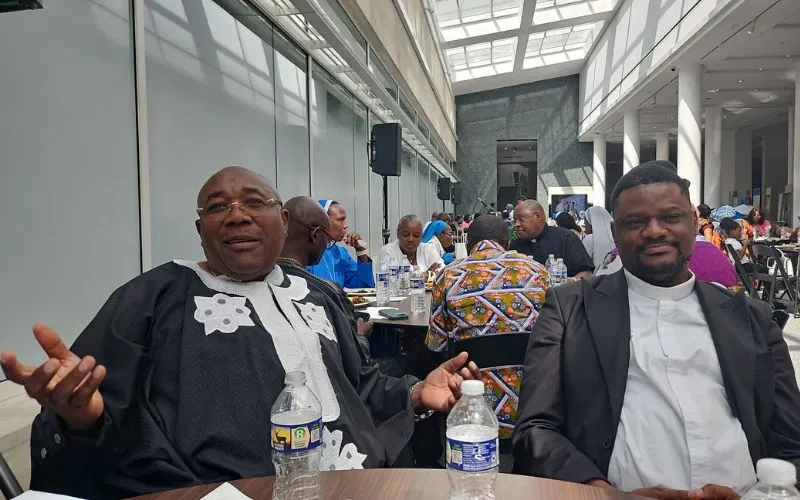 Credit: Lambert Mbom/Washington, DC
Bishop Bibi anchored his message in the Christ-centred spirituality of St. John Paul II, recalling the late Pontiff’s words at the start of his papacy: “Do not be afraid! Open wide the doors to Christ.”
This call remains vital for Africans navigating the challenges of modernity and secularism, the Cameroonian Bishop said at the Eucharistic celebration at the Redemptor Hominis Chapel — named after John Paul II’s first Encyclical Letter, Redemptor Hominis (The Redeemer of Man).
He explained, “When we open up to Christ and his saving power, we lose nothing; instead, we gain everything.”
Besides the Pontifical High Mass, the day featured keynote reflections, and cultural performances that brought together faith and African heritage in joyful harmony.
Personal encounters and the philosophy of the human person
After the Eucharistic celebration, participants gathered for the academic portion of the event, which featured a keynote address by Fr. Michael Niba, a member of Clergy of Bamenda Archdiocese.
Fr. Niba, who had played the lead xylophone during the 1985 papal Mass in Cameroon, shared personal reflections later published in his book “Encounters with John Paul II”.
“When you truly encounter a person, you also want to know what the person thinks,” he said, alluding to how successive encounters—through reading, liturgy, and personal audience—shaped his understanding of St. John Paul II’s personalist philosophy.
Fr. Niba characterized St. John Paul II as a “fearless theorizer and defender of who the human person is,” noting that the late Pontiff “salvaged the concept and reality of the human person—used, abused, refused, and dumped into disuse—from the tyrannies of the negative, oppressive isms of our time.”
The Cameroonian Catholic Priest emphasized that, for St. John Paul II, every human being is “an image of God, who bears a divinely crafted, imprinted and bequeathed dignity and respect that is non-negotiable.”
The late Polish Pope, Fr. Niba went on to say, made clear that “holiness is not the privilege of a few,” pointing to his beatification and canonization of Africans such as Blessed Isidore Bakanja of the Democratic Republic of Congo (DRC), Blessed Cyprian Michael Iwene Tansi of Nigeria, and St. Josephine Bakhita of Sudan as evidence of his belief that sanctity knows no borders.
Panels on faith and family
Two panel discussions followed the keynote address. In the first one, Deogratias Kawunde of Uganda and Sr. Joanna Okereke of Nigeria focused on devotion to African Saints and advancing causes for future ones.
The other panel discussion, which featured Emmanuel and Thérèse Mulumba of DRC and Chioma Chidume, a youth representative, explored how African families and youths can live out the Gospel in secular societies.
The conversations emphasized what the speakers of the day had underscored, that “Ecclesia in Africa” is not merely a document but a living reality—the Church in Africa as a vibrant, missionary family.
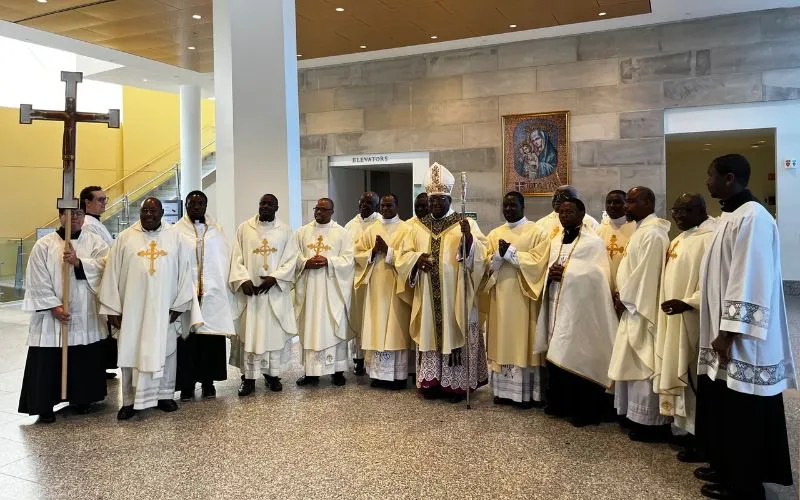 Credit: Lambert Mbom/Washington, DC
A celebration worth repeating
For participants, the September 13 commemoration was both nostalgic and forward-looking.
Sir Barbie Orusakwe, President of ACA D.C. Metro area, recognized with appreciation the very good attendance and that “it brought back the good memories of this traveling Pope.”
The Chairman of the Good Shepherd Cameroon Catholic Community in Baltimore, Kenneth Wirlen, said he was deeply moved by Bishop Bibi’s and Fr. Niba’s testimonies: “They both highlighted the role they played during that visit and how this impacted their lives today.”
Dr. Sofia Maurette, Director of Intercultural Ministry at the St. John Paul II National Shrine, expressed her satisfaction at the event’s success, saying, “With the celebration of the 30th anniversary of Ecclesia in Africa, the Saint John Paul II National Shrine is blessed to continue to preserve our Patron Saint's legacy and his vision for the African Church.”
A living tribute
As the Washington D.C. event which Fr. Herbert Niba, a Cameroonian Catholic Priest pursuing doctoral studies in Theology at the John Paul II Institute for Marriage and Family Studies, concluded, participants left inspired by the memory of a Pope who once called Africa “the continent of hope.”
Four decades after his first visit and 30 years after “Ecclesia in Africa,” the message of St. John Paul II – rooted in family, culture, and faith – continues to find new life among African Catholics both on the continent and in the diaspora.
Lambert Mbom contributed to this story in a submission to ACI Africa, which Catholic365 published on October 22
ACI Africa was founded in 2019. We provide free, up-to-the-minute news affecting the Catholic Church in Africa, giving particular emphasis to the words of the Holy Father and happenings of the Holy See, to any person with access to the internet. ACI Africa is proud to offer free access to its news items to Catholic dioceses, parishes, and websites, in order to increase awareness of the activities of the universal Church and to foster a sense of Catholic thought and culture in the life of every Catholic.


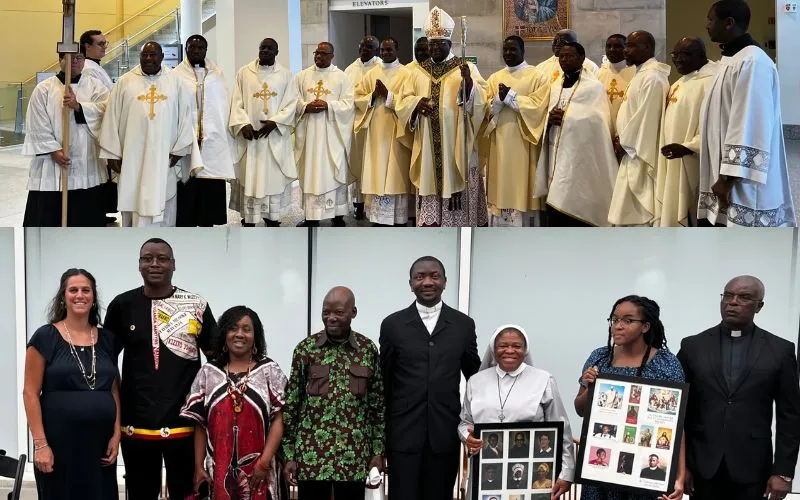

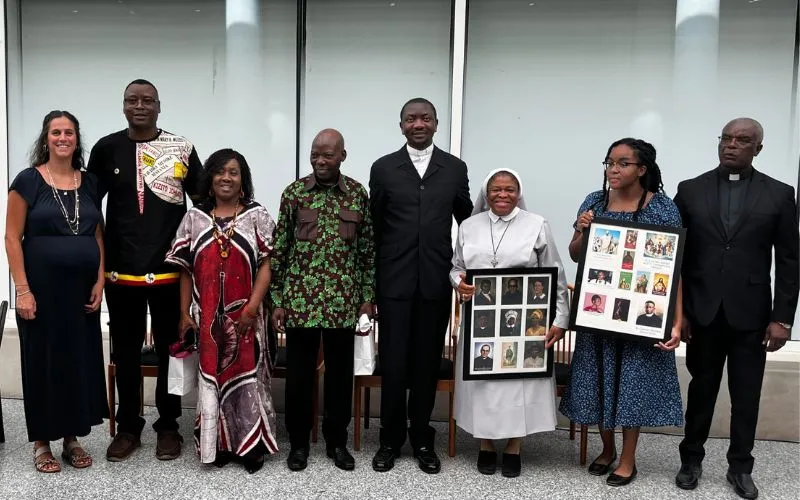 Credit: Lambert Mbom/Washington, DC