“Another area of focus is the formation of Small Christian Communities (SCCs). We believe that without these communities, the Word of God remains largely confined to the pulpit,” he said, noting that his efforts are bearing fruit.
He said, “The formation of SCCs is now picking up in our Parishes, and we see them as vehicles of evangelization. The Word of God is now being taken to the local communities where members meet weekly to pray together and discuss their issues.”
The Bishop also underscored the importance of vocation promotion, noting that the vast Diocese, covering about 46,000 square kilometers and serving over 300,000 Catholics, has only 18 Diocesan priests.
“We are currently blessed with 12 major seminarians, but that is not enough. We must sensitize and animate more vocations so that young people can respond to God’s call,” he said.
Bishop Lodiong told ACI Africa that the social pillar of the Diocese’s 2024–2028 strategic plan focuses on the reconstruction and rehabilitation of social service facilities that have been destroyed over the years by violent conflict.
(Story continues below)
“Many of our schools were destroyed or vandalized during the war,” he said, adding that. “Out of 17 primary schools, only four are currently functioning.”
He continued, “Reconstruction is costly, but we appeal to our partners and donors to help us rebuild. When people return from exile, they should find education and health services available.”
The South Sudanese Bishop expressed optimism that as peace gradually returns, professionals are going to return and help restore these essential services, including dispensaries and hospitals.
“Only one of our health centers is functioning; the rest were destroyed. We also face a shortage of personnel, as many professionals remain in exile. Once they return, we hope to restore services,” he said.
He further identified the youth ministry and peacebuilding and reconciliation as the other key components of the social pillar.
“We come from a volatile area where people are traumatized and communities fragmented by war and politics. Promoting coexistence is therefore essential,” he said.
He added, “We are also focusing on youth ministry, recognizing that young people are the future of society. Many have joined gangs such as the “Toronto Boys” and “Niggers” because of unemployment and lack of education.”
Bishop Lodiong said an annual youth tournament organized by the Diocese is helping transform the lives of young people, guiding them toward productive activities instead of violence.
“We bring together youth from all Parishes for games, talks, and discussions about social and Church issues, helping them discover their potential and encouraging them to engage in income-generating activities,” he said.
Beyond the pastoral and social pastoral pillars, the Diocese of Yei is also working on strengthening its institutions for a sustainable evangelization mission.
He said, “Our diocesan Curia is poorly equipped. The Bishop currently has no secretary, and our finance officer works alone because we cannot afford to employ qualified personnel. We need resources to hire technocrats, people trained in finance, communication, and administration, so that the Diocese functions efficiently.”
“We also plan to improve our office infrastructure by building a proper curia complex where all offices can be housed under one roof. Our Secretariat is made up of small, scattered huts (“tukuls”). After 40 years as a diocese, we have yet to build a modern facility with the necessary equipment,” he added.
He continued, “Most of our offices lack modern instruments such as computers or internet connectivity. We rely on mobile data, which is insufficient for institutional work. Equipping our offices with proper technology is essential for efficiency and communication.”
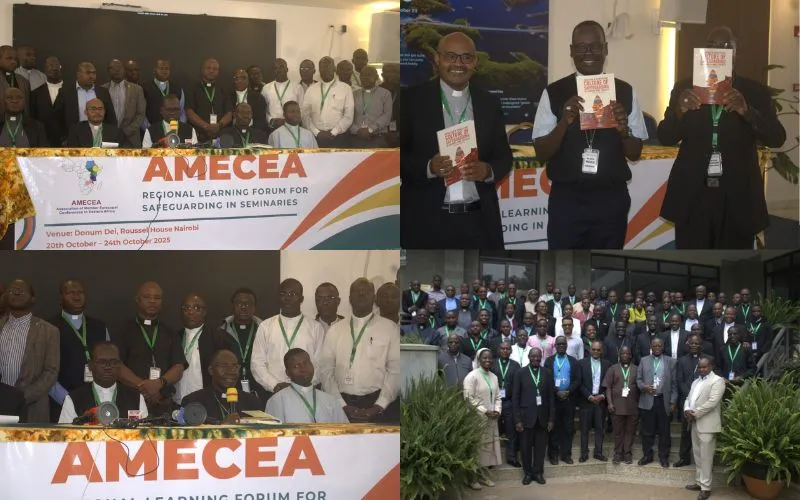
“Despite these challenges, our people have become resilient. “Through resilience, cooperation, and faith, we are keeping the Church alive in Yei,” said Bishop Lodiong during the October 23 interview with ACI Africa at Roussel House of Donum Dei Missionary Sisters in Karen, Nairobi.
Nicholas Waigwa is a Kenyan multimedia journalist and broadcast technician with a professional background in creating engaging news stories and broadcasting content across multiple media platforms. He is passionate about the media apostolate and Catholic Church communication.