Advertisement

Religious Leaders Call for Peaceful Participation in Tanzania’s October 29 General Elections

As voters in Tanzanian head to the polls on Wednesday, October 29, faith-based leaders have issued a united plea for peace, urging citizens in the East African nation to safeguard the country’s long-standing stability.

Speaking during the National Peace Symposium in Dar es Salaam on Monday, October 27, the Deputy Secretary General of the Tanzania Episcopal Conference (TEC), Fr. Chesco Msaga, underscored the spiritual and moral foundation of national unity.

“True peace begins within one’s soul. Our country is respected globally for its spirit of solidarity, thanks to the wisdom of our founding leaders. But we must continue to nurture it,” Fr. Msaga said.

He added, “Anything built but not maintained will crumble.”

“We can only preserve unity if every citizen recognises their role in protecting peace,” the official of TEC said at the symposium, which Tanzania’s National Peace Committee organized under the theme “Voting is our right, safeguarding peace is our duty.”
Advertisement

Bringing together more than 1,200 participants, including government officials, faith leaders, and representatives of civil society, the symposium offered a platform for reflection and interfaith dialogue ahead of the October 29 poll.

Eligible voters in Tanzania are expected to elect the President, members of the National Assembly, and Ward Councillors.

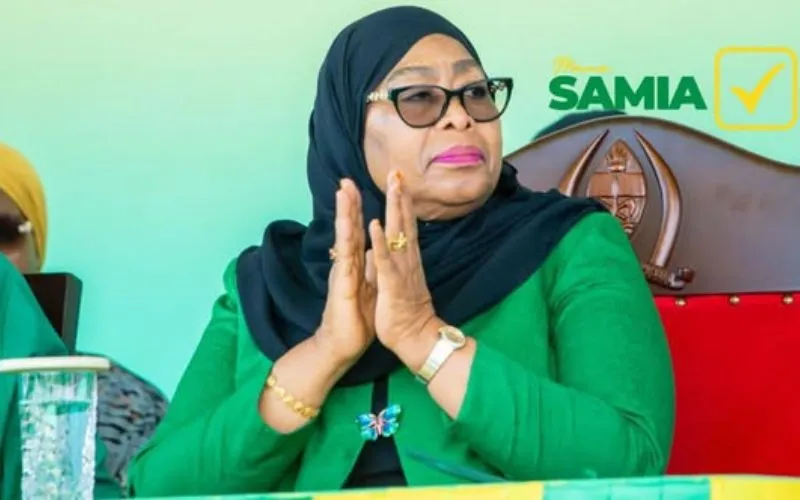
Tanzania's first female President, Samia Suluhu Hassan, is the lone candidate in the Presidential poll with no opposition candidates cleared to compete in the election.

The 65-year-old became the East African nation's first female head of state after the passing on of sitting President John Magufuli, in March 2021.

Also speaking during the October 27 event, the Mufti and Chief Sheikh of Tanzania, Abubakar Zubeir, emphasized that maintaining peace is not only a constitutional duty but a divine responsibility shared by all.

More in Africa

“We, as religious leaders in Tanzania, are heirs to the prophets. Our duty is to protect peace, promote patriotism, respect one another, and honour our leaders—not out of flattery, but because it is our spiritual obligation,’ Sheikh Zubeir said.

He warned that faith leaders cannot remain silent when national unity is threatened.

“We cannot watch our country crumble. It is our responsibility to identify and correct what is going wrong, not because we are instructed to, but because we know it is our calling,” he said.

The Tanzanian Muslim leader noted that peace allows citizens to worship freely, work, and coexist harmoniously – conditions that disappear when conflict takes root.

Alhad Mruma, Chairman of the Inter-Religious Council for Peace and National Cohesion, noted that the symposium marked the culmination of regional peace dialogues held across the country to strengthen unity ahead of the polls.

Advertisement

“Peace is not automatic—it must be protected,” he said.

Pastor Moses Matonya, Secretary General of the Tanzania Christian Forum (TCF), appealed for tolerance, acknowledging that political opinions will differ.

“Not everyone will be satisfied with the results. But that does not mean we turn against each other. We are all Tanzanians, and life must continue after the vote,” Pastor Matonya said.

On his part, the Chairperson of the Interfaith Desk, Nelson Kasarwa, stressed the responsibility of religious institutions during election seasons.

“We must remain impartial, prophetic voices that speak against corruption, injustice, and actions that undermine peace,” he said.

(Story continues below)

Government representative Professor Kitila Mkumbo, Minister of State in the President’s Office (Planning and Investment), who spoke on behalf of Tanzania’s Vice President, Dr. Philip Mpango, warned against taking national harmony for granted.

“Peace is the foundation of everything we value. Without it, development, democracy, and justice cannot thrive,” Prof. Mkumbo said.

Jude Atemanke is a Cameroonian journalist with a passion for Catholic Church communication. He holds a Bachelor’s Degree in Journalism and Mass Communication from the University of Buea in Cameroon. Currently, Jude serves as a journalist for ACI Africa.