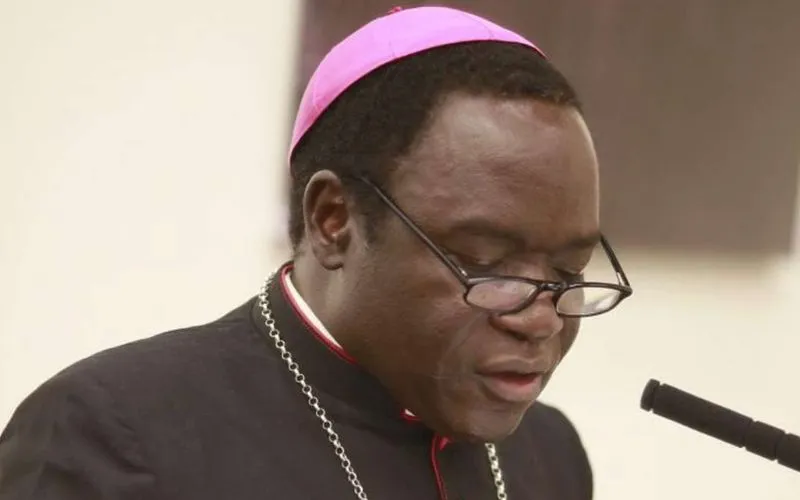
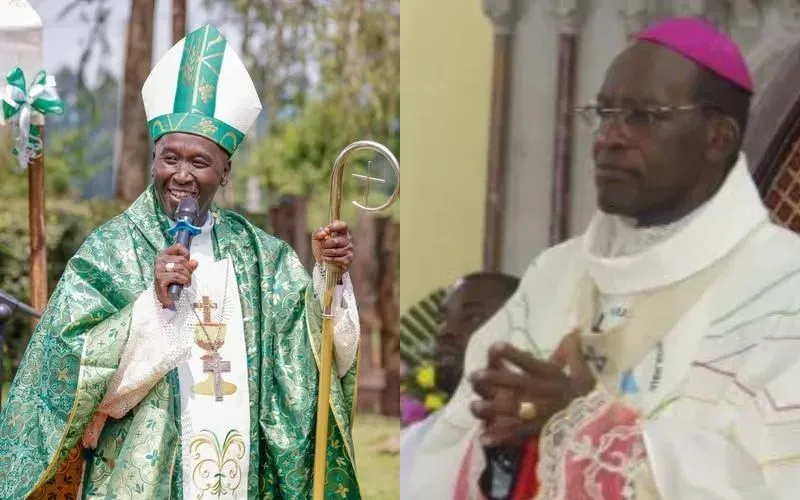
“His (Bishop Anagbe’s) passionate defense of the faith community’s suffering stood in sharp contrast to Bishop Kukah’s transmission of this same sentiment of the people’s suffering,” Fr. Stan said.
According to Fr. Stan, Bishop Anagbe’s testimony is “prophetic and denunciatory” while Bishop Kuka’s is “diplomatic and conciliatory”, and that both testimonies “have laid bare the painful tension within the Nigerian Church over how to speak truth to power in a time of blood and national anxiety and anger.”
However, according to the PACTPAN official, both perspectives reveal a deeper question of how shepherds should speak “when their flock bleeds.”
He said that while Bishop Kukah has been a consistent champion for a robust engagement of the Church in Nigeria’s politics, not much has come out of his efforts.
“It is hard to see the evangelical fruits of such engagement for the Christian community in Nigeria,” said, and added, in reference to the Church leader who was honored by President Bola Tinubu on his 73rd birthday, “Familiarity with power often leads to compromises that may bring temporary relief to Church leaders while potentially doing permanent harm to the Christian mission, even when that is not their intent.”
(Story continues below)
“This is why the Church in its wisdom is cautious in its relationship with the state, especially corrupt and extractive leaders who destroy the common good,” he said.
Fr. Stan said that while persecution of Christians in Nigeria persists, Church leaders in the country cannot give any impression in the eyes of the Nigerian Christians that they are appeasing the government of the day.
He noted that while the priorities and interests of the state and of politicians “shift like the weather”, the mission of the Church, on the other hand, possesses “a deeper and more enduring rhythm.”
“To confuse these temporal orders or to align the eternal mission of the Church with the transient ambitions of political power through appeasement or comfortable relationship with Nigeria’s corrupt ruling class is to betray the very heart of the Gospel,” he said.
The criticism of Bishop Kukah’s sentiments by the International Society for Civil Liberties and Rule of Law (Intersociety) was harsher, with the Catholic research entity in Nigeria describing the Bishop’s speech in Rome as a “misrepresentation of facts.”
In a report that revealed the killing of 100 Christians in Nigeria in the period between August 10 and October 26, Intersociety also weighed in on Bishop Kukah’s comments about the situation of persecution of Christians in the West African country.
Intersociety criticized the Catholic Bishop and other Nigerian leaders who the entity said are “also victims of Christian persecution” but “have chosen to battle their consciences by way of misrepresentation of facts of the matter concerning religious freedom, tolerance and accountability.”
“The last time we checked, Bishop Kukah was a highly respected and outspoken Catholic Bishop in Nigeria and defender of the Persecuted Christians dating back to 2015,” Intersociety said, and added, “However, the revered Catholic Episcopal Head of Sokoto Diocese has been widely criticized by critics who also accused him of inconsistency, blaming it majorly on his alleged undetached closeness to central political power in Nigeria.”
Intersociety faulted the Bishop for claiming that the Tinubu-led government had put in place “confidence-building measures” for dialogue to tame insecurity.
The researchers said that they had conducted investigations that revealed that not less than 22,000 defenseless Christians had been killed since Senator Armed Bola Tinubu became Nigeria’s President on 29 May 2023.
They said that under Tinubu, churches “numbering several hundreds” have been attacked, shut down, or burned down.
Meanwhile, Fr. Stan had called on faith-based leaders to continue speaking out against the ongoing persecution in Nigeria.
He said, “When Christians cry out for religious freedom and protection amid radical Islamic fundamentalism, silence becomes complicity, careless speech can inflame fragile peace, and disunity can prolong our long night.”
Agnes Aineah is a Kenyan journalist with a background in digital and newspaper reporting. She holds a Master of Arts in Digital Journalism from the Aga Khan University, Graduate School of Media and Communications and a Bachelor's Degree in Linguistics, Media and Communications from Kenya's Moi University. Agnes currently serves as a journalist for ACI Africa.