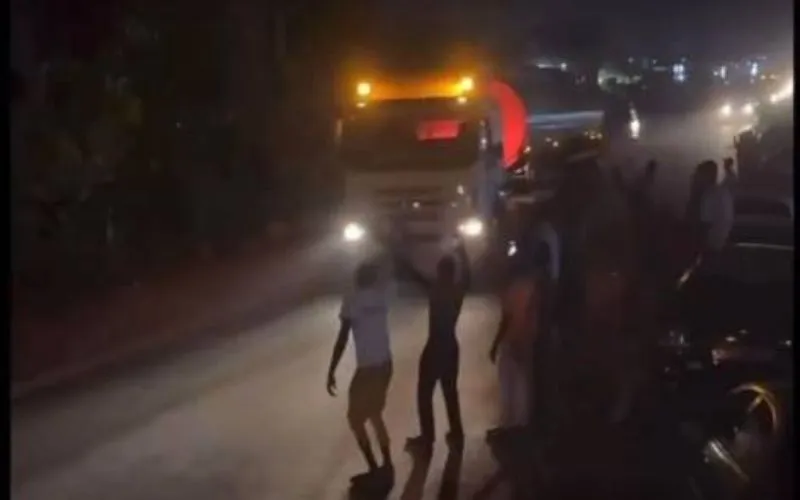
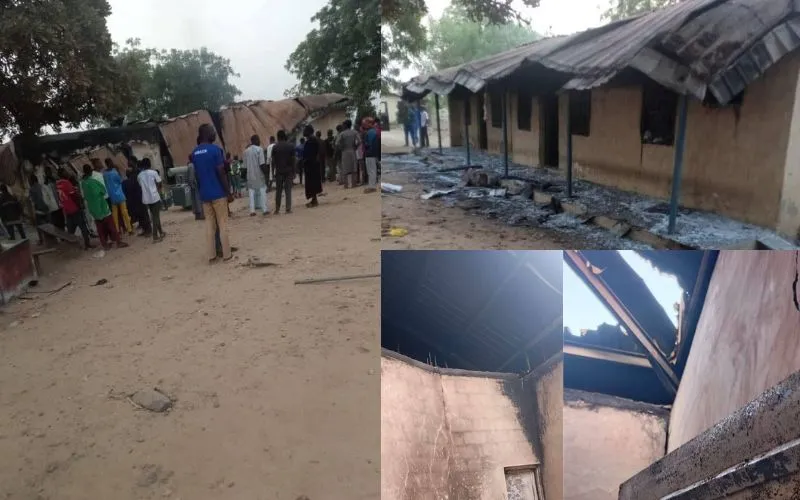
The Catholic information service reports that unrest is growing in the Malian capital due to the blockade by the jihadist group Jama'a Nusrat ul-Islam wa al-Muslimin (JNIM), which is attempting to prevent fuel tankers from Senegal and Ivory Coast from supplying the city.
Local sources have told Agenzia Fides that the jihadists’ strategy of blocking key transport routes between cities has been employed for some time in various parts of Mali.
According to the sources, “the alarm in Bamako due to the shortage of gasoline and other fuels is not only attributable to the blockades imposed by the jihadists, but also to the hoarding of fuel by various individuals who acquire large quantities to resell at inflated prices on the black market.”
“The army is responding by organizing military escorts for supply convoys, so unaccompanied tanker trucks are considered suspicious,” the sources say in the Agenzia Fides report, and add, “However, the problem is actually more complex, as a war over gasoline has been raging between jihadists and the military for some time.”
They say that at some point, fuel deliveries in some areas exceeded local demand, and add, “Suspecting that the surplus was falling into the hands of jihadists, the authorities imposed quotas on the amount of gasoline delivered to these areas. The JNIM responded by expanding the areas subject to its roadblocks.”
Meanwhile, the situation in Bamako, as in the rest of Mali, “remains precarious”, Agenzia Fides says, and explains, “Several Western countries, including the United States and Italy, have urged their citizens to leave the country as soon as possible.”
Towards the end of October last year, Catholic Foundation, Aid to the Church in Need (ACN) International revealed “a worsening situation” of Christian persecution in the West African nation of Mali.
Speaking to “confidential sources”, ACN gathered testimonies of Christian persecution that takes the form of discrimination against community members identifying with the person of Jesus Christ.
The discrimination ACN established had been taking place in the Mopti region of Mali, specifically in Douna-Pen.
The Pontifical charity foundation reported that Islamic extremists had demanded the closure of churches, Protestant and Catholic, in Douna-Pen. At the time, those allowed to practice their faith were only allowed to do so without the use of musical instruments during worship services in what ACN described as “a clear restriction on their religious freedoms.”