“We are a country where faith and education have worked hand in hand for more than 1,000 years,” she said, recalling the legacy of St. Stephen, who she said “built” the landlocked nation in Central Europe “on Christian values, wisdom, humility, and service.”
The diplomat expressed gratitude that Hungary supported the construction of TU’s new St. Elizabeth of Hungary Hall, noting that the building in the Catholic institution “stands for something far greater than bricks and walls… the meeting of minds and hearts, the encounter between faith and reason, tradition and innovation, and also Africa and Europe.”
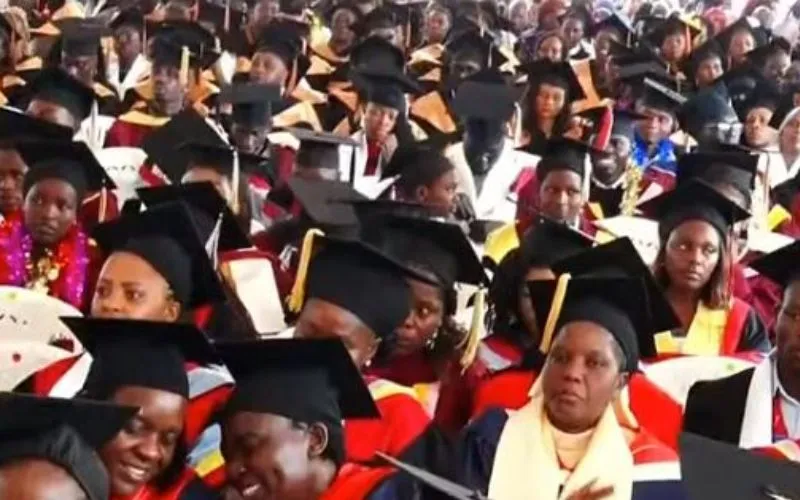
Also speaking during the second graduation of the Kenya-based institution of higher learning that is jointly owned by some 22 Institutes of Consecrated Life and Societies of Apostolic Life (ICLSAL), TU Chancellor, Fr. Edward Etengu reminded graduands that facing today’s global challenges requires both “intellectual capability and spiritual maturity.”
 Fr. Edward Etengu. Credit: Capuchin TV
Fr. Etengu said, “Climate change demands solutions that balance human needs with environmental stewardship. Economic inequality requires business models that prioritize both profits and people. Political divisions call for leaders who can bridge differences through dialogue and understanding,”
(Story continues below)
“These are not merely intellectual problems. They are deeply human challenges requiring both intellectual capability and spiritual maturity,” said the member of the Order of St. Benedict (Benedictines/OSB).
 Credit: Capuchin TV
He continued, “The world needs what you have received here. It needs professionals who see their work as ministry, entrepreneurs who measure success by lives improved, and citizens who understand that true leadership is fundamentally about service to the common good.”
“As you leave these halls, remember that your education here was never about accumulating facts or mastering skills. It was about becoming fully human, integrating mind and heart, spirit in the service of others,” the TU Chancellor said during the November 14 graduation ceremony.
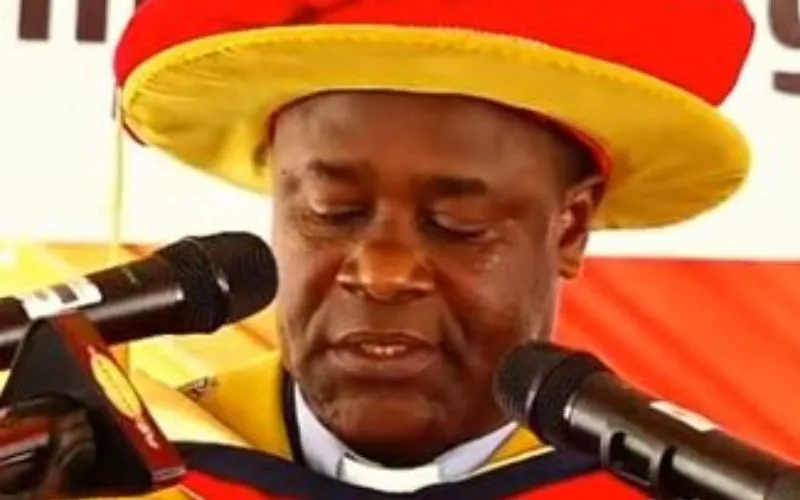 Fr. Edward Etengu. Credit: Capuchin TV
Established in 1986 under the name, Theological Centre of Religious, TU had the original aim to form members of ICLSAL for ministry in the Church and society in Africa. Servant of God Maurice Michael Cardinal Otunga, then Archbishop of Nairobi, blessed and formally inaugurated TU on 30 October 1987.
Since 1992, when the Nairobi-based Catholic University of Eastern Africa (CUEA) was granted the Charter in Kenya, the administratively autonomous TU became one of CUEA’s Constituent Colleges, particularly for academic-related matters.
TU was granted a charter to confer degrees and certificates by Kenya’s President, William Samoei Ruto, in May 2024 after many years of consistency in offering quality education.
 Credit: Capuchin TV
The May 2 Charter award was the culmination of the process that started in 2013 following the change in the regulations around the governance of universities and constituent colleges as stipulated in Kenya’s University Act, 2012.
With faculty and students of well over 40 nationalities and more than 100 ICLSAL, TU is a culturally diverse institution of higher learning that has “Teaching Minds, Touching Hearts, Transforming Lives” as its educational philosophy.
Nicholas Waigwa is a Kenyan multimedia journalist and broadcast technician with a professional background in creating engaging news stories and broadcasting content across multiple media platforms. He is passionate about the media apostolate and Catholic Church communication.


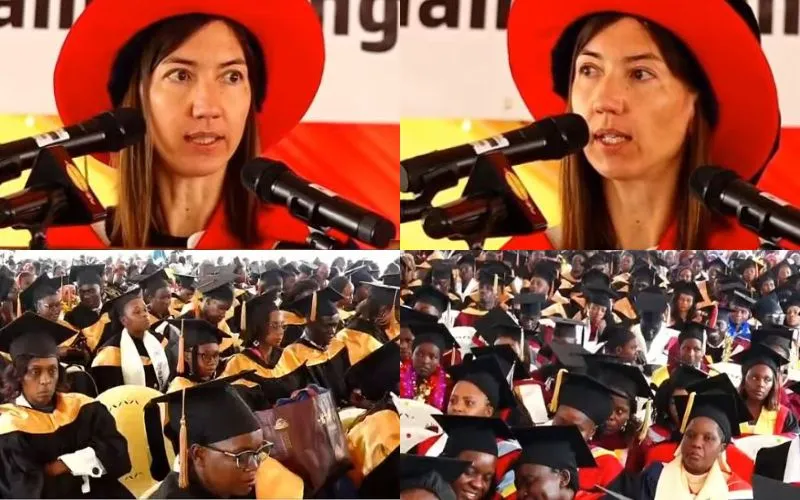

 Ambassador Katalin Nyirati. Credit: Capuchin TV
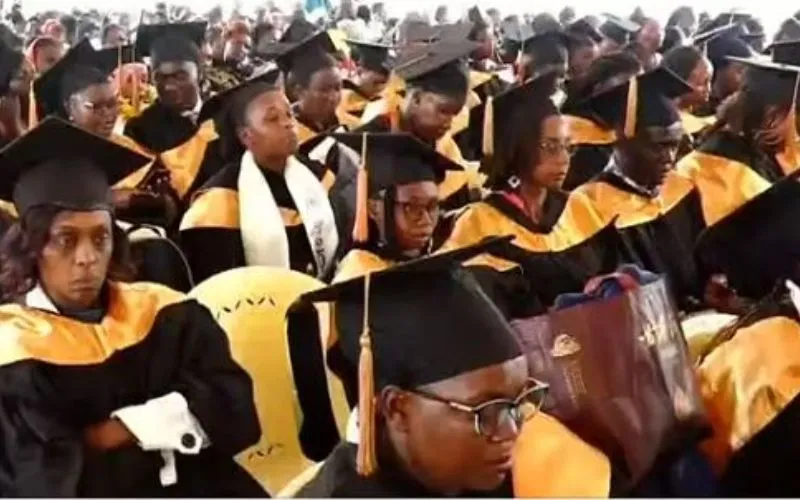 Credit: Capuchin TV
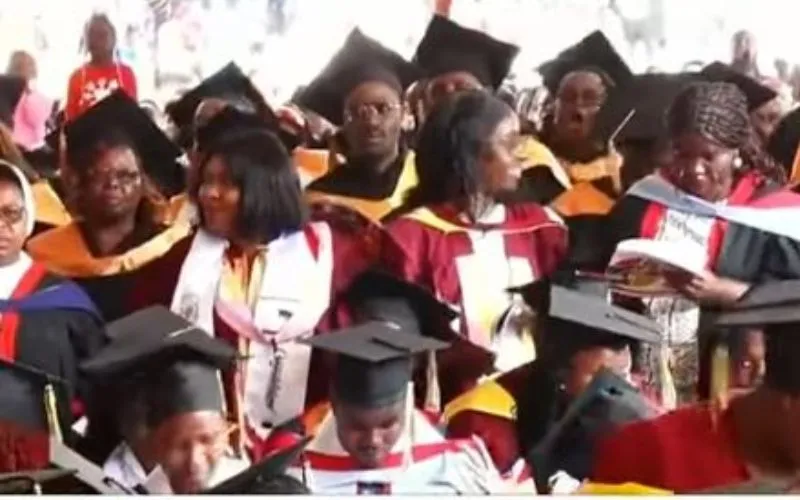 Credit: Capuchin TV
 Ambassador Katalin Nyirati. Credit: Capuchin TV